.png) 3 months ago
84
3 months ago
84
When the police arrived at Arlene Fraser’s house in Elgin, Moray in April 1998, they found a place where time had stopped suddenly, like a needle lifted hastily from a record. Sights that would have been ordinary had she been there were disturbing in her absence: a bicycle on its side in the yard, a vacuum cleaner plugged into a socket in the hall, washing on the line. Having stood in her dressing gown to wave her two children off as they left for school that Tuesday morning, Arlene had since vanished.
Across two episodes that sensitively manage to juggle a sobering reflection on violence against women and a gripping whodunnit where a full answer keeps maddeningly eluding the authorities, Murder Case lays out what is thought to have happened to Arlene, and replays the twists and surprises of the trial – or rather, the trials – where concrete details refused to emerge. It is sad, enraging, frustrating, compelling.
Knowing that being intrigued and wrongfooted is a thrill that will keep viewers interested long enough for the important messages to land, the programme initially focuses on the eerie abruptness of the disappearance. Arlene phoned her son’s school at 9.41am to check when she needed to pick him up; when the school rang back 10 minutes later to provide that information, they got no answer. Arlene failed to attend a planned meeting with a friend at 11am.
Where had she gone? Her backstory is carefully meted out. Arlene was a friendly and popular young woman before she married Nat, who attended their wedding with a black eye – seen at the time as an amusing misfortune. Energetic and free, Arlene surprised some of her loved ones by transitioning smoothly to motherhood, but by then her trauma had begun. She had stayed at Moray Women’s Refuge in 1990 and again in 1992, returning to Nat both times. “They don’t see themselves with an alternative or the confidence to move on,” says the refuge’s co-founder Lorna Creswell, observing that so many of the women she has tried to help have gone back to their abusers.
By April 1998, however, Arlene had very much moved on: on the day when she was last seen, she had been scheduled to meet a divorce lawyer. Five weeks earlier, Nat had placed his hands around her neck until she lost consciousness. He was facing an attempted murder charge. Later, a judge would be sympathetic to the assertion of Nat’s defence lawyer that the attack was out of character, but, as Dr Emma Plant of the Moray Violence Against Women and Girls Partnership points out, virtually no man throttles his wife just the one time: “There is no such thing as an isolated incident of violence against women.” Domestic abuse is about controlling a woman and, when that power is threatened, the ultimate way to maintain control is to kill her.
There was an obvious chief suspect, but no means of proving his guilt. There was no body, no weapon, no forensic evidence, no incriminating witness testimony from the day. Nat had an alibi so strong it stopped the case dead: the numerous weird anomalies that persistently suggested his guilt, including his dispassionate reading of a prepared statement at a press conference (“Arlene, if you’re watching this, then please get in touch”), were not enough. Arlene’s family stayed in an agonising limbo until, months later, an edition of BBC Scotland’s Reporting Scotland re-examined the facts, a tips line lit up, and the police were alerted to the suspicious purchase of a secondhand car and the existence of two potential conspirators.
We then follow the Frasers on their journey through the sapping complexity of the legal proceedings, as Nat’s trials for attempted murder and then murder devolve into a mass of bargains, technicalities, appeals and a retrial (this final chapter of the story took place in 2012 and was the subject of another documentary, The Murder Trial, on Channel 4 the following year), all of them dogged by the difficulty of establishing something beyond reasonable doubt that could not be known for certain, since so many parts of the narrative were missing.
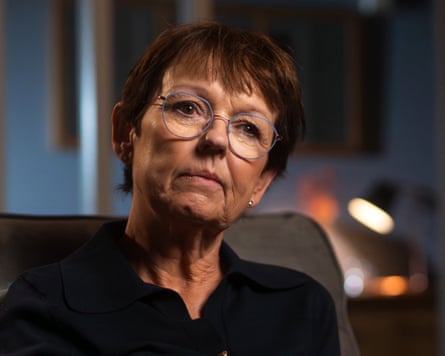
Arlene’s sister, Carol, is a picture of determined articulacy throughout her interviews here. In concert with another family who have endured a similar ordeal, the Frasers have successfully campaigned for a necessary change in the law: upon being prosecuted for murder, there is a further, final way for an abuser to exercise control, which is to never reveal to his partner’s family where her remains are. Such cruelty must now, in Scotland, be taken into account at parole hearings, which should in practice mean that those men are never released. It is justice of a kind for Arlene, wherever she may be.