.png) 2 months ago
63
2 months ago
63
The mystery of when, how and – perhaps most importantly – why a giant naked figure was carved into a dizzyingly steep hillside in the English West Country has been a source of wonder and intrigue for centuries.
Future generations may come closer to solving the puzzle of the Cerne Giant after the National Trust stepped in to buy 340 acres of land around the 55-metre (180ft) figure.
The planned purchase is expected to clear the way for more archaeological investigations around Britain’s largest chalk hill figure, which looms over the rolling Dorset landscape.
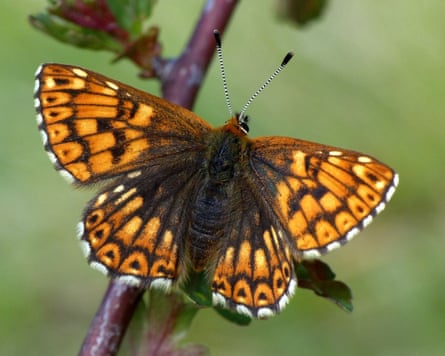
It would also mean more work can be done to protect the flora and fauna on the hillside, including the rare Duke of Burgundy butterfly. And the conservation charity hopes the purchase will lead to better access for people to the figure, with more chances for exploration and play.
The trust has exchanged contacts for the land and it plans to use money from its funds, grants and bequests to cover £2.2m of the asking price.
On Wednesday it launched a fundraising appeal to try to raise another £300,000 for the purchase. It is encouraging people to donate by offering some the chance of joining the rechalking of the giant next year or receiving a “cheeky giant” pin badge with an imagined view of the figure from behind.
The trust said the acquisition would help conserve the giant’s setting in perpetuity.
Steve Timms, an archaeologist, said: “The acquisition will provide an opportunity for archaeological research and investigation on a landscape scale. This will not only help us manage the land in the most appropriate way but also answer questions about the development of settlement and ritual activity over the area over several millennia.”

Many theories have surrounded the giant’s identity and origins, including it possibly being an ancient symbol of spirituality, the likeness of Hercules or a mockery of Oliver Cromwell.
In 2021, National Trust archaeologists concluded that the giant was probably constructed in the late Saxon period.
Near to the giant lie other nationally important monuments including the Trendle – earthworks whose date and purpose are unknown – and a bronze age burial mound.
The giant itself was given to the National Trust in 1920 but there were concerns earlier this year when land around the figure was put on the market. People who lived nearby and rights of way campaigners expressed concern that the spot could be developed or access to the hillside lost.
Hannah Jefferson, the general manager for West Dorset and Cranborne Chase, said: “The land is extraordinary. By protecting the area around the giant, we can restore a fully functioning ecosystem that supports species under threat and allows wildlife to thrive. There’s also potential for new walking and play opportunities, creativity and interpretation.”

The trust plans to join up parcels of land around the giant to create more of the conditions needed for the Duke of Burgundy butterfly and other flora and fauna to survive. The hillside is also an important habitat for orchids and hazel glove fungus, which is typically found only in temperate rainforests farther west.
Michael Clarke, an area ranger, said: “If we’re serious about tackling climate change and helping wildlife adapt, we need landscapes that are bigger, better connected and more resilient. The Duke of Burgundy butterfly is a perfect example. It has very specific needs, thriving only in taller, moister grass and laying its eggs on certain plants.
“Its breeding conditions are so exacting that attempts can easily fail. That’s why it’s essential to give this butterfly space to expand into healthy, connected areas, reducing the risk of inbreeding and giving it a fighting chance to survive.”
The actor, broadcaster and comedian Stephen Fry has backed the appeal, as has the Countryfile presenter Sean Fletcher, who said: “When you stand on Giant Hill and look out across this landscape, you feel the weight of history and the wonder of nature all at once.”