.png) 7 hours ago
32
7 hours ago
32
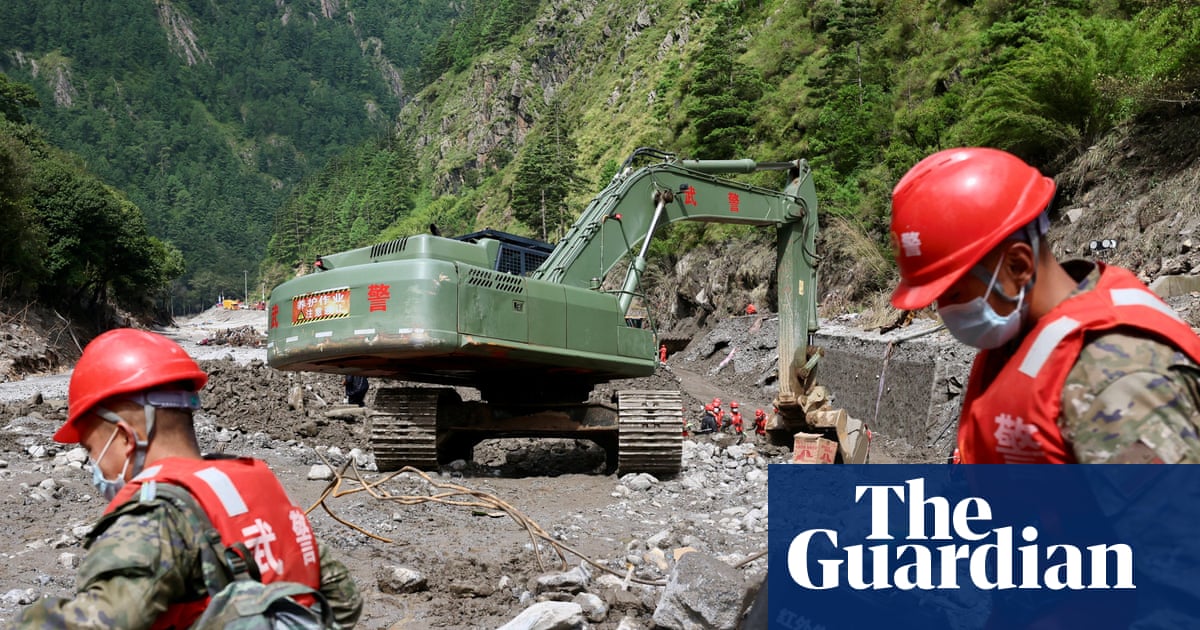
Rescuers in Nepal and Tibet have battled through leg-sucking mud amid the threat of fresh flooding to search for thousands of people still missing after a deadly wall of water swept through the Himalayan border zone, engulfing entire villages.
The latest updates on Sunday put the number of missing at 3,048, including hundreds of foreigners. There were 768 confirmed deaths, and reports of some bodies swept downstream possibly as far as India.
Nepal said it had begun the grim task of burying some of the hundreds of bodies after first taking DNA samples so that families could later reclaim them and perform traditional funeral rites after identification.
The disaster, which struck the border on Wednesday morning, was caused by a glacial collapse, sending a wall of water and debris downstream, the US Geological Survey said.
Nepal’s foreign minister called for a global response to the climate crisis, saying the small, poor Himalayan nation was bearing a disproportionate share of its impact.
“Despite having only 0.1% contribution to the global emissions, people of Nepal have become major victims of climate change,” Shisir Khanal said on Saturday.
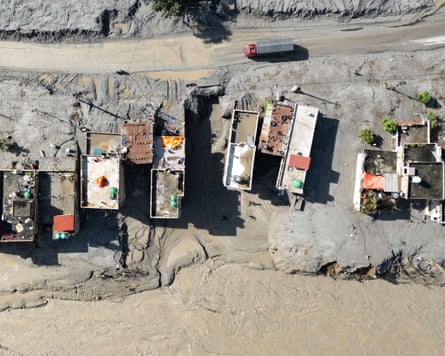
More than 3,700 people have been rescued in Nepal so far. Chinese authorities on Sunday reported 16 deaths and 546 missing, of whom 261 were foreign nationals, including 104 from Nepal, 49 from India, 33 from Latvia, 18 from the US and 15 British citizens.
In a breakthrough at the weekend, Nepal’s army was able to insert a pipe into a tunnel at the Trishuli 3A hydroelectric site where more than 100 workers are believed to be trapped.
The home minister, Sudan Gurung, said: “We have already started sending air through the small opening, and we will now begin excavation work and send the rescue team inside.”
It is a race against time to reach the workers, who may still be alive inside the tunnels, with rescue efforts focused on the Trishuli 3A and 3B sites. They are among 933 hydropower workers who are among the missing, according to Nepal’s disaster authority.
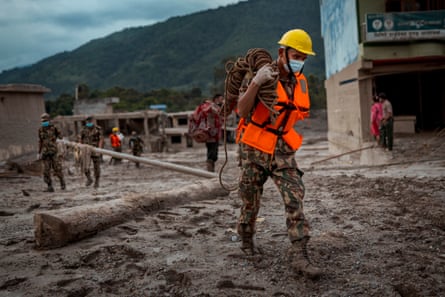
Nepal warned on Sunday of rising flood waters and urged rescue teams to exercise caution. “We have received information that the flood flow in the Bhotekoshi River in Rasuwa has increased further,” the National Disaster Risk Reduction and Management Authority said.
Flood warnings were sent to people’s phones early on Sunday as rescue crews worked to clear a highway connecting Kathmandu to one of the areas hit by the devastating floods.
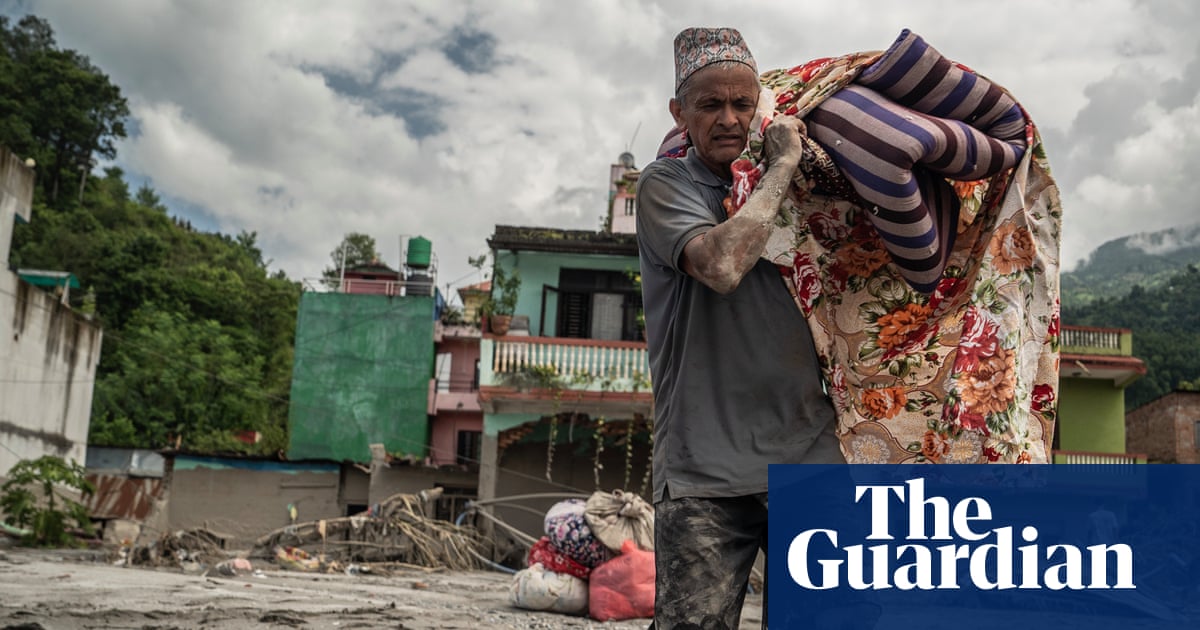
In Dhading, one of the worst-hit regions in Nepal, some people began returning to ruined homes to see what could be salvaged. Residents of the flood-hit villages said they were struggling to make sense of near-constant alarms they had received since the initial floods.
One resident, Govind Shreshta, told the Associated Press: “Sometimes they say a flood is coming, then we have to run again to higher ground, even at night. There is also rain. It’s really difficult for me. I have a 72-year-old father and 70-year-old mum. I must carry them and I am exhausted. It’s going on like this for those who are still alive.”
The government estimated Nepal’s reconstruction bill could run into the billions of dollars.
Officials in Nepal called for forensic testing kits to identify bodies and freezer units to store them in, saying bodies that had been in water could decompose at a faster rate.
Survivors face an agonising wait to learn the fate of missing relatives and the prospect of rebuilding their lives from nothing.
“All the settlements near the river were swept away,” Buddhi Ram Dangol told Agence France-Presse in Nepal’s Nuwakot district. “There is nothing left.”
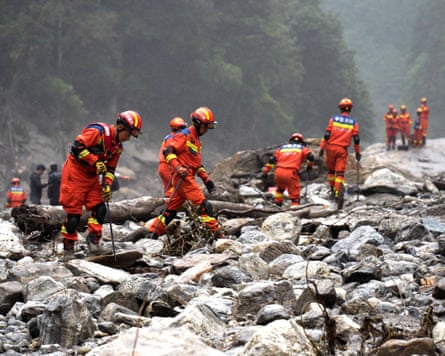
In Tibet, where Chinese authorities are the only source of information, rescue operations were temporarily paused at the hardest-hit area of Gyirong over the risk of more flooding from a newly formed lake.
A total of 2,141 rescuers were near the Gyirong site, the Xinhua state news agency reported, including more than 500 in the worst-hit area.
In Kathmandu, Nepal’s capital, relatives and friends gathered outside the main government hospital from early morning desperately searching for news of missing loved ones.
Many shuffled between the help desk and the hospital noticeboard, clutching photographs and scanning injured patients’ lists in the hope of finding them.
Dil Maya Lama stood weeping outside the help desk at the hospital, searching for information about her missing 26-year-old brother, a driver for a hydropower company in Rasuwa. She had travelled from Ramechhap, about 80 miles (130km) away.
“I came here with the hope that I might find him,” she told the Associated Press. “There is no information about him.”
Nelza Moktan anxiously sought information about her missing cousin, who also worked as a driver in Rasuwa. “I feel hopeless. It has already been four days,” she said.
With Associated Press, Agence France-Presse and Reuters