.png) 1 hour ago
5
1 hour ago
5
The latest version of the long overdue plastic treaty is even less ambitious than the previous one, according to experts.
A year after UN plastics treaty negotiations collapsed in Geneva in 2025, diplomats met informally in Nairobi between 30 June and 3 July, aiming to flesh out a new “no surprises” document.
The process’s newchair, Julio Cordano, the Chilean ambassador to the UN, took over in February with the objective: “To deliver an effective response to end plastic pollution through an international legally binding instrument.”
A new draft text of the treaty was published earlier this week, which Cordano described as “an informal, evolving reference document”. While he said he was “encouraged by members’ continued engagement and commitment”, there was still work to be done.
However, Andrés del Castillo, a senior attorney at the Center for International Environmental Law, said: “Science and reality are not adapting to the geopolitical context.”
He said that in the middle of the fifth consecutive heatwave in Europe, the latest draft was “very similar, if not the same, to the last draft released one year ago, with more brackets – mainly everything related to production, health, and chemicals.”
The managing director of the environmental NGO OceanCare, Fabienne McLellan, agreed, saying: “It is basically one large bracket” containing text similar to that previously rejected in Geneva.
Brackets in the text indicate disagreement and in effect puts the treaty’s objective to protect human health from the impact of plastics up for debate. From a public health perspective, this is of deep concern when “the science is clear”, according to Megan Deeney, research fellow at LSHTM.
“Human health appears just nine times in the substantive articles of the text”, with seven of these bracketed – “meaning they could be lost altogether in further negotiations”, she said. Overall, “the protection of our health and that of generations to come is tenuous in this treaty”.
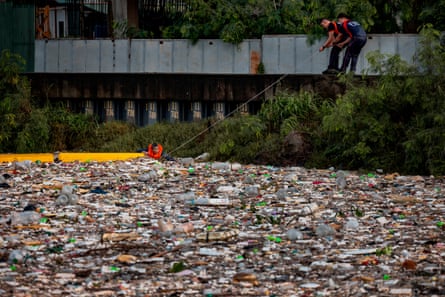
A treaty that suggests “we only want to protect the environment” would not include in its scope the recent injustices of Turkey’s microplastic pollution from UK waste or microplastics in recycled food waste contaminating agricultural soils.
The previous treaty collapsed because agreement could not be reached on the crucial issue of resolving to reduce production. At the conference in Geneva last summer, countries worked past the deadline but could not break the deadlock on whether to reduce exponential growth of plastic production and place global, legally binding controls on toxic chemicals used to make plastics.
after newsletter promotion
The negotiations have tested to the limit the UN consensus system – which requires all countries to sign up to the final agreement. Del Castillo said the negotiations needed an alternative option when consensus could not be reached, as without it, “we risk the same inertia that has slowed climate action for decades”.
At the talks last year, some NGOs said they had “lost faith” in the process after most countries wanted a cap on plastic production but a small but powerful minority of oil and plastic producing nations continued to reject the idea. Some argued the system was being “weaponised”.
The next round of negotiations are scheduled for March 2027, marking an unusually long period of 18 months between the talks. Ultimately, the text needed to focus on the “how”, del Castillo said.
These developments come against the backdrop of environmental groups increasingly speaking out about what McLellan calls “the elephant in the room” in ending plastic pollution: “Untamed plastic production based on fossil feedstock.”
She argues that the lobbying from this industry is “particularly troubling because plastics and fossil fuels cannot be credibly treated as separate policy issues”.
There is a “real risk” that “what emerges is essentially a waste-management treaty” that does not acknowledge the ultimate source of plastic pollution, which is fossil fuel production. Yet, the plastics and climate crises have remained siloed, even as fossil fuel companies themselves are now turning to plastics production in the face of increased global demand for renewables.
Despite this, del Castillo stressed the importance of civil society involvement to maintain “accountability” and ensure countries do not decrease ambition – “there’s still time for countries to deliver.”