.png) 2 months ago
27
2 months ago
27
The first round of fixtures at the World Cup is in the bank so we’ve finally seen all 48 teams. But what have we learned? Who was good, bad, lucky or fired after one game? A dig into the Opta data has revealed some facts that may not have been immediately apparent from the scorelines.
Mexico 2–0 South Africa
Mexico moved the ball upfield slower than any other team. They could afford to take their time as South Africa offered next to no threat. It is unlikely to end well when a team receive as many red cards as they have touches in the opposition penalty area, which was the case for the losing side.
South Korea 2–1 Czechia
This game was the first to feature one of the trademarks of the 2025-26 Premier League season. The former West Ham defender Vladimir Coufal launched a long throw-in, which the Wolves centre-back Ladislav Krejci headed home to give Czechia the lead. South Korea were worthy winners, with the 25-pass buildup to Hwang In-beom’s equaliser the joint-fifth longest passing sequence leading to a goal in the World Cup since records begin in 1966.
Canada 1–1 Bosnia and Herzegovina
Czechia’s set-play prowess looked weak compared with Bosnia and Herzegovina’s. Seven of their eight shots against Canada were from set pieces. Sergej Barbarez will need his team to generate more than one open play chance per match. Their remaining opponents being as wasteful as the Canadians will help too.
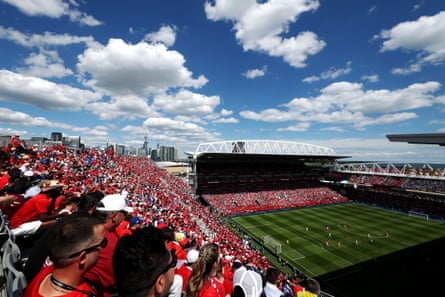
United States 4–1 Paraguay
Opta Analyst’s pre-match predications rated this as the second-closest of the opening set of fixtures. The USA looked at the supercomputer and laughed. Paraguay conceded the joint second-fewest goals in the South American qualifying group yet allowed their hosts 53 touches in their penalty area, the second-most after Curaçao against Germany.
Qatar 1–1 Switzerland
Australia 2–0 Turkey
Spain 0–0 Cape Verde
Saudi Arabia 1–1 Uruguay
Portugal 1–1 DR Congo
These matches are grouped together because their favourites failed to win for broadly the same reason. Portugal, Spain, Switzerland, Turkey and Uruguay are the top five teams for possession and final-third pass accuracy. They had the ball where a team would want it and, Portugal aside, generated at least 25 shots.
The problem was the quality of their chances. A reasonable expected goals tally looks far less impressive when divided among numerous low probability efforts from long range. Spain averaged 0.08 xG per shot, with Uruguay (0.06) and Turkey (0.04) among the teams below them. That is worse than Burnley and Wolves averaged in the Premier League this season (0.09), two teams nobody is looking to emulate.
The so-called minnows have defensive fortitude hey did not always carry in the past. Giants be warned.
Brazil 1–1 Morocco
This summed up what we can probably expect from Brazil. Their midfield may be porous, as shown by Morocco’s goal, but if they can get the ball to Vinícius Júnior then they’ll probably be fine.
We should doff our caps to Carlo Ancelotti, though. His half-time changes helped ensure Morocco did not have a shot between the break and the 98th minute.
Haiti 0–1 Scotland
There have already been nine draws. Even allowing for the World Cup being bigger than ever, the proportion of draws in this phase of the competition has never been higher. Is this a byproduct of a bloated format with little jeopardy for most teams? We’ll see.
This is the one match that should have ended all-square. It was a dead heat on expected goals to two decimal places, at 1.05 apiece.
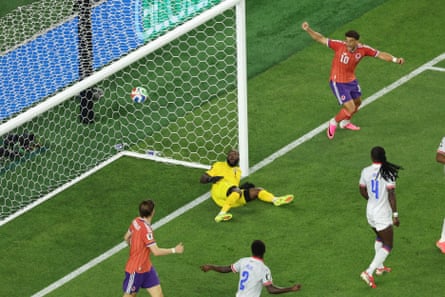
Germany 7–1 Curaçao
Transfermarkt’s data suggests the Germany starting XI was worth €559.4m (£485m) more than the 11 men that lined up for Curaçao. Opta gave the four-time champions a 90.7% chance of winning the match.
Netherlands 2–2 Japan
The Netherlands increased their expected goals tally by 1.38 in Opta’s post-shot model, the most of any team. Japan had 19 touches in the opposition penalty area and had the lowest xG of any team that scored at least twice.
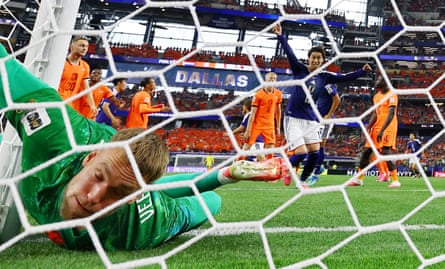
Côte d’Ivoire 1–0 Ecuador
Ghana 1–0 Panama
These matches ended in similarly glorious or heartbreaking fashion depending on your perspective. Ecuador hit a post three times, while Panama missed two Opta-defined big chances. The data suggested the teams were probably worthy of a draw as the clock hit 89 minutes.
Amad Diallo and Caleb Yirenkyi put paid to those hopes with very late winners for the countries.
Sweden 5–1 Tunisia
This result may give the impression that Sweden are back on track after their deeply disappointing qualification campaign. The notion is undermined by Graham Potter’s men overachieving against their xG by 3.67 goals, the most of any team.
It is fair to assume the Tunisian football federation is not paying attention to expected goal outliers, as it fired Sabri Lamouchi after the game. It will take more than Hervé Renard to save them.
Belgium 1–1 Egypt
This was a lesson in the importance of taking chances. At 1-0 up early in the second half, Mohamed Salah had a header saved, with the goalscorer, Emam Ashour, blasting the rebound out for a throw-in. Omar Marmoush sliced wide on a counterattack shortly afterwards too.
Enter Romelu. Lukaku came on in the 66th minute, immediately forced an equalising own goal and Egypt mustered only three low-value chances between that point and full time.
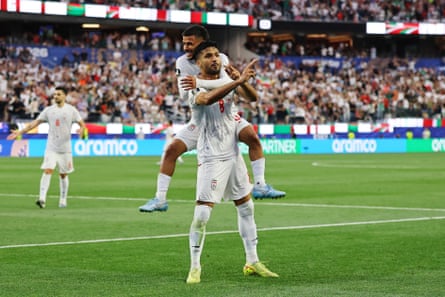
Iran 2–2 New Zealand
Iran fielded the joint second-oldest starting XI in the history of the World Cup (at 31.8 years old). People who love naming footballers of yesteryear will enjoy trying to recall the Germany side of 1998 that was older. They beat Iran 2-0, funnily enough.
Age didn’t prevent this from being one of the most entertaining matches. Iran were unlucky to run into the New Zealand duo of Chris Wood and Elijah Just. The former assisted the latter twice, making them the only combination to have linked up for two goals.
France 3–1 Senegal
France produced a game of two halves. Their efforts in the opening 45 minutes had them careering towards the “big team with lots of the ball fail to win” section of this roundup. Gorgeous defence-splitting passes from Michael Olise and Adrien Rabiot ensured otherwise.
Six Premier League teams did not muster more than their two through-ball assists in the entire season; France logged their pair in a 16-minute spell of incision.
Iraq 1–4 Norway
Iraq were holding their own until a pair of defensive errors handed Norway a second lead. Erling Haaland leads the World Cup for individual expected goals, with the goalkeeper Jalal Hassan’s blunder contributing hugely to his tally.
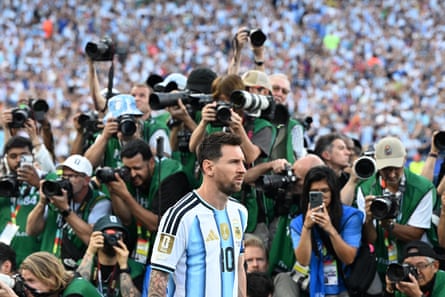
Argentina 3–0 Algeria
The most surprising statistic of the first wave of fixtures is that Algeria had more touches in the opposition penalty area than Argentina, limiting the defending champions to 12. But they were also the only team to fail to register a shot on target and when Lionel Messi is on song, data is almost irrelevant. Almost.
Austria 3–1 Jordan
Eleven shots with four on target. As it was for Austria, so it was for Jordan. The difference came in Opta-defined big chances – opportunities where you can reasonably expect the attacker to score. The Austrians led that metric 4-0 and they benefited from an own goal too.
England 4–2 Croatia
England had seven big chances, more than any other side. It was hardly surprising that four came from dead-ball situations, as they had more shots this way than in open play. Harry Kane’s double carried him on to our rundown of the highest goalscorers in World Cup history and he should join the top 10 before the group stage is out.
Uzbekistan 1–3 Colombia
Last and by most means least, we have a fairly routine win for Colombia. Uzbekistan made the xG figures look respectable thanks to Abbosbek Fayzullayev scoring with a chance valued at 0.98. Few people in any walk of life will ever be handed a better opportunity to become a national hero.