.png) 3 hours ago
6
3 hours ago
6
By now, we all know the shape of financial nihilism: the throw-your-money-at-anything reaction to the dissolution of the slow, linear path to wealth; the prediction markets, meme stocks, cryptocurrencies and microluxuries growing in its place. We’re left in an economic no man’s land. But financial nihilism only describes where we put our money. What about how we earn it in the first place?
The modern economy has long relied on our need for stable employment – to pay the mortgage, to keep our kids fed, or, for some, to chase prestige and power – to generate the work ethic that keeps the wheel of production turning. None of this is going well for young people. Our jobs are insecure, we can’t afford houses, we’re deferring having kids (if we have them at all), and only 6% of us say a leadership position is our primary career goal. Hope is one of the economy’s most productive inputs, powering our willingness to endure long hours. When the production function of income – the mechanism that turns hard work into a stable salary, then a mortgage, then a pension – breaks down, so does our relationship with the input. I call this production nihilism: my generation’s growing indifference to the kinds of work we’re willing to participate in, and where we’re willing to earn.
“Normal people are asleep. Good,” a young woman running her craft business at nighttime tells the camera in Shopify’s latest commercial. Partially thanks to all-in-one e-commerce platforms like Shopify, many of us have mastered the art of polyworking. These are jobs our high school career advisers could hardly have imagined – platforms such as Mercor, where white-collar workers train LLMs to do their job; “YouTube empires”; the much-covered millions being made by young women on OnlyFans; non-sexualized escorts. Some are supplementary, some are enough to eventually become a primary source of income. Americans seem to be coming around to the idea of “portfolio careers”, with more than half calling them more desirable than traditional careers for a future workforce.
Take away the feasibility of long-term goals and our willingness to wait for “the good life” collapses. So we redirect our motivation to grind and save into channels that pay out sooner – cash, yes, but also autonomy, flexibility or a sense of identity. Fifty-seven percent of gen Z report having a side hustle, well over double the boomer rate. Day jobs start to function as financial anchors, paying the rent while our side gigs do the identity work. After all, “writer” plays far better on a Hinge profile than “analyst”.
With no solid formula for our futures, more of us are experimenting with what it means to interact with the economy at all. The cultural counterpart to this economic logic is a series of attitude shifts to work, nervously cataloged as trends: the gen Z stare, or faked productivity. I recently wrote about the slow death of the prestige career, where – thanks to AI – companies no longer require a robust team of entry-level workers to scale.
We’re living through a transition in our economic relationship with the future. The cultural theorist Lauren Berlant described how an “anticipatory present” kept people bound to an economic system: enduring the short-term in the hope for a promised version of the long-term. Profoundly unable to imagine – let alone attain – a prosperous future, young people may be among the first generations to name this for what it is: foreclosed. When the promise of a future stops working, we “maxx” for the present, extracting value as quickly as possible with whatever assets late-stage capitalism permits us to spend. It’s the other side of the “little treat” economy.
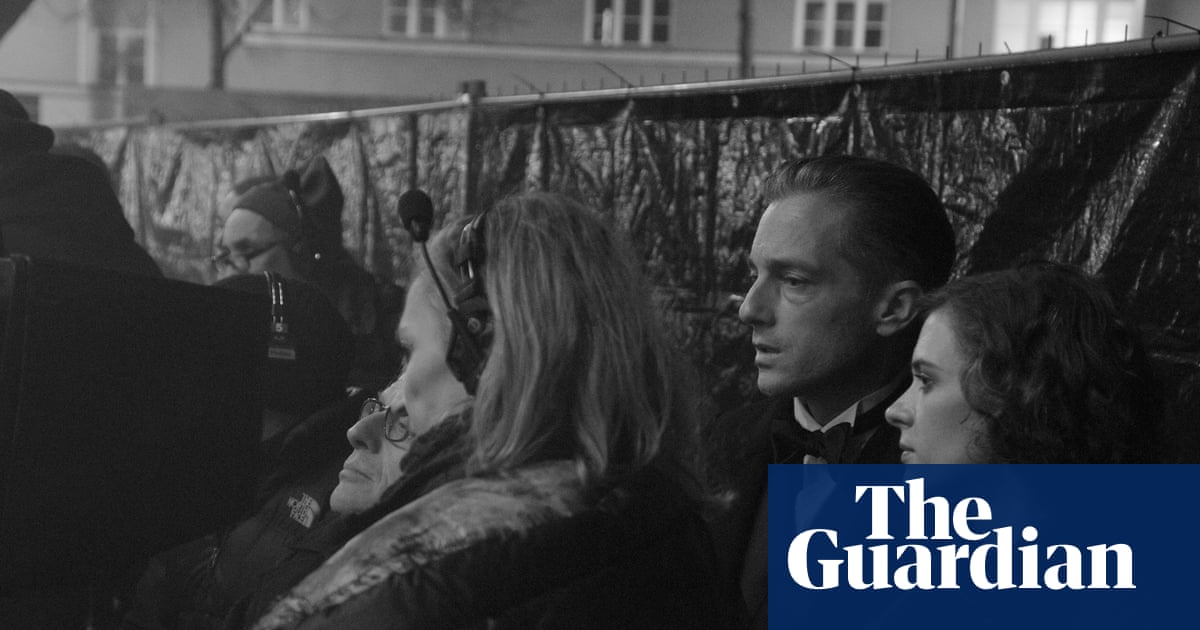
Neoliberalism, the system that raised us, offers a convenient way forward: everything can be commodified if we try hard enough. When western society was first learning this lesson, France’s artists gave voice to the unease of their postwar consumer boom. The film-maker Jean-Luc Godard’s Two or Three Things I Know about Her follows Juliette, a Paris housewife, as she prostitutes herself to keep up with the lifestyle being aggressively marketed to her. She decides to sell her afternoons, her time, her body. It’s a precursor, in many ways, to the gig economy of platform capitalism: Juliette optimizes any assets at her disposal to enjoy the present moment.
The New Wave tried to warn us against the relentless tide of commodification. But where Godard and his contemporaries channelled their anxiety through women as objects, gen Z reclaims Juliette’s image – not as a helpless, bored object, but as subject. We are agents of our own relationship with the economy. Less despairing, less passive, less accepting: gen Z’s nihilism feels distinctly active. Production nihilism leans into a new definition of work, forcibly detaching us from the neoliberal “good life” fantasy that’s clearly stopped delivering. Nietzsche described nihilism of this kind as a process of clearing away dead values. Which is what production nihilism does: it detaches us from the neoliberal “good life” fantasy that’s clearly stopped delivering. Refusing to accept the current economic system as the endpoint of our search for meaning, we improvise a new set of values as we go.
But is there real agency here? There’s an idea circulating in Silicon Valley: that “high-agency” individuals – those who think for themselves and act without being told – will be the ones to survive the coming AI disruption. This isn’t really agency. It’s the anticipatory bind Berlant warned us about, another story about how to succeed in an economy where fewer of us will realistically be able to. No wonder we’ve stopped caring about where our income comes from, when its source no longer determines where we end up.
-
Alice Lassman is an economist who writes The Intimacy Economy, a Substack and forthcoming book on the economics of connection, care and relationships