.png) 2 months ago
40
2 months ago
40
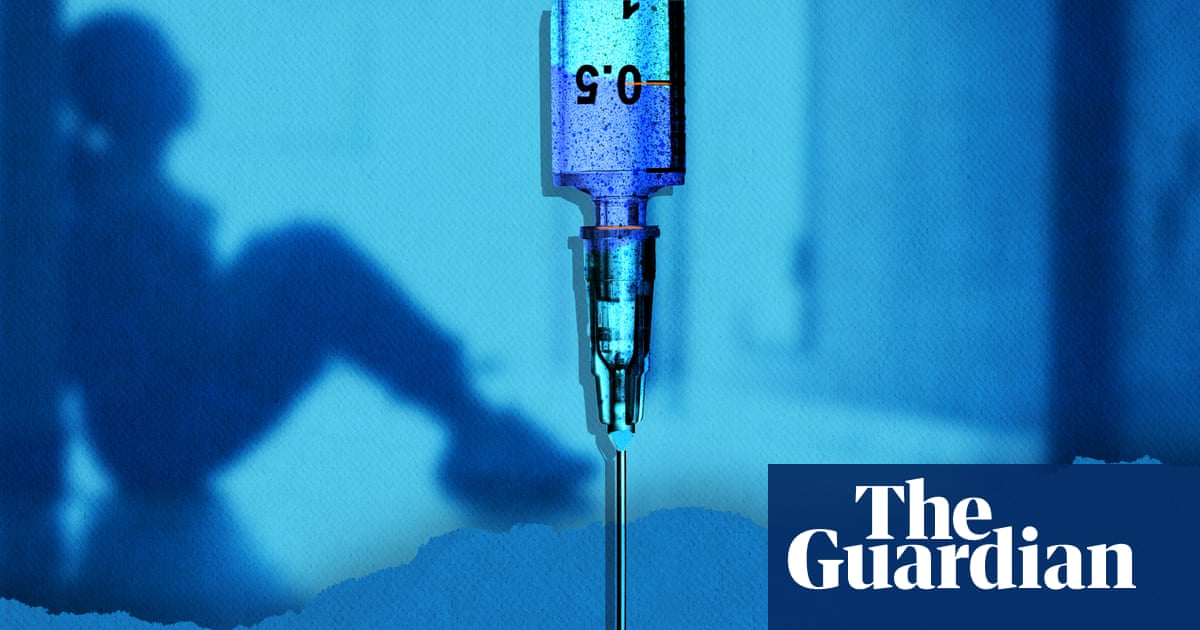
It started in 1998, with a pain in Ken Rideout’s ankle. A podiatrist gave him a prescription for seven Percocet, a drug containing the opioid oxycodone. Rideout was a high-flying commodity trader in New York, outwardly successful but racked with impostor syndrome. The Percocet dulled his foot pain – and also his anxiety. Rideout was used to alcohol and cocaine, but this was different. He felt happy, confident and optimistic.
He returned to the podiatrist for more pills. Then more. Soon he was altering the prescriptions manually, changing a seven into a two and adding a zero, before targeting smaller pharmacies that wouldn’t run verification checks.
A year after starting the pills, Rideout moved to London for work. This was an opportunity, he thought, for a clean break. But within a week he was suffering extreme withdrawal: depression, delirium from days of lost sleep, overwhelming flu-like symptoms. He called his younger brother and asked him to FedEx a batch of a new drug he had read about called OxyContin, which, depending on the dose, can contain a significantly higher amount of oxycodone per pill than Percocet. The OxyContin made Rideout feel amazing again. He found a private doctor who would prescribe the pills.
“I wasn’t even happiest when I took the drugs,” says Rideout. “I was happiest knowing that they were coming.”
Rideout flirted with sobriety, attending Narcotics Anonymous while in London. He tried Subutex, a medication used to treat opioid addiction by easing withdrawal symptoms, but when it was time to come off that too, he couldn’t do it. No matter how much he tried to wean himself off Subutex, he would eventually relapse. “I’d gotten myself hooked on a drug that had no high,” he writes of opioids in his recently published memoir, Everything You Want Is on the Other Side of Hard. “They kill joy, too. Not just joy and happiness but any sense of pleasure, any sense of completion or fulfilment or basic human connection.”
His struggle with opioids and Subutex lasted years. A work stress, a bad run, difficulties at home – something would tip him over the edge and he would turn to pills for relief. During one particularly tough spell he read about “pill mill” pharmacies in Florida that were prescribing opioids in massive quantities – within days he had placed orders at 10 of them. At his lowest ebb, he needed 10 pills a day just to avoid withdrawal. “I was generally taking 20 to 30 oxycodone tablets per day,” says Rideout. “The pills made me vacillate between very high, euphoric and very erratic, depressed and highly irritable.”
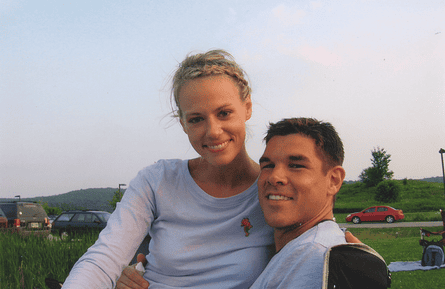
In the early 00s, on a night out in Manhattan, a mutual friend introduced Rideout to a model called Shelby. They hit it off, ditched the friend and went straight to her place, where they stayed up all night talking. A whirlwind of dates and weekends together soon followed. Rideout was conflicted: thrilled to have found the woman he wanted to spend his life with; fearful she would discover his addiction and end their relationship.
In 2007, Rideout married Shelby, and three years later, in August 2010, came the call that would change his life. The couple had been trying to start a family with no luck, and now an adoption agency brought word of a four-week-old girl in Ethiopia who needed parents. They went through the approval process and were told they could travel to meet her in November. They were ecstatic. Shelby knew her husband had been on and off drugs, but had no idea about the ferocity of his opioid addiction.
Thirty days before he was due to travel to Ethiopia, Rideout knew he had to get sober – he didn’t want to be “erratic, unpredictable and severely depressed while also trying to be a dad”. He checked into an outpatient detox facility in New York where they checked his vitals every day for a week and gave him medication (Ritalin to stay awake, Xanax to sleep, blood pressure medication and a fast-acting antidepressant). After the first week he would be eligible for a shot of Vivitrol, which blocks opioid receptors in the brain for up to a month.
Three days into the treatment, Rideout was so depressed he couldn’t leave the bedroom. He was dripping with sweat, shivering, overcome with self-loathing and felt on the brink of a heart attack. When he woke up in the night to use the toilet, he passed out, smashing his head on the way down. He came to, lying in a pool of his own urine, while Shelby cradled his head and cried.
The effect of hiding his substance abuse from Shelby had been profound. He had felt like a fraud and often thought about suicide. “The lowest moment of my life was definitely when my wife found me unconscious in the bathroom trying to detox and withdrawing from the opioids,” he says. Finally, he confessed everything.
Today, we’re speaking over video call, Rideout from his home office in Nashville, where he sits in front of shelves lined with signed sports memorabilia. He has thick-rimmed glasses and an even thicker Boston accent. Importantly, he is sober.
Rideout’s memoir is a warts-and-all account of his journey from an abusive childhood in the Boston suburbs, to becoming a high-flying trader, to navigating a decade-long addiction to opioids, before becoming a top endurance athlete. Astonishingly, after years of substance abuse, he became one of the fastest marathon runners in the world over 50. Last month, at 54, he topped both the 40+ and 50+ categories at the Austin half-marathon, with a time of one hour 15 minutes.
Rideout was born in 1971 in Somerville, Massachusetts, a “bombed-out blue-collar suburb of Boston”, he writes, growing up in a poor, Irish Catholic household. His parents were young when they had him – his mother 19 and father 20 – and they had his brother Keith 11 months later, before getting divorced. Rideout lived with his mother and brother on the top floor of his maternal grandmother’s house. His grandmother and her son Barney lived on the floor below.
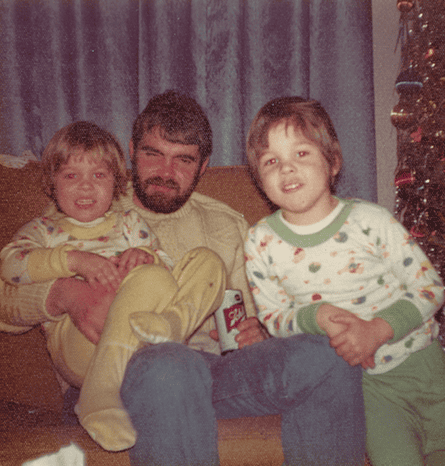
Rideout says his mother was always overwhelmed and taking pills. He writes in his memoir that he can’t recall any part of his childhood when he wasn’t getting hit. Mostly, he says, it was his mother and various boyfriends of hers. His mother tried to stand up to them at first, but soon just looked the other way. A couple of weekends a month, Rideout would go to stay with his father, which felt like an escape, but while his father tried to intervene to stop the violence at home, nothing actually changed.
Rideout was a poor kid in a poor neighbourhood. “From my earliest childhood, I was just really uncomfortable with my circumstances,” he says. He was ashamed that the family were reliant on food stamps. “I hated it. I mean, as a kid, I was mortified.”
He wanted to go to college, so he focused on getting good grades and excelling at sport. After finishing high school he worked as a prison guard, then attended college after being recruited by a football coach. He covered the fees with a mix of loans and assistance from his dad. While there, Rideout discovered cocaine. Nights out would involve drinking, snorting and getting into fights.
The fighting stopped when he landed a job in pharma sales and moved to New York. He progressed rapidly through a series of jobs and was soon earning decent money as a commodity trader. When he moved to London, aged 29, he was given a $250,000 (£188,000) signing bonus by his new firm. “At the time, it felt like a rock star lifestyle and you’re young and you can do drugs all night and get up in the morning and still function,” he says. “I didn’t really have thoughts about the future.”
But the move to London was also when the rock star feeling started to wear off. “I realised how severe my addiction was. That’s when I realised that this was all unsustainable.” He was moody, unpredictable. “My addiction affected my ability to forge deep connections with most people because it took precedence over everything in my life.”

Shelby had a front row seat to Rideout’s mood swings. “She had started to catch small glimpses, throughout our relationship, that I was struggling with substance abuse issues but didn’t realise the extent.” When Rideout confessed what was really happening, she was horrified, “but she also loved me and quickly went into saviour mode and did everything she could to help me.”
Aside from a few small relapses, Rideout has been sober since confessing to Shelby in 2010. “My relapses have been a handful of minor – relatively speaking – bad decisions usually spaced out by months or years,” he says. These were often triggered by periods of stress and anxiety, or: “I’d come across someone who had pills, or a doctor would offer me a prescription for a legitimate injury I’d sustained.”
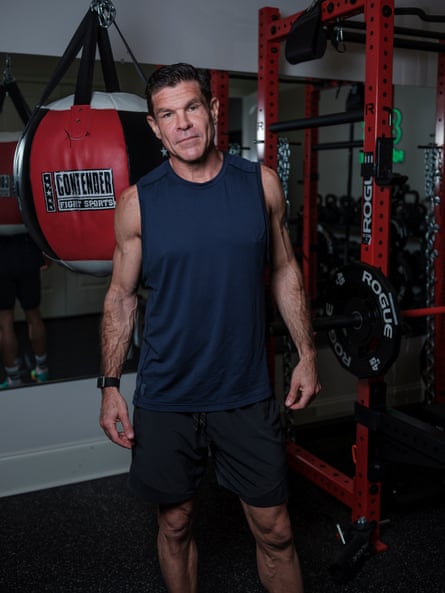
After the couple adopted their daughter, they had three biological sons and moved to Nashville. Rideout has always been athletic, playing hockey alongside football as a kid. Even when his addiction was at its worst, he exercised moderately. With sobriety, training became a refuge and he picked up the intensity. “When I found running and endurance sports, I got my athlete identity back and also found an area to focus attention that was previously going to self-destructive behaviours.”
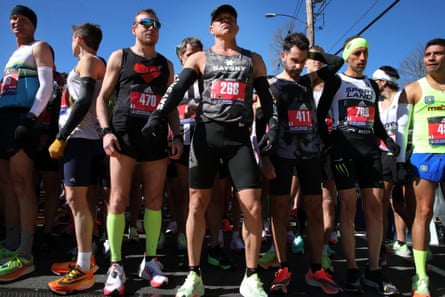
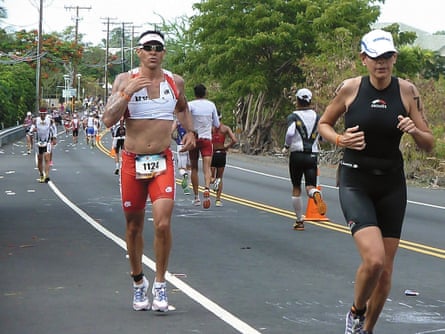
He began running 10 miles a day as hard and fast as he could, and started competing in marathons and iron man contests. In 2012, after completing a 112-mile bike ride in the heat of Kona, Hawaii, at the Ironman world championship, Rideout felt utterly broken and quit the contest without finishing. It was a decision he immediately regretted. He told himself he would never quit again.
When he got home he started working with a trainer for the first time. Since then, Rideout has set a personal best marathon time of 2:28:25 and is recognised as one of the fastest marathon runners in the 50+ division at World Marathon Majors races.
Is he surprised he has been able to achieve these results despite his years of addiction? “Everything that has happened in my life since I got sober has been shocking to me, not just surprising,” he says. “Getting sober is my greatest accomplishment in life. None of the running achievements are even close.”
Running has brought Rideout incredible highs, but also lows – the competitions have taken him away from his family for long periods and he often suffers depression after a race, or humiliation if he hasn’t performed as well as he expected. After one particularly severe emotional plunge, following competing in all six World Marathon Majors over 18 months, Rideout went to an intensive four-day therapy programme in rural Tennessee. There he attended AA-style meetings and therapy sessions in which he finally started to understand the trauma he had been carrying since childhood.
“For the longest time, I convinced myself that nothing bothered me,” he says. “I just pushed it down. And then when I was forced to confront these emotions, I opened my eyes to the reality that it doesn’t make you weak … Once I realised that, it was a weight off my shoulders.”
When Rideout was growing up, he saw the drug users around him as losers. “So when I found myself in that situation I thought of myself as a loser. I had always had high self-esteem and confidence, and when I went through this addiction battle it definitely destroyed a level of my self-esteem.” Has he managed to recover it? “Some. I’m definitely not where I was prior to the addiction.”
“I accept the responsibility for every single thing that I did and every decision I ever made,” he says. “Ultimately, anyone who’s gone through addiction knows that the only person that can save you is you.”