.png) 2 months ago
65
2 months ago
65
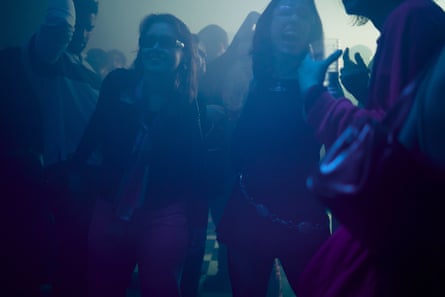
When Brooklyn metal band Contract performs around New York, they expect a mosh pit: thrashing bodies shoving and jumping along to the music. They also want to make sure the amped-up, usually drunk crowd stays hydrated. Without water, a mosher might feel sick, faint or pass out. “You don’t want anyone to get injured or hurt,” frontman Pele Uriel said.
Most of the spaces Uriel plays or visits have water stations where customers can easily fill up. But some do not. The worst offenders sell bottles of water at astronomical prices, from $5 to $10. “There have been times when I asked for water, but they charged a lot, so I went to the store next door to buy some,” Uriel said.
These venues are not breaking any rules. The city of New York, home to more than 25,000 bars, clubs and other nightlife venues, does not require them to supply free water to patrons. While a majority do – and most bartenders are trained to look out for signs of an inebriated customer – this most basic safety precaution is not accepted by all.
Brian Hackel, an EMT who works at local festivals and events, often finds himself treating partygoers suffering from heatstroke brought on by high temperatures, close crowds and dehydration. “When things do happen, free water makes it not as bad for that person,” he said. “It absolutely makes a difference between someone getting an Uber and only having to go to urgent care, as opposed to needing an ambulance to a hospital where an IV drip can cost between $700-800.”
In other locales, partygoers have better luck. In San Francisco, any venue with a dancefloor must provide “free, cool drinking water”. The same goes for businesses in Connecticut that serve alcohol. As of this year, Minnesota requires ticketed events with more than 100 attenders to make free water available and allow guests to bring in their own factory-sealed water bottles. And after years of grumbling from tourists to the longtime party capital of the world, Ibiza, Spain, where some said places charged €10 for a water bottle, clubs must offer free water on demand.
The most Hackel has seen water go for in New York is $12. In November he started a petition demanding the city put regulations in place requiring alcohol-serving venues and large gatherings to provide free water stations. More than 500 people have signed on, and Hackel wants to work with harm reduction non-profits, which campaign to minimize the risk that comes with drug use, to spread the word further and hopefully catch the attention of elected officials.
A long battle was fought in the UK to ensure all establishments selling liquor must provide free, cold tap water to customers. It started in Manchester during the city’s storied rave era, said Fiona Measham, chair of the criminology department at the University of Liverpool and founder of the harm reduction organization the Loop. The legendary nightclub the Hacienda was the center of “Madchester”, a scene known for its club-oriented musical acts such as Happy Mondays and New Order. But in 1989, the party dimmed when a 16-year-old girl collapsed and died in the club. It was the UK’s first widely publicized ecstasy death, and experts wanted to know exactly how it happened.
Despite scary headlines and slogans like “one pill can kill,” ecstasy deaths are rare. But John Henry, a London toxicologist, made the connection between MDMA, which causes a rise in body temperature, and overheating while partying. Measham’s colleague Russell Newcombe, a drug researcher, pushed for greater awareness of harm reduction at clubs, which could look as simple as telling revelers to drink water – half a pint an hour is recommended when taking MDMA – to combat the sweltering effects of drug use (made worse by the physical exertion that comes from dancing all night).
In 1994, Newcombe published the manifesto “Safer Dancing”, in which he urged venues to provide “free, cold water … at the very least in the toilets, at best by providing water on the bars”. After that, Measham said it became “good practice” for Manchester clubs to do so, though it was not legally required. Venue owners knew that club kids were unlikely to order alcohol, as it lessens the effect of MDMA. Some started upselling water to take the place of booze sales.
“It definitely became a point of contention,” Measham said. She remembers Mixmag, an electronic music magazine, publishing a list of rave clubs with symbols of water taps next to each that had hydration stations. “It was known that you wanted to pick the place with the tap symbol,” she said.
Measham and others continued to publish studies and reports on the importance of staying hydrated during a night out. It took more than 15 years for the UK to legally catch up, with a 2010 update to the country’s liquor licensing rules. “I say half-jokingly that getting free drinking water to be a legal obligation in all UK licensed premises is my greatest achievement, and I want it written on my tombstone,” she said.
Still, the law is vague, and there are many ways venues can interpret it. Measham points to the London club Fabric, which features an ice water bar, as a good example. “But I can think of other places that only have one [water] bar, as far as possible from where all the action is, and there’s always a massive queue, and they only give you a tiny little cup of it,” she said. “Some festivals in the UK won’t provide tap water at the proper bar that serves alcohol, but they’ll have a standpipe in a field that’s three-quarters of an hour’s walk from where all the entertainment is.”
Security staff at concert venues usually have bottled water on hand, in case of health emergencies. In fact, it is not uncommon for artists to stop concerts when they see a fan who needs assistance in the crowd. (Billie Eilish handed out water to a Swedish crowd while performing in 2018, after one fan said: “We’re all just passing out.”)
Richard Gallo, a 31-year-old publicist who lives in New York, goes out often and wonders why it has to get to that point. “If they have cases of water on hand in case anyone’s going to have a reaction, it blows my mind,” he said. “That could be alleviated by having multiple water stations around venues.” Gallo noted that he has seen friends drink straight out of clubs’ bathroom sinks as a (gross) last resort.
Harm reduction advocates argue that taking care of patrons is a good investment. People do not want to go somewhere they feel is stingy with water.
“In my experience, doing the right thing is profitable, and cutting corners with community safety can really kill an event or venue,” said Richard Hartnell, an organizer and director of outreach for DanceSafe, the non-profit best known for handing out free drug-testing kits at raves and festivals in North America. “If people know that you care, and don’t want anyone to potentially get brain damage from dancing five hours in a sweaty box with no water, then they’ll take your venue over the sketchy one.”
Peter Kerre, a New York DJ and community activist, recalls visiting Brooklyn Mirage, a since-shuttered megaclub popular among fans of electronic dance music. “I would stand by the bar and see people order water, and I remember being baffled by the price,” Kerre said. “It cost almost as much as a beer. I chatted with one of the staff, and they told me: ‘Oh yeah, this is more of a pill crowd,’ [meaning] they could make some money off of selling water.”
(The Brooklyn Mirage shuttered after failing to secure proper permits after a long renovation. The club did have water refill stations, but those were not by the bar and patrons needed to buy a bottle first. Representatives for Avant Gardner, which operated the venue, did not respond to a request for comment.)
If New York does amend its rules about free water, Kerre hopes the regulations are specific enough to prevent venues from easily flaunting them. “Not only should there be stations, but those should be clearly illuminated,” he said. “If there’s an emergency, you want to know where the water is. There are exit signs in case of fire. There should be blue signs for water. Fire codes for the buildings, water codes for the bodies.”