.png) 2 months ago
70
2 months ago
70
Parents are constantly being told to limit their children’s screen time. But when it comes to deciphering which films or TV shows are best suited to developing minds, the guidance remains largely one-size-fits-all. A relatively slow-paced programme such as Bluey offers a very different viewing experience to a fast-moving action series such as PAW Patrol, yet both are broadly considered suitable for young children.
This challenge is growing as the type of content children are exposed to evolves. “Today’s young viewers are increasingly engaging with short-form, fast-paced, highly captivating content, often created by splicing and rearranging existing episodic content into quickly digestible snippets or compilations,” said Prof Tim Smith, director of University of the Arts London’s Nerve Lab. “This evolution is not only changing how content is produced and distributed, but may also affect children’s attention, comprehension and emotional response.”
Young children process information differently from adults, yet there is still relatively little evidence about how specific features of children’s programmes influence their attention, comprehension and behaviour. “We have kids as young as two spending three or four hours a day on screens. It is really important to have a wider understanding of what it means for them to watch something that’s appropriate for their age,” said Alisa Musatova, a research assistant on the Animating Minds project.
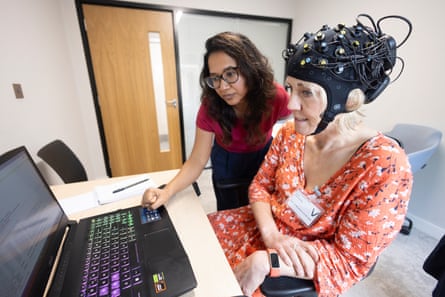
Animating Minds is just one strand of research under way at Nerve Lab, which opened in London earlier this week. The first facility of its kind in the UK, it combines wearable brain imaging, motion capture and AI-powered analytics to study how people respond to media and artistic experiences in real time. Other projects are developing tools to help visually impaired people navigate video games or even shape live dance and music performances.
To better understand how different styles of children’s content affect young viewers, Musatova and her colleagues have assembled a database of about 1,000 episodes of popular animated TV shows and are using AI-based tools to analyse features such as pacing, colourfulness, loudness, shot frequency and narrative structure, while interviewing animators, producers and commissioners about the creative decisions that shape children’s content.
They are also currently recruiting UK families with children aged three to six years to participate in an online study exploring how animated programmes influence their short-term attention.
Their ultimate goal is to develop tools that could help animators, commissioners and regulators understand whether programmes are having the intended effect on their target audience, while laying the foundations for more nuanced classification systems.
“The question is, can we build a computational system where we can understand and predict the direct effect that children’s animated content is going to have on young children?” said Smith.
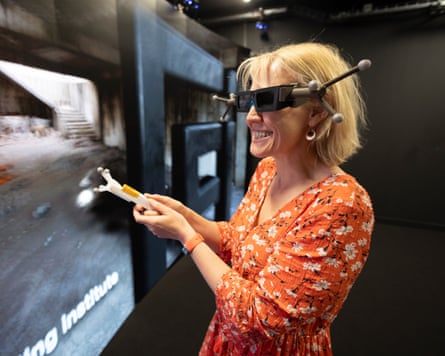
Prof Heather Kirkorian, a developmental psychologist at the University of Wisconsin-Madison who studies children’s media use, agreed that further research to address this gap was needed.
“The digital media landscape has changed a lot in recent years,” she said. “While there is a lot of speculation about potential impacts on development, there is very little research that uses the types of precise measurement proposed in this work.”
She added that AI-based tools could make it possible to analyse children’s programming at a scale that would previously have been impractical. “In the past, this kind of work required very time-intensive – and sometimes subjective or imprecise – manual coding. Now that streaming platforms have democratised content creation, young children are watching an ever-growing array of videos on different platforms. Time-intensive manual coding just can’t keep up.”
Polly Conway, senior editor at Common Sense Media, which provides reviews and age-based guidance on children’s media, said additional evidence about the impact of children’s programming on young brains could be valuable, particularly if researchers can quantify features that have previously been difficult to define.
“Just because a programme or YouTube channel is teaching the ABCs, numbers or shapes, they may not be doing it at the correct level for the intended audience,” she said.
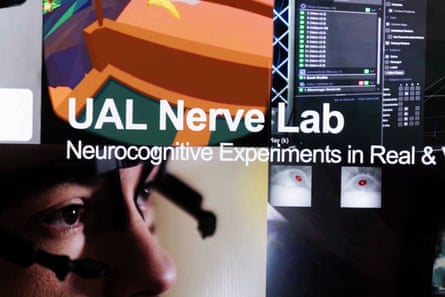
Another Nerve Lab project is using brain imaging and behavioural data to investigate individual differences in children’s comprehension of maths and identify new ways to support them.
Take fractions. Two children might answer the same question incorrectly, but for different reasons: one may not understand fractions, while another may simply struggle to suppress an intuitive response based on whole numbers – assuming that 1/4 must be bigger than 1/2 because four is bigger than two, for example.
“With conventional testing, I can see whether an answer is correct and how many seconds a child took to solve it, but it doesn’t tell me why two children have made the same mistake,” said Dr Rakhi Leela Nair, who is leading the Mathstronauts project. “One child may need help learning the concept of fractions. The other may know the rules, but need help to stop, think and inhibit the wrong answer.”
The hope is that a non-invasive form of brain scanning, called functional near-infrared spectroscopy (fNIRS), could help unpick what’s going on. Children are fitted with a neoprene cap studded with sensors that use near-infrared light to monitor activity in different regions of the brain as they play a maths game on a computer. This information, combined with their game scores, is then used in real time to adapt the game and provide more personalised support.
Children who appear to understand the mathematical concept but get the question wrong because they respond impulsively are directed towards tasks that encourage them to slow down and think more carefully before answering. Those who have not yet mastered the concept are instead given additional teaching and practice exercises designed to strengthen their understanding. The system is now being tested with seven- and eight-year-olds in a north London primary school.
Prof Roi Cohen Kadosh, a cognitive neuroscientist at the University of Surrey, described the approach as “a plausible and potentially useful direction for educational neuroscience” but cautioned that its value would depend on whether brain-imaging data could provide insights beyond those available from teachers and conventional assessments.

“The important test is whether the system performs better than existing approaches,” he said. “A teacher may already be able to distinguish between a child who lacks conceptual understanding and a child who is answering impulsively.”
He added that technologies such as fNIRS should be seen as tools to support, rather than replace, teachers. “The opportunity is to use neuroscience, psychology and AI to understand the learner more precisely and give teachers better tools.”