.png) 4 hours ago
6
4 hours ago
6
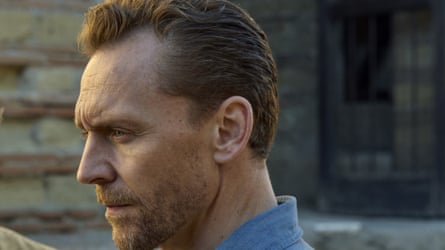
There’s such a fine line between “cheese” and “cringe”, is there not? Come, walk it with me and Tom Hiddleston in Pompeii: Out of Time With Tom Hiddleston. Let’s see how many of us survive the eruptions of embarrassment that attend our journey!
This is a National Geographic documentary-drama, which means that even the factual bits are emotionally scripted and there’s CGI money and speaking parts for the re-enactments. And there is Tom (he has looked very deeply into my eyes throughout all three episodes, so I feel we are on first-name terms now), wringing every drop of feeling from every moment with the untrammelled appetite of a born actor.
We begin! Dramatically! With Tom! Telling us – in weirdly ungrammatical fashion – that Pompeii was destroyed in “a single day that are the most harrowing anyone on this Earth has ever experienced”. Then he drops his voice. And explains that although a day is not long, it does mean there is hope for individual survival. He looks deep into my eyes, into your eyes, into all eyes, into eyes past and not yet born, and intones: “A day. A chance.”
You have been Hiddlestoned. While you recover, opening credits roll.
As the programme proper begins, informal Tom greets us. He vouchsafes us the intimate personal knowledge that he actually visited Pompeii with two friends in 1998, when he was 17. There are photos to prove it! Tom is young and happy and just like us except taller and handsomer and a born actor destined for a career that blends lucrative and prestigious work in perfect proportions! Pompeii, he confides in us and our eyes, inspired him to learn Latin, study classics at an unnamed university and pursue acting “to bring people back”. Crikey. It’s lucky he didn’t just bugger off to Ibiza for a month. His life and Britain’s cultural export ledger could have been so different.
Tom meets Prof Steven L Tuck, leader of the Pompeii Survivors’ Project and labelled in the onscreen caption as “Helpful Classicist”, which, once further experts have been cheesily introduced as “Helpful Archaeologist”, “Helpful Geoscientist” and so on, I very much enjoy. He is there to help Tom find three Pompeiians whose stories he can trace through that fateful day in AD79 when Mount Vesuvius began to rain tonnes of rock and magma down on the defenceless towns below.
Prof Tuck shows Tom some ancient records and inscriptions and Tom, who has the Latin, translates them. The first candidate they find is a boy called Lucius Avianius (which, if my own Latin does not desert me, translates as “Lucy Birdyus”). Tom looks – nay, surely is! – deep in thought. “If I’m going to tell Avianius’s story,” he says at last, raising his soulful eyes to our bog-standard eyes, “I need to combine the historical evidence with what I do as an actor. I need” – voice drop, eyes soulfuller – “to walk alongside him, through the streets in his shoes.” The Romans had the same word for “story” and “history”, he says. “Evidence and imagination intermingled,” he continues, knotting his fingers together. Consider me awed.
The second potential survivor is a bathhouse owner called Julia – mistakenly translated by Tom at first as “Julius”. Oh, Tom! But then another expert explains that women held property and power in the old days and that Julia even did it with the stigma of illegitimacy attached to her. This causes Tom to sigh in compassion and admiration and name her “Impossible Julia”. At this point, I find myself cringing so hard I nearly turn to cheese, which is an unexpected turn of events but not an entirely unpleasant sensation.
On we go, with Tom interviewing more Helpful Experts, including a disaster psychologist, who explains why people don’t necessarily run for the hills literally or metaphorically at the first sign of trouble but might try to find, say, family first. “Of course,” breathes Tom. “That’s who you’d go to. It’s who I’d go to.” I regretfully make a mark in the “cringe” column.
Tom enthuses educatedly over Pliny, stands aside graciously for more ash- and pumice-occluded re-enactments, and hopes wildly for success in the rescue mission launched by the Roman fleet from the Bay of Naples. Occasionally, though, he is overcome by the thought of the suffering unfolding over the day as the full force of the volcano is unleashed. Born actors are easily stricken. But they are very brave. They soldier on until the contract is fulfilled and the money inarguably due.
I suppose I would have to look back at my first documentary-drama presented by a born actor and profess myself entertained but exhausted by the constant prospect of the whole teetering thing collapsing into utter humiliation for all involved. But if I were younger, less cynical, a nicer person in any way, I would have loved it and it would have got me a bit more interested in the ancient world. Contract fulfilled.