.png) 3 months ago
57
3 months ago
57
There is only one correct way to extricate a 15-tonne wrought iron mast from one of the world’s most famous and beloved warships – very slowly, and with extreme care.
Which is precisely how a 30-strong team led by shipwrights and riggers set about their task on Monday night into Tuesday morning when they lifted the foremast from HMS Victory as part of a £42m conservation project.
A 750-tonne crane removed the 23-metre mast from the ship in an operation requiring power to lift the wrought iron structure but also a great deal of delicacy to make sure the fabric of the vessel was not harmed.
In the coming days, as long as the wind does not get up, two more masts – the mizzen and bowsprit – will also be craned off Nelson’s 18th-century flagship at the Battle of Trafalgar and laid on a Portsmouth dockside ready for conservation work to begin.
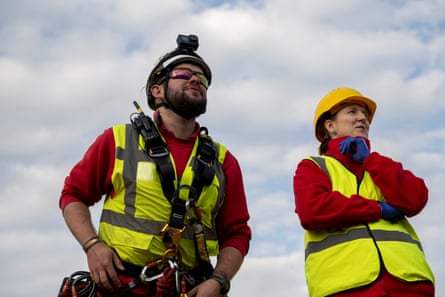
At daybreak on Tuesday, Patrizia Pierazzo, the deputy project director, hailed it as a “great start”. He said: “The team worked through some initial challenges but overall the lift process was undertaken safely and we now have the foremast securely removed from the ship.”
Andrew Baines, the executive director of museum operations at the National Museum of the Royal Navy, admitted he had been a little anxious. “I think you’re always nervous when you’re dealing with something like Victory, which is a 250-year-old structure that’s been knocked about over the years.
“These masts have not always been maintained as well as they might have been. We’re lifting historic wrought iron structures out of a very important timber historic structure. So it’s fairly complex.”
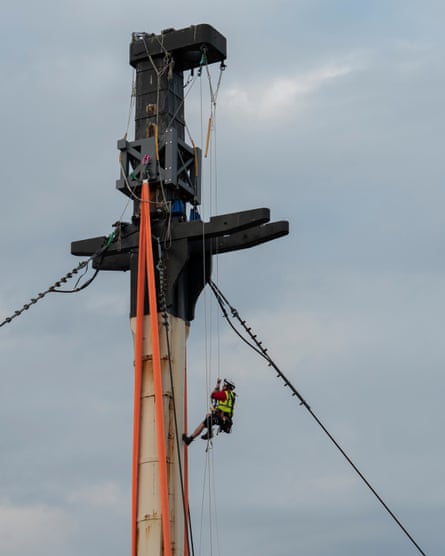
Baines said the masts were strong and designed to carry the force of large spreads of canvas. But he likened the lift to someone being yanked up by the hair. “And then swung from the vertical to the horizontal. They haven’t sat in the horizontal for 130 years.”
About 30 people worked on the operation overnight and double that number, including archaeologists, structural engineers and conservators, are involved overall.
Baines said: “There’s six months of planning gone into this process, refining and perfecting and making sure those risks to fabric have been reduced to a level as low as reasonably practical and risk to life has really been eliminated.”
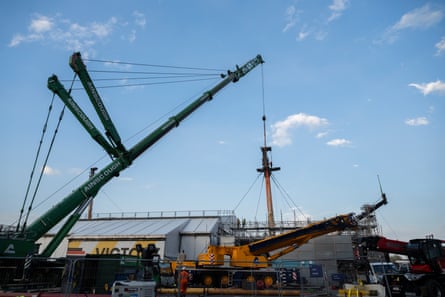
The ship’s main mast was removed in 2021 at the start of the restoration of the whole ship, which is being billed as the Big Repair. Once all the masts are down, a huge scaffolding structure will encase the vessel and remain in place until the conservation project ends in 2033.
Victory’s original masts were wooden but in the 1890s a survey concluded they were rotten and should be replaced with wrought iron masts recycled from the decommissioned frigate HMS Shah.
“HMS Shah was retired and had been sent off to Bermuda and didn’t need her masts,” Baines said. “It was decided that they were good enough to be dropped in Victory as part of a repair and a refresh. They are thought to be the only surviving iron masts of the 19th century still in use.”
It is the first time Victory has been without all her masts since then, and Baines said it would look a little odd. “The number one query that comes our way is when are the masts going back.”
He said the restoration was a slow, careful process. “It would be faster to build a new ship but we’re not involved in a piece of shipbuilding or a ship repair. These masts are important objects in their own right. They need to be protected for another century plus and that takes time.”
HMS Victory and the wider Portsmouth Historic Dockyard site will remain open to visitors as usual throughout the works.