.png) 2 months ago
42
2 months ago
42
The revelation that Trinidad and Tobago has approved the installation of a US military radar installation has stoked fears that the Caribbean could be drawn into the escalating crisis between the US and Venezuela.
Trinidad and Tobago’s prime minister, Kamla Persad-Bissessar, had attempted to allay concerns about a US C-17 aircraft that had landed in the country, claiming it was carrying marines to assist with a road construction project. She also claimed she was told that no marines remained in the country.
But images and videos later emerged of US marines at a Tobago hotel and of a radar installation on the island.
After being pressed by reporters, Persad-Bissessar admitted on Friday that at least 100 marines were in the country, along with a military-grade radar, believed to be a long-range, high-performance AN/TPS-80 G/ATOR , which US Northrop Grumman defence company said is used for air surveillance, defense and counter-fire.
The prime minister claimed the radar installation in the country, which is only seven miles away from Venezuela at its closest point, is part of a counter-drug trafficking strategy, and that she had withheld details in the interest of national security and to avoid alerting drug traffickers.
Persad-Bissessar has consistently expressed strong support for the US military buildup in the Caribbean. Since September, the US has launched at least 21 airstrikes on alleged drug smugglers in the Caribbean Sea and the Pacific Ocean, killing more than 80 people – including several Trinidadian citizens.
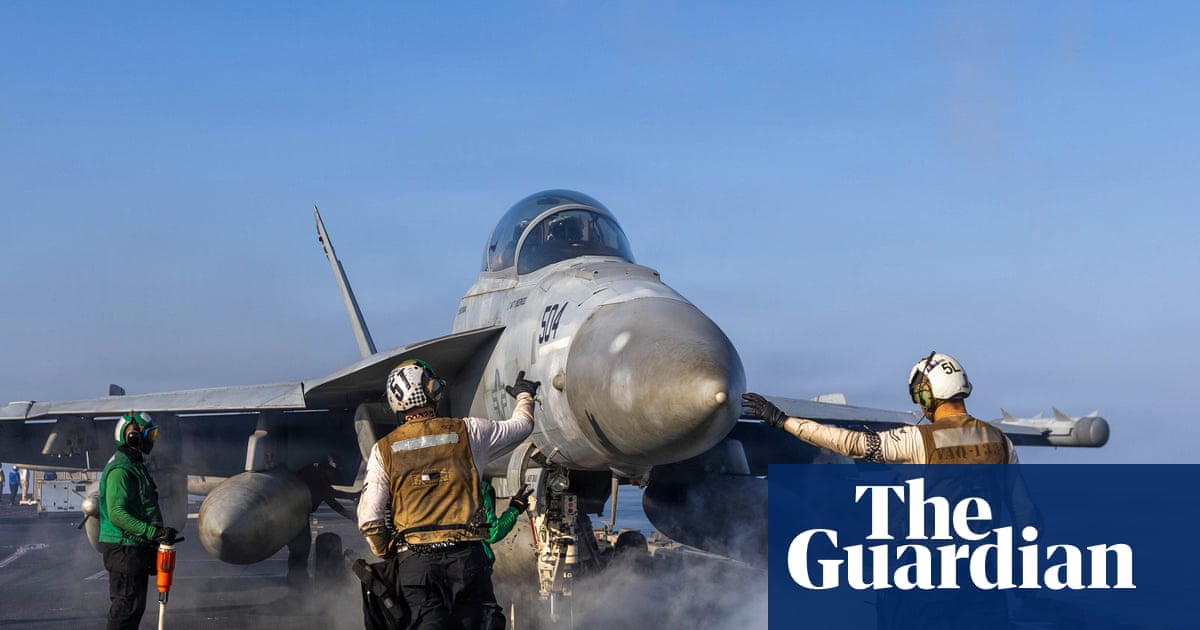
The Pentagon has also deployed the world’s largest aircraft carrier, the USS Gerald Ford, and its accompanying strike group to South American waters, in one of the biggest mobilizations of US military power in the region for decades.
But the prime minister has rejected claims the radar installation was to support the US in its pressure campaign against Venezuela.
Trinidad and Tobago’s minister of defence, Wayne Sturge, has said that the country “is not a launch pad for any military operations”.
But Marvin Gonzales, an opposition MP and former national security minister, accused the prime minister and her ministers of misleading the country. “They have sold the soul of the nation for a mess of portage,” he told the Guardian.
He added: “Caribbean ancestors … are all turning in their graves for what has befallen our beautiful Caribbean.”
Echoing his sentiments, David Abdulah, political leader of Trinidad’s Movement for Social Justice, accused the prime minister of being “complicit in the extrajudicial killings in the Caribbean Sea”.
“With the installation of a US military radar in Tobago it is now directly involving the country in the US war plans. Our international reputation has been tarnished as the government unapologetically sides with the agenda of Washington,” he said.
Caribbean political analyst Peter Wickham warned that Persad-Bissessar’s action risked taking the region back to the cold war era, arguing that Persad-Bissessar was using the “war on drugs” to justify her alliance to Trump’s administration.
“She is trying to suggest that it is a small thing. If you have a … US administered military radar in Tobago, that’s essentially a military installation. It has to be maintained by American officers who will have a presence on the island. They’re not going to just drop it and leave. It’s something that has to be defended because, of course, it is also susceptible to attack,” he said.
Adding that the militarisation of the Caribbean could be detrimental for tourist-based economies in the region, he said: “I’m concerned that Donald Trump is planning some initiative against Venezuela and he has a willing and able ally in Persad-Bissessar.”
For Amery Browne, opposition senator and Trinidad and Tobago’s former foreign minister, the concern is that the prime minister “is taking deliberate steps” to draw the country into a war that would make it a target and put “precious people and resources at unnecessary risk”.
He added that the prime minister is “loudly and publicly cheerleading … what is quite obviously a regime-change agenda in addition to the [airstrikes on boats] that are quite clearly in violation of international law.”