.png) 1 hour ago
5
1 hour ago
5
Brian is live
Brian is now answering your questions about the Edinburgh fringe.
Key events
Is the Edinburgh fringe really ‘Edinburgh’?
Sausolito asks: Is there any ‘Edinburgh’ in the ‘Edinburgh Festivals’, apart from the good old Tattoo of course?
Brian:
Yes, there is but probably not as much as there ought to be. The Traverse Theatre remains one of the go-to destinations on the fringe, and the work they stage has a local bias. (Even if one of this year’s Trav stars, Elaine C Smith, is very much more Glasgow than Edinburgh). The Stand Comedy Club showcases a lot of Scottish standup talent. And the Made in Scotland showcase gives a decent profile to a lot of wider Scottish performance.
All of that said, a lot of Scottish acts don’t feel very welcome or celebrated at their own festival. I watch a lot of comedy acts on the fringe who seem to assume their audience is generic English/British rather than Scottish, which I find graceless. I wish more audiences saw their visit to the fringe as an opportunity to engage with the indigenous culture, which is there if you look for it.
What shows will make twentysomethings love the festival?
Catski asks: My two kids (early 20s) don’t know anything about the festival. What fun/amazing/striking shows for the 22 and 23 August should I book to hook them on returning for life?
Brian:
I am an evangelist for the Edinburgh festival, and would love to have the killer answer to this question that binds your kids to the fringe for all time. But part of the fun of approaching the fringe is that (notwithstanding all those prefestival ‘shows not to miss’ articles…) none of us really know what the must-see shows are going to be by late August.
I’d say take your kids, throw yourself into all the street performance, the free shows in every nook and cranny, the overwhelming sights and sounds of this beautiful city at festival-time, go see a cross-section of comedy/theatre/dance/music performance (selected partly at random, partly at the suggestion of infallible experts like myself). Then point those twentysomethings towards any of the city’s never-sleeping night spots and let the fabled ‘spirit of the fringe’ do the rest.
What does it take to get five stars?
Achhca asks: Hi Brian! Reviews at the Fringe seem to have extra weight to them, especially the exact star rating - four stars can go on the poster, three stars may as well be zero. What are your criteria for stars, and is it informed by the knowledge that a 4+ will end up stapled on posters across the city?
And brion asks: Why have you offered so few five star reviews? What is your rubric for a five star score?
Brian: I try to think about star ratings as little as possible. My job, as I see it, is to write something insightful, respectful and hopefully entertaining about a show; and to express all I have to say about that show in words. At a stretch, I recognise the usefulness, to some, of then appending a star rating to that review. But I wish we didn’t have to. It’s reductive and dumb. My own kids ask me after I’ve seen a show ‘what did you give it?’ rather than ‘what did you think of it?’ That makes me sad.
But: let’s not take ourselves too seriously! There was once, reputedly, a critic who never gave three-star reviews because he knew no one would read them. But most shows are three-star shows – i.e. good, enjoyable, competent if unexceptional. I’ll try to err on the side of enthusiasm whenever I can. God knows my own work has received enough two- (and lower) star reviews over the years. I know how depressing that is.
I’m not bothered whether my ratings or quotes are used on posters. To me, a five-star needs to be a real pearler, a show that you’ll never forget. And let’s not pretend they come along too often. It should feel special, and I don’t want to devalue that currency (too much). Comedy, particularly at the fringe, is awash with hype, and stars, and (while fully acknowledging my own complicity with all of it!), I don’t think stars should be scattered around like confetti on acts who’re merely quite good.
Does it matter what the critics think?
Bumscissors asks: Do reviews still matter? (And yes, I regret my choice of username)
Brian: Matter to whom? They matter to me. My experience of art (books, movies, TV, whatever) is so massively enriched and improved by cross-referring it with the experience of reviewers. As soon as I close the last page of a book, I jump online and read what other people have said about it. I love to read what cleverer or better informed or just different minds to my own think about the shows and paintings and songs that I’ve experienced too. I find it weird that anyone might think otherwise.
Whether reviews matter in terms of an artwork’s success or failure (and who gets to define that?!) is less clear. Depends on the show. Depends on the circumstances. At any rate, reviewers are part of an ecology that responds to the art and entertainment that gets put out into the world, and one of the many factors that may influence how those artworks are received, understood and savoured. And the world would be more drab and undistinguished without them. (But then, I would say that…)
Any advice for young comedians?
TheHound asks: What advice would you give to young people who want to be comedians?
Brian:
Gig. Get up on stage at open mic nights, and give it a go. Over and again. Most comedians would say that it x-hundred gigs’ worth of trying and failing and refining before your comic voice fully emerges (assuming it ever does…) and you learn how to operate in dialogue with the room. Arguably more than other art forms comedy is a skill that can’t really be developed anywhere other than in dialogue with an audience.
So: perform! And go watch lots of comedy too. And don’t try and be anybody but yourself.
Are writing and delivery equally important?
JamesMoriarty asks: Can a good performance rescue less-than-stellar material, or are writing and delivery equally important?
Brian:
Yes, of course a good performance can (substantially) redeem sub-par material. Hard to quantify the relative importance of writing and delivery, and the dream of course is that both are top-notch and working in perfect harmony.
But I’ve enjoyed plenty shows by acts who blaze with performing flair even when their material is so-so. And likewise, shows by acts who write brilliant jokes, even if they don’t sell them as vivaciously as other performers might.
Can material be separated from the artist delivering it?
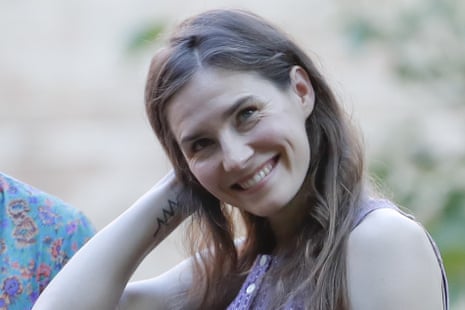
GlenWright1975 asks: Do you think Amanda Knox’s show will be judged fairly and without bias? Over the years we’ve all built up an opinion of her, and I wonder if reviewers/audiences can separate that from the quality of her material?
Brian:
It’s hard bordering on impossible to review without bringing some biases and preconceptions to the process. The best reviewers will at least be aware of these and try and acknowledge or mitigate them. It looks (judging from the blurb) like Amanda Knox’s show is going to be upfront about her public history, which brings that history even more into the scope of what the critic will be writing about.
I don’t think it’s the critic’s job, or certainly not their most interesting one, to adjudicate on the rights and wrongs of whether Knox should be performing the show in the first place. But if that question, and others relating to what we know of her life, feel like they’re genuinely affecting how one experiences the show (and how it feels it’s landing in the room), it would be disingenuous of the reviewer not to address that.
Who should've won a Comedy Award but didn't?
Pgetz1 asks: What act or show(s) have been most unfairly overlooked for a Comedy Award nomination in your years of covering the festival?
Brian:
How long have you got?! Last year gave us a prime example, when the American comedy/cabaret act Cat Cohen had the most fantastic show in town by a mile, and was overlooked. (The fact that no one is entirely clear on the award’s eligibility criteria doesn’t help.)
The phenomenon isn’t unique to Edinburgh comedy, but choices made by committee are often compromise choices, and acts that are brilliant but idiosyncratic find themselves sidelined. At any event, the majority of the incontrovertibly great acts and shows I’ve seen at the fringe over the years have been pipped to or wholly overlooked by the awards – or, as sometimes happens, offered the sop of the so-called Panel Prize.
Examples include Bo Burnham’s Words Words Words in 2010; Rhod Gilbert’s 2008 show The Award-Winning Mince Pie; Natalie Palamides’ hot-button and hilarious Nate; and one of the all-time great sketch shows, Pappy’s Last Show Ever, in 2012. Then there’s peak Doug Stanhope. Kate Berlant. The once-seen, never-forgotten Hans Teeuwen. Flight of the Conchords. The Pajama Men. Adrienne Truscott’s extraordinary feminist show (and Panel Prize recipient) Asking For It. Some were nominated; none won.
If populism is popular, where is all the populist comedy?
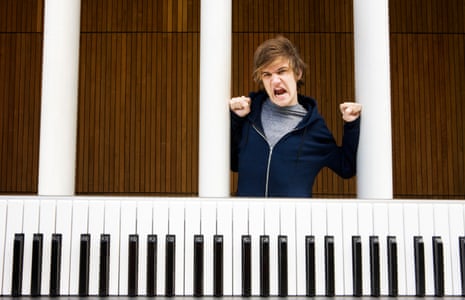
Wateroffaducksback asks: If populism is so popular, why is there so little comedy about populists? By definition it is not niche but they all seem to be comedians and tick all the boxes - exposing hypocrisy, pretension, injustice, absurdity, irony…
Brian:
If by this question you mean, ‘where’s all the right-wing / populist comedy?’, well, there’s plenty of it around – although the Edinburgh fringe isn’t the best place to find it. Jimmy Carr, Ricky Gervais, Dave Chappelle – some of the biggest comedy acts in the world pander to populist sentiment. And that’s before you even mention the Jim Davidsons and Roy Chubby Browns beloved of the Reform brigade.
Even on the fringe, there’s an upcoming generation – the likes of Vittorio Angelone, or his slight senior Geoff Norcott – whose ‘saying the unsayable’ material knowingly flirts with populist ideas. And there are regular visits by old-school comics (Bobby Davro was one recent example) whose shtick would be right up Nigel Farage’s street.
So, the idea that comedy is in some kind of left-wing stranglehold is a nonsense, although I’d agree that the fringe, where the acts (and audiences) tend younger and more idealistic, self-selects against that kind of comic.
Is the fringe now just for visitors and ‘the industry’?
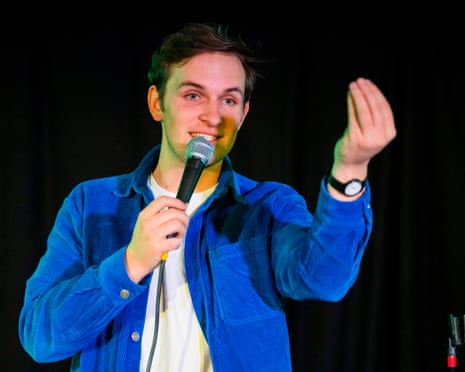
WolfFlow asks: Having lived in Edinburgh for more than 30 years, is it safe to say that the Fringe is for tourists and “the industry”?
Brian:
I don’t believe that’s the case. I grew up in Fife, my family are still there, and I’ve got family and friends in Edinburgh too. They all go to fringe events every year, as I did when with my pals when I was a teenager.
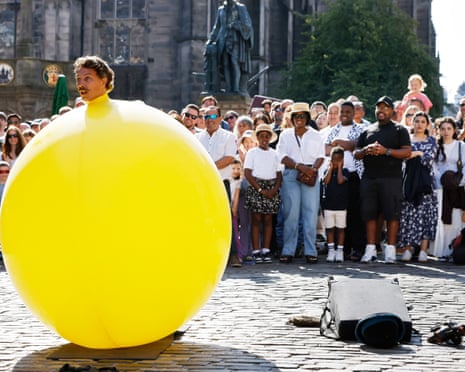
In my experience, it’s an unhelpful myth, usually propagated by people with little love for the arts, that Edinburgh residents don’t like the fringe. Some don’t, I’m sure. But many do, and are proud and delighted that their city hosts the biggest and best performing arts festival in the world.
Brian is live
Brian is now answering your questions about the Edinburgh fringe.
Welcome to the Conversation
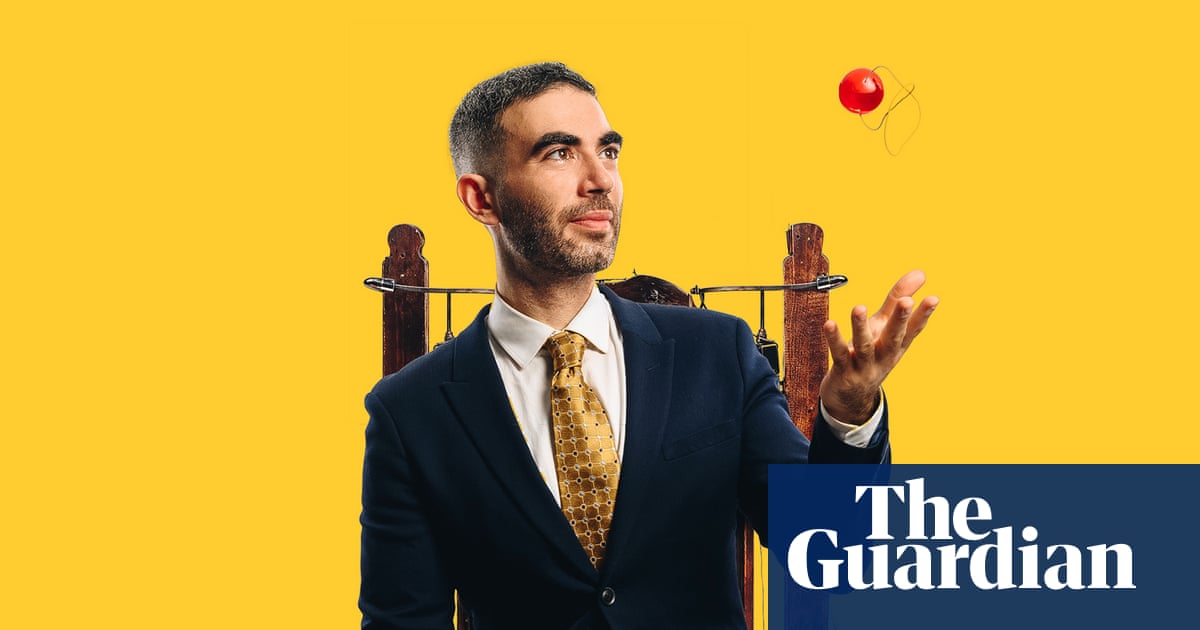
Join us at 1pm (BST) on Tuesday 4 August, as the Guardian’s comedy critic Brian Logan answers your questions about Scotland’s singular performing arts festival.
In his many years of covering the fringe, Brian has seen it change and grow, and break stars and shows alike. But in a Guardian column four years ago he wrote that “in recent years, my enthusiasm has been increasingly smothered by caveats: that the fringe is too absurdly expensive for artists, to a degree that excludes many; that it’s insufficiently diverse; that it can be overwhelming, gruelling and lonely for many of the people taking part” and that it “must change or die”. Have the past few editions changed his mind? And this year, with dynamic pricing being trialled, will there be questions about who the fringe is for?
Please post your questions for Brian below now.