.png) 3 months ago
36
3 months ago
36
Peter Mandelson’s associations with senior figures in China, Russia and Israel were among the concerns raised by the UK’s vetting agency when it concluded he should be denied clearance, multiple sources have told the Guardian.
Mandelson’s links to China’s minister of finance, Lan Fo’an, the sanctions-hit Russian oligarch Oleg Deripaska and a former Israeli military intelligence general, Tamir Hayman, were all flagged by the agency as areas of concern shortly before he took up his post as the UK’s ambassador to the US, the sources said.
They added that United Kingdom Security Vetting (UKSV) also noted Mandelson had a very close relationship with a fourth individual, who is British, that could be compromising.
Another concern identified by the vetting agency, the sources said, was a £1m loan Mandelson received to invest in an Israeli startup. And UKSV noted separately, the sources added, that he appeared naive about the risk that historical relationships with other individuals could be exploited.
These concerns were all contained in a nine-page UKSV summary of Mandelson’s vetting file in January 2025, according to the sources, all of whom spoke to the Guardian on condition of anonymity.
They said the concerns contributed to the agency’s conclusion that Mandelson posed a “high” overall concern and its recommendation to the Foreign Office that his developed vetting clearance should be denied.
After being briefed on the contents of the UKSV summary file, the then Foreign Office permanent secretary, Olly Robbins, granted Mandelson security clearance anyway.
Emily Thornberry, the Labour chair of the foreign affairs select committee, said the disclosures made her “very angry”. She added: “It becomes quite clear why UKSV saw [Mandelson] as a subject of concern who shouldn’t be granted clearance.”
Ed Davey, leader of the Liberal Democrats, said that responsibility for hiring Mandelson despite the concerns lay with Keir Starmer, saying that “glaring warning signs were wilfully ignored”.
The Conservative shadow foreign secretary Priti Patel said: “These shocking revelations underline just how reckless Keir Starmer’s decision to appoint Peter Mandelson was. A man with these links to Russia and China should never have been handed one of our most sensitive diplomatic posts.”
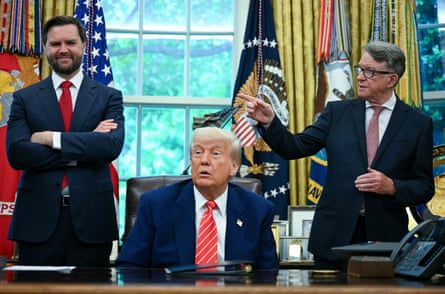
The Guardian’s decision to reveal details of some of the concerns flagged by the vetting agency comes after a powerful parliamentary committee said the government was failing to fully comply with a parliamentary motion known as a humble address ordering the release of all papers relating to Mandelson’s appointment.
In an extraordinary intervention earlier this month, the intelligence and security committee (ISC) publicly accused the government of withholding some Mandelson vetting documents and implementing redactions “far too broadly”.
During a debate in parliament last week, MPs from across the political divide criticised the Cabinet Office’s handling of the process, warning that public trust was being undermined by ministers who were challenging the sovereignty of parliament. Two MPs openly accused the government of a “cover-up” and one threatened to table a motion holding ministers in contempt.
The second tranche of Mandelson files is expected to be released in June. Ministers have said it will be one of the largest document releases of its kind in history.
However, multiple sources familiar with the Cabinet Office’s work said they believed officials had been heavily redacting and even seeking to withhold files to avoid political embarrassment. One source said UKSV’s nine-page summary, much of which the ISC believes should be released to the public, was due to be withheld by the government in its entirety.
The Guardian’s revelations will put pressure on Starmer’s government to release all relevant files and explain what “mitigations” were put in place to manage the risks in relation to Mandelson, which appear to have been wide-ranging.
Ministers will also be pressed to explain if there was any harm done to national security during the seven months Mandelson was in Washington. Those questions will be most acute in relation to Lan and Deripaska, two senior figures enmeshed in the power structures of hostile states.
Starmer sacked Robbins last month after the Guardian revealed that Mandelson had been given clearance despite UKSV recommending it should be denied. Starmer said it was “unforgivable” and “staggering” that the senior civil servant did not tell ministers about the agency’s findings.
Robbins decided to grant Mandelson clearance on 29 January 2025, hours after his department received the UKSV file.
In evidence to MPs last month, Robbins claimed UKSV regarded Mandelson’s case as “borderline”. He repeatedly declined to tell the foreign affairs select committee what concerns UKSV had about Mandelson, although he did say they did not relate to his relationship with the convicted child sex offender Jeffrey Epstein, the issue that led to Mandelson’s sacking in September 2025.
Mandelson’s security vetting began on 23 December 2024, three days after Starmer announced him as the pick for US ambassador.
The purpose of national security vetting is not to identify wrongdoing by an individual or their associates, and inclusion in a vetting document does not signal misconduct of any kind. Instead, officials gather information and conduct background checks to enable the government to make an “objective risk assessment”.
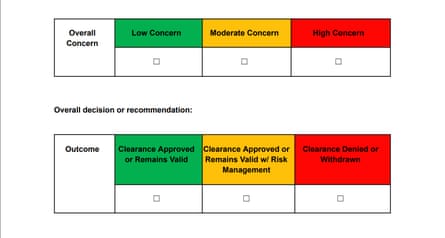
Applicants are asked to disclose detailed information, including about personal finances, business connections and associates. Officials in UKSV then identify areas of concern, which can be ranked as low, moderate or high. Multiple sources said those concerns would then be listed in a nine-page UKSV summary file, which concludes with UKSV’s overall concern and a decision or recommendation.
Mandelson’s summary file was completed on 28 January 2025 and sent to the Foreign Office via a “secure portal” the next day at 1.52pm. Hours later, after being briefed on the contents of the summary file by a security official in his department, Robbins decided to grant Mandelson clearance – with, he has since said, mitigations to manage the risks.
Ties to China’s finance minister
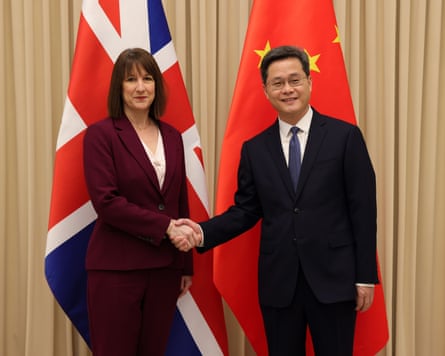
Lan was appointed to the powerful role of finance minister in China in October 2023 after a career in the Guangdong department of finance and a stint as the provincial Communist party leader in Shanxi.
It is not clear how and when Lan and Mandelson became associates. According to sources, UKSV noted that the pair spoke several times a year but had not done so for 12 months before Mandelson’s vetting process began.
While the vetting process was under way in January 2025, Mandelson is understood to have received sensitive Foreign Office briefings on China. Philip Barton, Robbins’ predecessor as permanent secretary, told MPs last month that the briefings “must have included” the UK government’s audit of its policy on China.
Mandelson’s interest in China dates back to his time as an EU trade commissioner, when he made several trips there to negotiate trade policy and tariffs. He also courted China contacts through his now defunct lobbying company, Global Counsel, although it is not known whether Mandelson’s relationship with Lan had a commercial dimension.
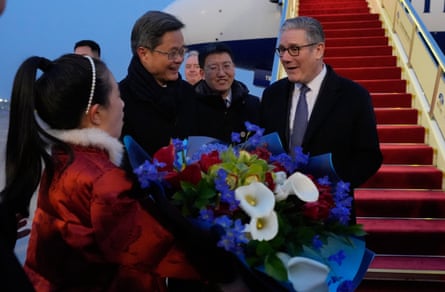
Since his elevation to finance minister, Lan has played an important role in talks between China and the British government. Lan greeted Starmer on the runway in Beijing in January 2026 as he made the first visit to China by a British prime minister since 2018. Lan held meetings with the chancellor, Rachel Reeves, in China in January 2025, when Mandelson’s vetting was ongoing, and again in Washington in April 2025, by which time Mandelson was in post.
The government will now be asked whether Mandelson was involved in any way in those meetings and, if so, how any conflict of interest was disclosed and managed.
Friendship with Russian oligarch
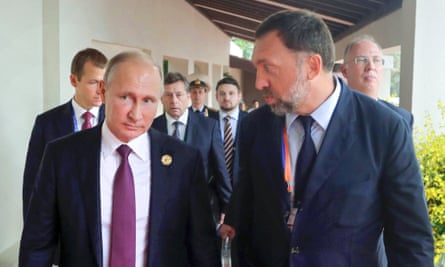
Mandelson’s controversial friendship with Deripaska has been known publicly for almost two decades. It dates back to before a notorious gathering on the billionaire’s 73-metre (238ft) yacht off the coast of Corfu in the summer of 2008.
Deripaska, once known as “the king of aluminium” because of his vast holdings in the metal commodity, is one of Russia’s wealthiest oligarchs.
After the yacht gathering, it was reported that Mandelson was “dripping pure poison” about the then prime minister, Gordon Brown, to another guest of Deripaska, George Osborne, the then shadow chancellor.
Mandelson’s relationship with Deripaska is believed to have begun before the gathering on the yacht and continued long after.
Files released by the US Department of Justice show that in 2010 Mandelson sought Deripaska’s help in an attempt to secure a visa for Epstein to travel to Moscow. The emails, first reported by Bloomberg, show Mandelson and a Global Counsel colleague referring to Deripaska with codes such as “OD” and “Mr D”.
In 2016, Mandelson and Global Counsel helped executives of the taxi-hailing company Uber access Deripaska’s party at the World Economic Forum at Davos, according to a leak to the Guardian of Uber’s files.
In 2018, the US imposed sanctions on Deripaska, citing his close ties to the Russian state and allegations of money laundering, racketeering and extortion, which he denied. After Russia’s full-scale invasion of Ukraine in 2022, Deripaska was hit with sanctions by the EU and UK over his links to Vladimir Putin and his regime.
According to sources, UKSV noted that Mandelson regarded Deripaska as a friend and had remained in occasional contact with him, although the pair had not spoken for about 10 years.
Links to Israeli spy chief and tech firm
Mandelson’s link to Hayman, one of Israel’s former top spy chiefs, was not publicly known. According to sources, UKSV noted that Mandelson spoke with Hayman bimonthly.
As the head of Israel’s military intelligence directorate between 2018 and 2021, Hayman oversaw a powerful apparatus of surveillance, espionage and cyberwarfare. He has previously claimed that on his watch the military intelligence directorate influenced the US’s decision in 2020 to assassinate the Iranian military commander Qassem Suleimani.
Today, Hayman is the director of the Institute for National Security Studies, an influential security thinktank in Tel Aviv. How Mandelson came to be associated with a former Israeli spymaster is unclear.
The other Israeli connection identified by UKSV relates to Mandelson’s stake in Moon Active, an Israeli company behind a lucrative and widely popular mobile phone game, Coin Master. The company, reported last year to have revenues of more than $2bn, has a reputation in Israel’s tech sector for being secretive.
Mandelson did declare his Moon Active investment in the House of Lords register of interests in July 2019. However, there is no reference in that declaration to a £1m loan used to pay for any shares, an omission that raises questions about whether the disclosure rules were complied with.
UKSV noted that the loan was given to Mandelson by a businessman, according to sources, and was used to acquire shares in the company that were due to be sold in 2026.
It is not known whether Mandelson disclosed the loan, or his associations with Lan, Deripaska and Hayman, in a separate Foreign Office conflict of interest form. The document, which has yet to be made public, requires officials to disclose financial interests and personal relationships that could raise a conflict of interest.
Why we have revealed the vetting details
The Guardian’s decision to publish details of UKSV’s concerns about Mandelson was taken after carefully weighing the public interest case for doing so.
In February, parliament passed the humble address ordering the government to release all papers relating to Mandelson’s appointment. The motion said the most sensitive documents should first be referred to the intelligence and security committee, which would decide whether redactions on grounds of national security or international relations should be made before public release.
However, in the weeks afterwards, there was a debate at the highest levels of officialdom over whether documents about Mandelson’s vetting should be sent to the ISC.
Those discussions have since been confirmed by the Cabinet Office permanent secretary, Cat Little, and Robbins, who told MPs he was among those arguing that the files should remain in a “hermetically sealed box” for national security reasons.
It was only after the Guardian revealed on 16 April that Mandelson had been given clearance against the advice of UKSV, and Robbins was sacked, that key documents were shared with the committee.
A source familiar with the ISC’s work said “a flood of materials” was released to the committee after the Guardian’s story, including the crucial nine-page UKSV summary file.
The Cabinet Office published a template of that file, while Starmer, addressing parliament, revealed some of the Mandelson file’s contents, noting that UKSV officials had ticked two red boxes to denote “high” overall concern in relation to Mandelson and a recommendation of “clearance denied”.
However, there have been growing concerns in recent weeks that the government is still withholding materials it is obliged to release, and indications it may even block the public release of the key summary file.
On 15 May, the nine-person committee of trusted MPs and peers took the highly unusual step of going public with its concerns. It said the government was withholding vetting documents despite not having the authority to do so.
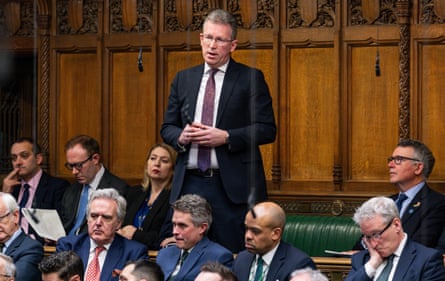
During a debate in the House of Commons on 19 May, Jeremy Wright, a KC and former attorney general who serves as the committee’s deputy chair, revealed that ministers were withholding “some documents related to vetting in their entirety” and applying redactions unrelated to national security or international relations, using grounds such as commercial sensitivity of third-party data. He said the issue could pose a challenge to “parliamentary sovereignty”.
Thornberry said in the debate that she shared those concerns. “My committee and the ISC are trying our best to get to the truth, and we are having obstacles put in our way,” she said.
One government source familiar with the Cabinet Office’s redaction process said officials had been looking for legal arguments that would enable them to abide by the letter of the humble address while “bypassing its spirit”.
During the parliamentary debate, Darren Jones, the prime minister’s chief secretary, who is overseeing the Cabinet Office’s release of the Mandelson files, defended the government’s right to make its own redactions and withhold some of the most sensitive vetting files from parliament.
He told MPs the second batch of Mandelson files would be released after parliament returned from recess in June.
Jones denied accusations of a cover-up. “If there was any suggestion of a cover-up, I would not be standing at this dispatch box to defend the process,” he said. “I would resign.”
The Cabinet Office, the Foreign Office and representatives for Mandelson, Robbins, Lan, Deripaska and Hayman have all been contacted for comment.
Additional reporting by Harry Davies