.png) 3 months ago
41
3 months ago
41
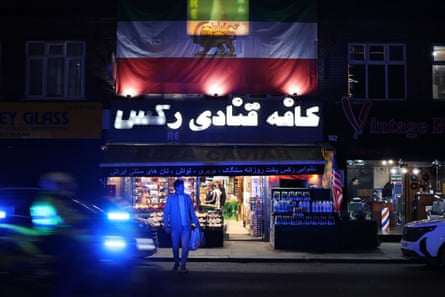
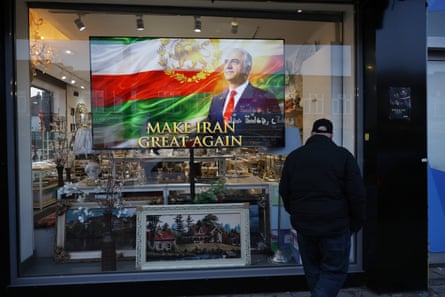
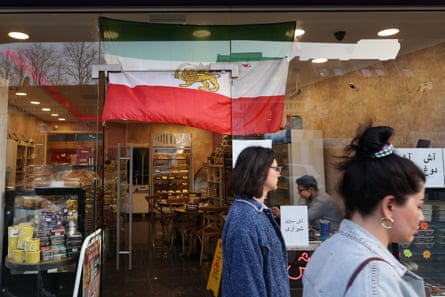
Sara* arranged slices of watermelon on a plate and poured mint tea into glass mugs. Outside her window, in North Finchley, lies the stretch of London known affectionately as Little Tehran, home to one of the UK’s largest Iranian communities.
“When the bombing happened, the streets here went crazy,” she said. “People were covering themselves in flags and chanting for the king to come back.”
But when the celebrations started, Sara’s family stayed home. “Even though Khamenei was a terrible man, it felt barbaric to celebrate his death,” she said, her voice clear and hard. “I couldn’t dance.”
She paused, staring hard at the roses and candles on the kitchen table. “The community’s emotions have been overtaken by their elation: it’s drowning out the sense.
“I’m relieved Khamenei is gone, of course I am,” she rushed to clarify, “But I feel a sense of doom over what is happening and what will happen next: America has a repertoire of starting fires that it doesn’t put out.”
Despite – or rather, because of – the waves of euphoria sweeping the Iranian diaspora, Sara will only talk on condition of anonymity.
“The diaspora is very loud,” she said. “Families at the school gate wave flags and chant, and I can’t join in. Our buildings aren’t being blown up around us; our neighbouring countries aren’t being invited in to attack us; we don’t live alongside separatist groups who could now start a civil war, or have to fear that our young people will seek vengeance.”
She even worried the celebrations could be premature: “Is the US really going to be able to get rid of the whole regime?” she asked. “Because otherwise, it will come down even harder on the people.”
Her father, Geff*, nodded. The 72-year-old worked in both the shah’s and the Islamic Republic’s governments until he was able to leave the country with his young family in 1987.
He, too, is conflicted. “I have two different feelings: no one likes their country to be attacked by another nation but the Iranian people have no choice: how else can we get rid of a regime that kills 40,000 of its own young people when they’re protesting peacefully?”
Geff has no illusions about Donald Trump’s motivations for starting the war. “We know the USA isn’t coming to help us; they’re coming to help themselves,” he said. “But we have the same interests and whatever they take in payment for giving us our freedom, there will still be something left – which is more than the nothing we have now.”
Although he is disappointed by the British government’s attitude towards the regime, Geff still feels love for the country that has given his family sanctuary.
But for Kimia Movahedi, the war has fundamentally shifted her allegiances: “I never previously thought of Trump as a good character but now he has my love because he is the only leader who has stood up to the regime.”
Studying for her second degree in the UK, the 28-year-old was born in Iran and lived there between the ages of 11 and 18, before moving first to Canada and then to the UK.
“I’m looking on this as a rescue mission even though I know it’s a war,” she said. But the fact that the rescue mission had to take the form of war is, she said, an indictment not just on the regime – but on the international community.
“This war is, in part, a consequence of how the world has appeased the regime,” she said. “I’ve heard people here shouting ‘Ayatollah Starmer, shame on you’ and I agree with them.
“The UK has been supporting the regime by engaging in diplomacy with them instead of putting them on the terrorist list, by letting them buy valuable properties in the UK and come here for medical treatment,” she said.
Navid Tafagodi, who came to boarding school in the UK in 1977 as a 13-year-old, was even more blunt. “I am having second thoughts about leaving the UK, even though it has been so good to me,” he said. “The appeasement of the British government towards Iran has been unbelievable.
“I understand the interests of the US and Israel aren’t our interests but it is very much a case of ‘your enemy’s enemy is your friend’,” he said.
Back in North Finchley, Sara offered more mint tea and shook her head at the celebrations outside. “They can dance if they want,” she said quietly. “But they’re not the people who will live with the consequences of this.”
* Names have been changed