.png) 3 months ago
67
3 months ago
67
The chief executive of Shell saw his pay jump more than 60% to almost £14m in 2025 despite a slump in profits at the oil company and prospects of rising pump prices related to war in the Middle East.
The package for Wael Sawan, who took the top job in 2023 and has refocused the company on fossil fuels, rose from £8.6m in 2024 to £13.8m in 2025.
The increase, which was announced in Shell’s annual report, triggered an immediate condemnation from pay campaigners, who said people were unlikely to “look favourably” on Sawan’s remuneration package given fears around another rise in energy and fuel prices linked to the US-Israeli war on Iran.
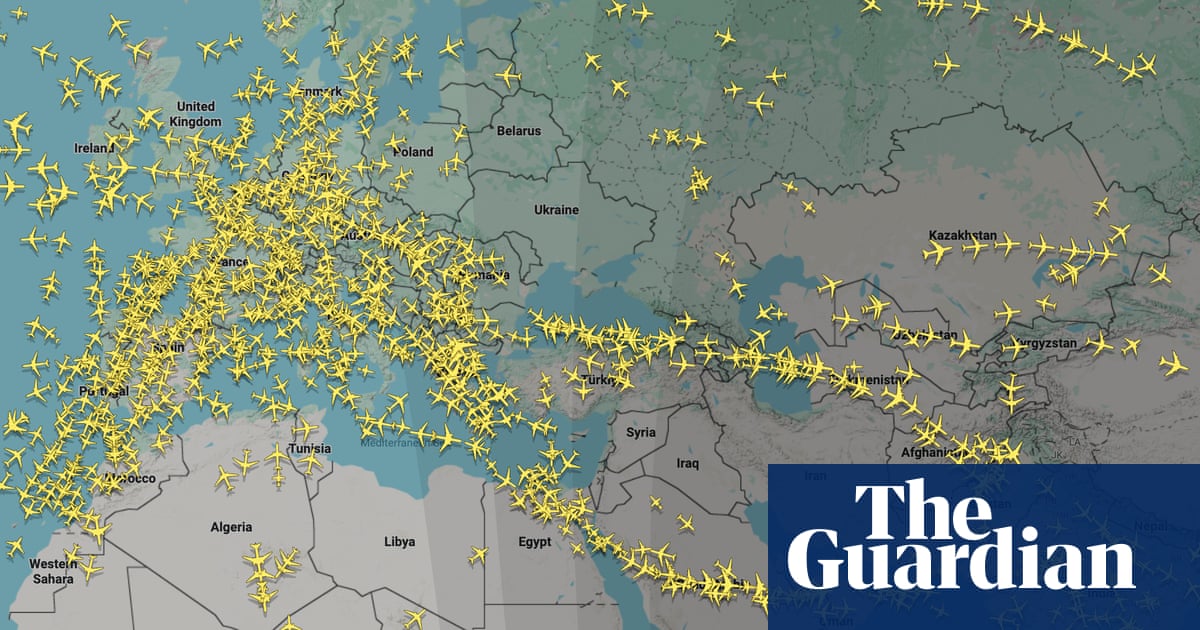
Oil prices briefly topped $100 a barrel again on Thursday as widespread Iranian attacks on energy facilities in the Middle East overshadowed a vast release of government reserves, which was ordered by the International Energy Agency on Wednesday.
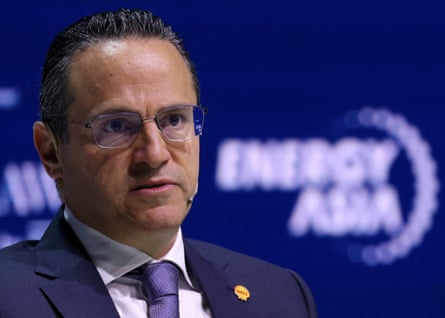
Sawan received £1.9m in his fixed salary, pensions and benefits but most of the bumper package came from £11.8m in bonuses.
This included a £2.7m bonus for the year and a £9.1m share award linked to longer-term business targets.
It is the first year that reflects Sawan’s full pay as chief executive, owing to the three-year vesting period for share awards. In 2024, his share awards included two years as chief executive and one year as a director on the company’s executive committee.
The huge package for 2025 came even after Shell reported a 22% drop in annual profits. Adjusted earnings were $18.5bn (£13.6bn), compared with $23.7bn in 2024, because of weaker oil prices last year.
It marked the third year in a row that Shell reported falling profits since making almost $40bn during the 2022 energy crisis.
Andrew Speke of the High Pay Centre thinktank said: “As consumers fear another rise in energy and fuel prices, this time linked to conflict in the Middle East, few are likely to look favourably on the chief executive of Shell receiving a substantial pay rise.
“The increase appears to be part of a broader pattern among the largest FTSE 100 companies, who are showing less restraint in executive compensation,” he said.
“Those in the City argue that higher pay is necessary for British firms to compete with their US counterparts, with little sign the government intends to challenge this trend.”
Sawan’s package will rank among the highest in the FTSE 100 group of Britain’s blue-chip companies.
Last year, the current and former chief executives of the engineering company Melrose Industries, Peter Dilnot and Simon Peckham, were the highest paid across the FTSE 100. They took home almost £59m between them, mostly because of long-term incentive plans.
Pascal Soriot, the chief executive of the pharmaceutical company AstraZeneca who spent the previous two years as the FTSE 100’s highest-paid boss, was pushed into third with £14.7m. However, he could soon return to the top spot.
Sawan’s pay is still much lower than that of US oil executives. Darren Woods, the chair and chief executive of ExxonMobil, was paid $44m in 2024, while Mike Wirth, his counterpart at Chevron, was paid $32.7m.
Since Sawan became chief executive of Shell in 2023, he has refocused the company on its fossil fuel production, with its share price since rising by more than 30%.
Shares in Shell have also risen in recent weeks, as the Iran war triggered an increase in global oil prices. The international benchmark Brent crude rose back above $100 a barrel on Thursday, although it pared back some of its gains, to a rise of 6% to about $98.
A Shell spokesperson said: “The CEO’s pay is commensurate with his position at a major global energy company and one of the FTSE’s largest companies.
“Around 80% of the CEO’s target total package is linked to performance. Since he took over as CEO at the start of 2023, Shell has delivered strong financial and operational performance and outperformed its peers with total shareholder returns of 19% per year.”