.png) 2 hours ago
4
2 hours ago
4
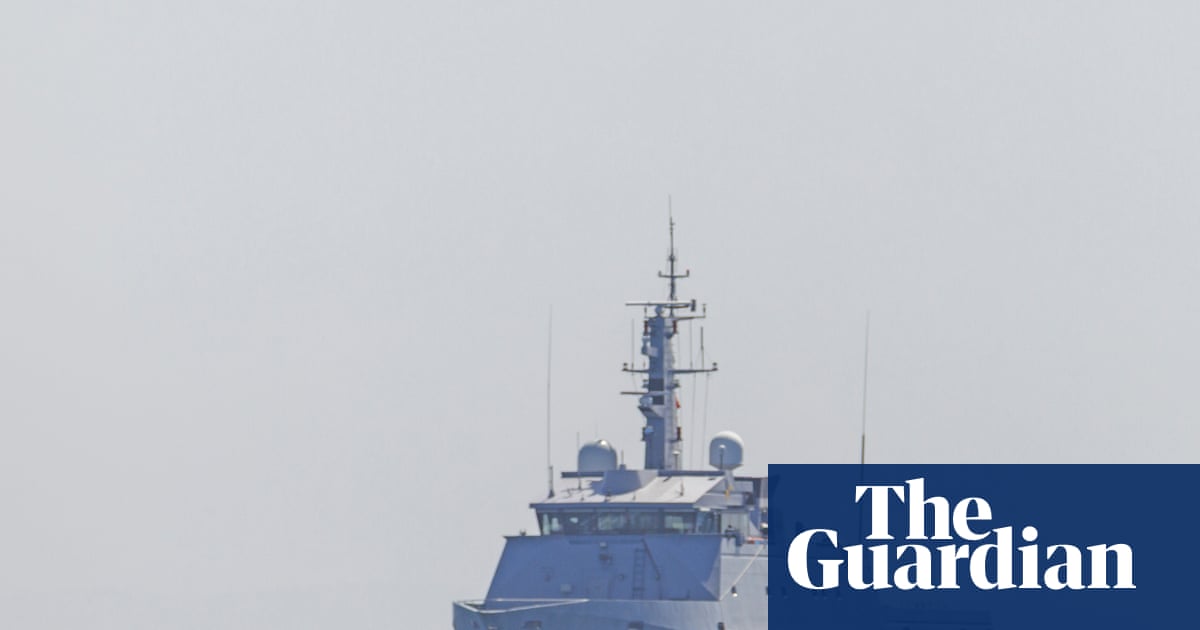
The dramatic footage last Thursday of thousands of migrants entering Spain’s north African enclave of Ceuta generated an online frenzy among the far right. And the alarmist rhetoric was also evident in the European mainstream, as EU leaders wasted little time attributing the chaotic scenes to Spain’s liberal immigration policies.
In a letter organised by Italy and Denmark, and signed by 22 EU heads of government, they appeared to blame the crisis on Spanish prime minister Pedro Sánchez’s recent programme to regularise undocumented migrants, which received more than a million applications. They argued that Europe must “[address] all policies that can serve as pull factors”.
This reaction displayed a striking lack of solidarity with a fellow EU member state. In an angry response, Sánchez called out the “prejudice, misinformation and attacks” of many of his peers. Yet his defiance, as well as the subsequent attempts by Brussels to display a united front, could not dispel the image of his government’s isolation during an acute emergency on its southern border. The Spanish prime minister might have taken a more prominent role on the world stage over the last year, above all through his opposition to the US war on Iran, but the Ceuta crisis also points to the narrowing margins for his brand of progressive foreign policy.
In reality, Sánchez’s pursuit of accommodation with Morocco’s repressive monarchy – particularly over its occupation of the disputed territory of Western Sahara – stands at odds with his otherwise principled agenda on Palestine, Ukraine and Iran. And Ceuta is at the heart of this concession on values. Though unprecedented in scale, this is not the first time such an incident has taken place on the highly militarised border separating Morocco from the exclave.
The EU’s response to the last mass incursion in 2021 was notably different. Then, after 10,000 mostly Moroccan citizens arrived in a 48-hour period, the European parliament closed ranks, adopting a resolution that accused Morocco of endangering their lives so as to exert “political pressure against Spain”. There seems little doubt that last week’s events, constituting a humanitarian tragedy in which at least 141 people died, also bore the hallmarks of such coercive diplomacy.
Reports that Moroccan border guards offered little resistance during the influx, and even encouraged migrants to cross, followed a familiar playbook. Over the last decade, the Moroccan government has periodically relaxed border enforcement during moments of diplomatic tension with Spain, provoking mass crossings as a means of exerting pressure.
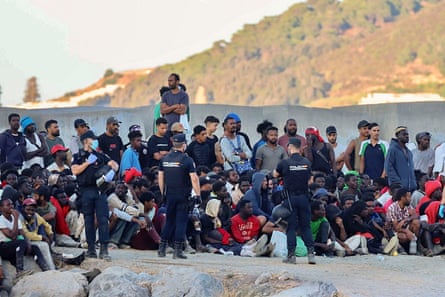
Five years ago, Europe recognised that dynamic. This time, much of the political debate has instead focused on point-scoring against Spain’s centre-left administration. For Sánchez, this was a sharp reminder that the rightward shift in the EU has left him operating as a progressive outlier. Italy’s Giorgia Meloni is not the only leader to treat the crisis as an opportunity to press for a harder line on migration. Those fomenting internal EU divisions simply underscored Europe’s weakness as a geopolitical actor: when faced with an apparent hybrid attack against a member state, it was unable to coordinate a collective response.
The fact that Sánchez’s government was caught off guard also suggests a degree of complacency over the potential consequences of its refusal to allow the US access to its airbases during the Iran war. In the months prior to the border surge, prominent Republicans had already urged the Trump administration to retaliate by backing Morocco’s territorial claims to Ceuta, and Spain’s other north African exclave, Melilla. The combination of this sharp decline in US-Spanish relations, and Morocco’s increasing importance as a regional partner for the Trump White House, may have emboldened the country’s regime to once again target the border.
after newsletter promotion
Alongside Trump’s threats to cut off trade with Spain, his administration has also intervened more directly in Spanish domestic politics in recent months. Just weeks after Sánchez made his stand on Iran, the US Department of Homeland Security supplied messages from a cloned phone to Spanish corruption investigators that appeared to suggest former Socialist prime minister José Luis Rodríguez Zapatero may have lobbied for a pandemic-era loan for a Spanish airline with links to Venezuela. Few in Madrid doubt the political motivation for this intelligence transfer, and the ensuing political storm killed most of Sánchez’s momentum from his popular anti-war stance – as Zapatero, a key ally, was put under formal investigation.
The coordinated pile-on from Trump and the wider Maga universe over the Ceuta crisis also raises the prospect of further efforts from Washington to target Sánchez politically, ahead of next year’s Spanish general election. Any such efforts would find a willing domestic partner in the Vox party, which has stood apart from much of Europe’s populist right by remaining uncritically aligned with Trump, even during the Iran war. Vox is Spain’s fastest-growing party since the 2023 general election, is polling in the high teens, and will play a pivotal role in any future rightwing alternative to Sánchez’s government.
With that threat rumbling in the background, the Spanish PM must also navigate relations with Morocco in the wake of its latest act of coercion. Rather than publicly confronting Rabat, Sánchez has prioritised restoring cooperation and quickly containing the crisis, with the vast majority of the estimated 72,000 arrivals returned to Morocco within 24 hours.
Yet this pragmatism carries obvious risks. Spain’s last major confrontation with Morocco in 2021-22 ended in a historic concession, as Sánchez abandoned decades of Spanish neutrality on Western Sahara to back Morocco’s plan to incorporate the former Spanish colony as an autonomous region within the Moroccan state. Last week’s events suggest this strategy of accommodation has failed to deliver the long-term stability in relations which Madrid sought. Sánchez’s leftwing coalition partner, Sumar, is now demanding a tougher line – including that Spain refuses to co-host the 2030 World Cup with Morocco.
Morocco’s exact motives for acting now remain open to debate. The most plausible explanation lies in Sánchez’s visit to Algiers 10 days earlier to seal Spain’s rapprochement with its key gas supplier, Algeria, which is also Morocco’s chief rival over Western Sahara. The Ceuta crisis was probably the Moroccan regime’s reminder that any attempts by Madrid to rebalance its north African policies remain subject to its influence over migration flows. It also likely reflects Morocco’s longer-term ambition to advance its claims on Ceuta and Melilla, at a time when control of maritime checkpoints like the strait of Gibraltar have acquired renewed geopolitical importance.
At the height of the crisis, Spain’s combative transport minister, Óscar Puente, posted on social media that he wanted “Spain to be a sovereign nation in an interconnected world, not a subsidiary of Trump or Netanyahu”. With much of Europe’s political class lying supine before Trump, Sánchez has been the most outspoken western leader willing to challenge Washington, not just on Iran, but also in rejecting the 5% defence spending target, pushing the EU to end its association agreement with Israel, and forging closer ties with China and nations of the global south. This is not an index of Sánchez’s radicalism so much as his wager that Spain has more to gain from adapting to the new geography of global economic power than it does from clinging to the old Atlantic order. Ceuta, however, is a reminder that such a wager is fraught with danger.
-
Eoghan Gilmartin is a freelance journalist who has covered Spanish politics for Jacobin Magazine, Tribune, Novara Media and Open Democracy