.png) 2 months ago
67
2 months ago
67
I like year-end list season. I like an opportunity to remember and reflect on the records that stuck with me over the course of a year – especially when there is a chance to recommend something that others may have overlooked. I like looking through friends’ favourites for albums that I missed completely, and making a big listening queue. I like following along as critics attempt to determine the year’s “best”, even when I end up yelling into a group chat about how wrong they all are. I like it because it all requires looking back, racking your brain and processing your year in listening. It requires thinking.
This year, as Spotify Wrapped takes over social media feeds again, I am struck by how the whole concept seems to discourage that critical practice for something more passive. It nudges listeners away from deep consideration and towards accepting a corporate-branded scorecard reflecting a very specific perspective on musical value. It encourages music fans to believe that the records they streamed the most must be the ones they liked the most, which is surely not always the case.
What is lost when we entrust Spotify’s systems of data collection and interpretation to do our year-end reflections for us? What ideas and recaps are we not writing and sharing when we hand over that labour to tech companies who would prefer to automate our thinking? What playlist are you not making when you share the one Spotify has made for you?
As with other ways in which convenience culture infects music – from personalised playlists to prompt-based audio generation and beyond – it makes sense that some fans would receive their results, see the “share” button, and dutifully comply. But what’s at stake is a sense of our own musical memories, and our own personal archives of our years. When our own thoughts and recollections aren’t written down they can simply get lost. When we just accept that what a streaming service tells us about our music taste is true, there is much that we are not remembering, learning or celebrating about the music of our years and lives.
Spotify Wrapped now feels like just another example of something personal and precious that is being automated away from us; another example of a supposedly unbearable task of thinking and writing being “offloaded” in order to make life more frictionless. It is an especially urgent consideration in 2025, a landmark year for consumers being sold on this sort of cognitive offloading via consumer-facing AI. It can feel as though every day there is some new start-up prompt-based surveillance product claiming to ease the daily burdens of reading, writing, researching, summarising or brainstorming – but this is the work that helps shape how we think, how we make connections, what we remember and what we forget. It may sometimes feel unpleasant and it may require friction, but friction is where connections get made, and working through that process is a part of staying sharp and curious and in relationship with the world around us. Without those points of friction, the degeneration of critical thinking just continues.
There is much to be said about how corporate decision-making shapes public memory when it comes to music – not just because marketing budgets often determine what becomes popular but because corporate strategy decides the very metrics that dictate what has value. But Wrapped does not just use corporate metrics to communicate what’s important to the market – it uses the same logic to make claims about what’s important to you. It reinforces its own logic into not just taste but one’s sense of self.
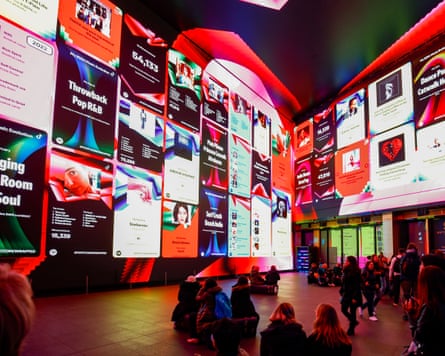
And there are other reasons to find the whole Wrapped idea generally troubling – and not just Wrapped but the similar year-end recap campaigns that other streaming services have launched to mimic it. These are essentially meme-like advertising campaigns for companies that notoriously pay musicians penny fractions. And they are only possible due to user-surveillance practices. As for Spotify specifically, in a year in which the biggest music streaming company has made headlines for its outgoing CEO’s investment in military AI technology and the subsequent artist boycotts, its deals with major labels to build generative AI products, big changes in its leadership and its running of ICE recruitment ads, there will likely be much Wrapped-synchronised commentary on the state of streaming – and the varied reasons users will find for opting out this year.
So what will we opt into instead? This year, rather than letting a streaming service tell you what records were important to you simply because you played them the most on one app, consider taking the time to write a list based on what you actually connected with. Share it if you feel like it – even if it’s just a notes app screenshot or a scribbled, handwritten list that you photograph and share with a caption. Even if you only text or email it to some friends. Or if you prefer, write it in a notebook just for yourself and your archives.
I can already hear some of the defeatist replies this idea is likely to receive: “But the people who post their Wrapped were never going to make their own lists anyway!” To which I say: “Why not?” It may require some research but at least you can determine the parameters for yourself. I would suggest a list of records you feel may have been overlooked, or a list of your favourite local releases. Or how about a list of the most exciting live shows you saw, or the most surprising new-to-you music from the past? The possibilities are limitless. Corporations take so much: let’s not let them have this too.