.png) 2 months ago
60
2 months ago
60
Sunderland have not so much defied expectations as torn them to shreds. You have to go back 20 years to find a promoted side that has picked up as many points after 13 games – Wigan Athletic in the 2005-06 season. Newly promoted sides simply do not start like this anymore.
In fact, the three promoted teams in each of the last two seasons have all ended up facing relegation, and playoff winners fare even worse: seven of the last 11 clubs to come up via the playoffs have gone straight back down. Promoted clubs are supposed to wobble, scrap, cling on; Sunderland have politely declined that script.
It’s worth remembering that Sunderland were in League One in 2022, finished 16th in the Championship in 2023-24, and lost their last five games last season, finishing the campaign with just 76 points – the joint-lowest points tally of a playoff winner for more than a decade. The other promoted teams, Leeds and Burnley, picked up 100 points. Sunderland’s return to the top flight for the first time in eight years felt as if it owed more to destiny than anything else. They won their playoff semi-final thanks to Dan Ballard’s goal in the 122nd minute and completed the miracle when teenager Tom Watson curled home a winner in the 95th minute of the final.
Even in those heady moments of jubilation at Wembley, reality demanded caution. The fate that befell Ipswich, Leicester and Southampton last season served as a stark reminder of the gap in quality between the Premier League and Championship. Since the 1996-97 season, the total points tallies won by the three promoted teams have dropped below 100 four times; three of those have come in the last four seasons. The Premier League is fast becoming an exclusive club. Breaking in is one thing, but staying in is another entirely.
Yet, here we are. More than a third of the way through the season, Sunderland are sixth in the table, above Manchester United and Liverpool, just eight points behind league leaders Arsenal, and just four short of the tally that would have guaranteed survival last season. Had you told Sunderland fans a few months ago that they would take points from Arsenal, Chelsea and Aston Villa in their first 13 games they would have dismissed it as unthinkable.
Against all odds, Régis Le Bris has created harmony in a squad that welcomed 15 new players in the summer. Such upheavals do not usually lead to positive results – Leicester, Southampton and Ipswich spent a combined £276.5m the summer before they were relegated – but Sunderland’s recruitment team got it spot on.
The fresh faces have slotted into the team seamlessly, none more so than new captain Granit Xhaka. When the 33-year-old isn’t feeding off the energy from the crowd at the Stadium of Light, the midfielder is the heartbeat of the side. He provides defensive security with his flawless reading of the game, works tirelessly to cut off passing lanes and hoists his side up the pitch on the transition. His work has translated into results too. Xhaka has four assists this season; only Mohammed Kudus and Bruno Fernandes (both five) have more.
Sunderland have been solid at the back, conceding just 13 goals – the fifth best defensive record in the league. The Stadium of Light has become a fortress. The Black Cats are unbeaten in their first seven home games, a feat no newly promoted side has managed since Blackburn achieved it 24 years ago. Only Arsenal and Brighton can match Sunderland’s flawless home record this season.
Spectacular as it may be, this sort of form is not unprecedented on Wearside. Cast your mind back to the 1999-2000 season when Peter Reid’s side picked up 27 points from their first 13 games, a haul no newly promoted side has topped. A 4-0 defeat to Chelsea in their opening game suggested they would face an uncomfortable season but it turned out to be nothing more than a wake-up call. Much like Sunderland this season – who lost to Burnley in August – they were spurred on by the early setback. Kevin Phillips caught fire, scoring 30 league goals, and Sunderland finished seventh.
However, the record of Reid’s side is not the best performance by a newly promoted team. Ipswich Town finished fifth in the 2000-01 season after returning to the Premier League via the playoffs. It was a heady time for fans at Portman Road. Marcus Stewart outscored Thierry Henry, Michael Owen and Teddy Sheringham (take note Wilson Isidor) as George Burley was voted manager of the season. The following campaign the Tractor Boys were hosting and beating Inter in the Uefa Cup.
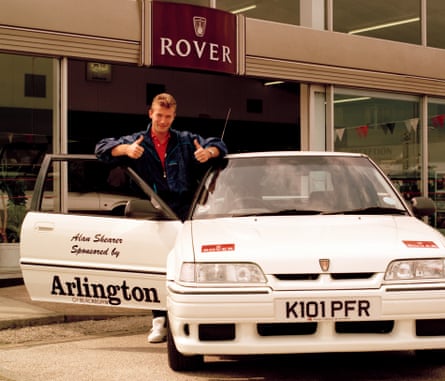
Blackburn’s story must be irresistible to romantic Sunderland fans. Having secured promotion via the playoffs, they wasted no time in showing they meant business in the 1992-93 season. Jack Walker lured Kenny Dalglish out of semi-retirement and plucked a young Alan Shearer from Southampton for a British transfer record fee of £3.6m. It worked. Blackburn finished fourth – what would be a Champions League finish these days – and went on to win the title two years later.
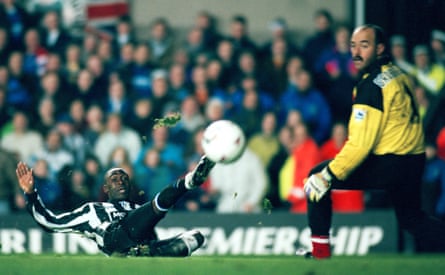
Newcastle experienced a similarly meteoric rise when they were promoted to the Premier League in the 1993-94 season. Peter Beardsley returned to the club, reuniting with manager Kevin Keegan and establishing a prolific strike partnership with Andrew Cole. They scored 55 league goals between them – Cole’s 34 landing him both the Golden Boot and PFA Young Player of the Year award – as Newcastle finished third in the table and qualified for the Uefa Cup.
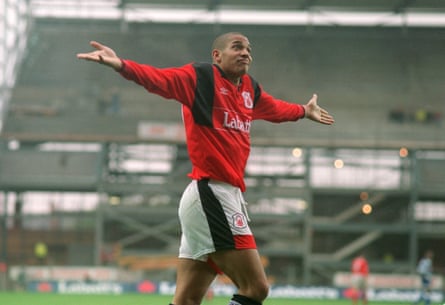
No Premier League team has beaten that third-placed finish from Newcastle but Nottingham Forest did match it the following season. After crashing out of the Premier League in Brian Clough’s farewell season, Forest bounced back at the first time of asking, with forward Stan Collymore dragging them up like a one-man rescue mission. Forest picked up where they left off in the top flight in 1994-95, going unbeaten in their first 12 games and pushing on to a third-place finish, qualifying for the Uefa Cup in the process.
In an era when stories of newly promoted sides storming the top flight feel like distant fairytales, Sunderland’s start this season feels like a throwback to an era when underdogs could shock the giants. Who knows what Le Bris’ team can achieve.
This is an article by WhoScored