.png) 1 month ago
55
1 month ago
55
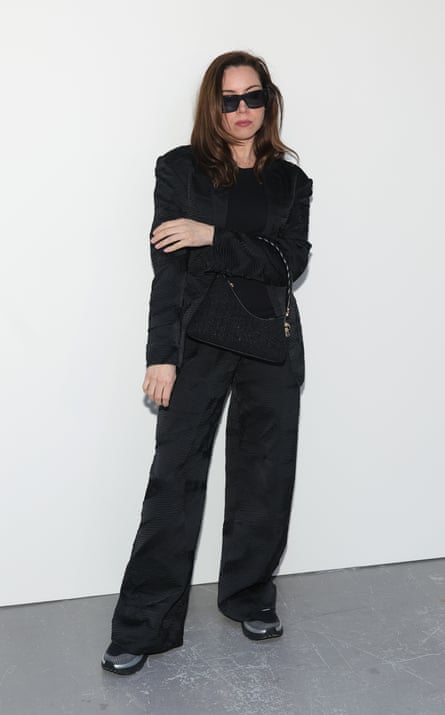
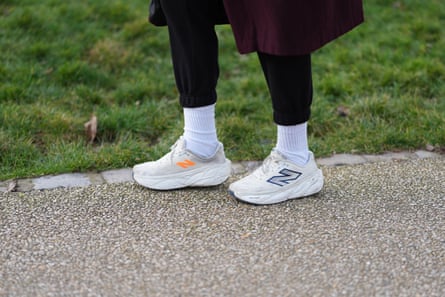
Floaty foam-based footwear has been spotted on celebrities for years, from Aubrey Plaza in Hokas and Harry Styles in New Balance to Zendaya’s ongoing deal with On running shoes.
A desire for “practical functionality” has driven technical sportswear to street pavements, says streetwear reporter Lei Takanashi from the Business of Fashion in New York.
“Hoka, one of the largest purveyors of these types of shoes, elevated them among fashion consumers by releasing lifestyle sneakers with brands from Marni to Comme des Garçons,” he says.
Another influence is the rise of “running club culture”, says Lucila Saldana, footwear and accessories strategist at trend forecaster WGSN.
While the trend is firmly mainstream, its staying power is “tied to deeper behavioural shifts”, Saldana says. Hoka and On, in particular, have popularised stacked sports shoes as everyday “symbols of a wellness-driven, effortlessly functional lifestyle”.
John DiZane, senior director of buying at sports retail chain Foot Locker in Australia, says his customers are demanding more footwear innovation, “sometimes faster than the brands are moving”. He points to high-performance sneakers’ responsive foam, high stack, carbon or nylon plates as desirable features. “Certain consumers feel really comfortable using that kind of footwear for their every day, not just for when they’re running,” he says.
Nike was the first to create a lightweight “super shoe” – the ZoomX Vaporfly 4%, released in 2017. Its carbon-fibre plate helps propel runners forward, reducing energy loss through the midsole. Eliud Kipchoge, the only person to run a sub-two-hour marathon, was wearing modified Vaporflys in his record-breaking 2019 race. Now, nine out of the 10 fastest marathon runs in history have been achieved by athletes wearing super shoes.
Super-padded lifestyle sneakers often share features with super shoes. They may have carbon-fibre plates, soft rebounding foam or a “rocker” design, for example.
However, Eoin Doyle, an exercise physiologist and lecturer at Australia’s Macquarie University, says these shoes can be unstable. “It’s one of the biggest things I’d caution about: how high a midsole is and how thick the midsole is,” he says. High midsoles decrease lateral stability, “and that’s a bit of a risk, especially for rolling an ankle”.

Not all foamy sneakers are built the same, says Daniel Bonanno, Associate Prof in podiatry at La Trobe University. “Some high stacked shoes actually have a wider base and foams that are of a higher density,” he says. “They’re still highly cushioned, but having that more stable foam creates a more stable platform. So you get the benefits with a lower risk of instability.”
Trampoline-like foam, Bonanno says, can reduce pressure on your feet. “There are people that have certain types of foot pain that are aggravated by high pressure, so they’re probably going to see a benefit from a soft, high stack shoe,” he says.
People who pronate (roll their feet roll inward when they step) or supinate (roll outward, placing weight on the outer part of their feet) may find that ultra-soft foam exaggerates issues as it tends to collapse over time, says Bonanno. “It makes the mechanics worse in either direction,” he says, which “can put more stress on tissues that are not acclimatised to those levels of stress”.
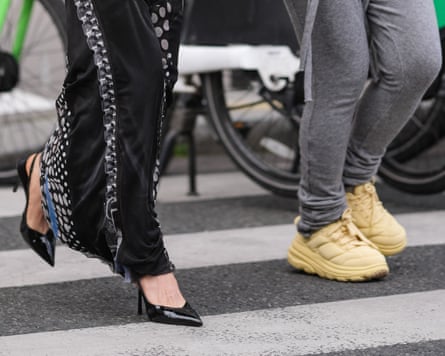
Foamy sneakers are usually very lightweight – “if you’ve ever tried one or held them in your hands, it almost feels like a feather,” says Doyle – but that lightness can mean “they’re not really designed for longevity”.
“If it’s got a very, very lightweight upper it’s not going to be as durable, and I think that’s probably going to be less suitable for your everyday walker.”
Doyle cautions against spending big on carbon-fibre plated styles too, as some only last around 500km. Most other sneakers will last longer, he says.

Ali Ball, journalist at Runner’s World UK, says: “If lifespan is measured in optimal performance, then research does suggest that the foams in super shoes lose their edge more quickly than daily trainers.” She points to a 2023 study by the University of Castilla-La Mancha, which looked at the foam in advanced footwear. They found Eva styles, a type of foam used in both Hoka and On shoes, “retained approximately 67% of their initial shock-absorbing capacity after 160 to 240km, but less than 60% after 400 to 800km”.
There hasn’t been a lot of research on soft, padded styles worn for everyday use, Doyle says. With super shoes, runners have reported lower muscle soreness and better recovery after runs, but recent studies report increased pain felt by slower runners and increased loading in the knees.
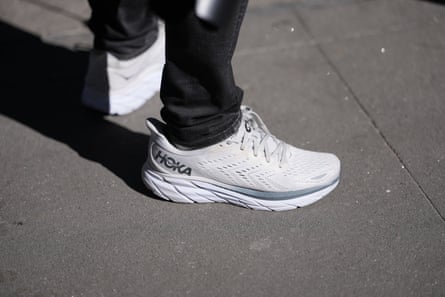
“There’s probably a lack of understanding about what the shoe is actually designed for,” says DiZane. “Carbon-plated fast running shoes probably shouldn’t be used for lifestyle.”
But he also says “a lot of brands are doing a really good job of … having the same foam for something that’s more wearable day to day”.
Bonanno’s advice is to switch up your footwear, no matter the style. “If you can have variety in your shoe choices, that’s generally a good thing because different shoes apply different stresses to different parts of your body. It avoids overloading,” he says. “The only caveat would be if someone has an injury and a certain shoe is providing a lot of relief. Then I’d say keep wearing that shoe until you overcome that injury.”
This is good news if what Zendaya wears matters for how you spend your money: the Euphoria star has moved on from stacked styles.
Saldana says fashion in general is shifting towards low profile and retro runners: “There’s a return to embellishments and romantic details in sportswear.”
On 16 April, Zendaya launched her third shoe for On, made in collaboration with stylist Law Roach, called Cloudnova Moon. It’s a low profile, crisscross ballerina style with velcro straps – the antithesis of a bulky, foamy sneaker.