.png) 3 months ago
53
3 months ago
53
The road to the “nation of immigrants” has radically changed course over the past months for those hoping for a new life in the United States. A series of executive orders by the US president, Donald Trump, has drastically shifted migration across the Americas.
-
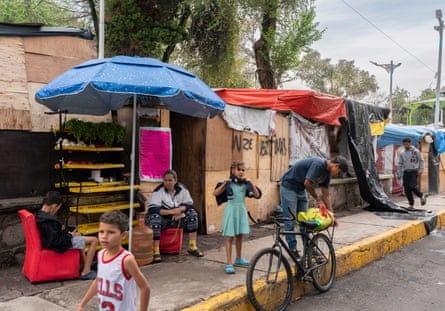
In the early morning in Mexico City, people living at Vallejo informal migrant camp get ready for the day. It is one of the last of six camps formed to house growing numbers of people arriving mostly from Venezuela and Honduras after changes to US legislation in 2022. Other camps were recently dismantled
Asylum seekers were once able to reach the US from Mexico and be allowed to make their case before a judge. Now, many have found themselves stuck in Mexican cities, fearful of returning to their home countries and unable to continue north.
-
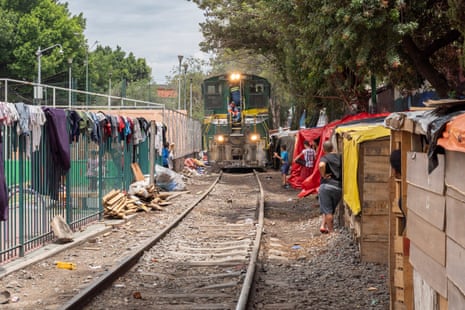
The shelters at Vallejo camp are built along a railway track, where a train that hauls rubbish to a dump passes three times a week
Under Trump’s “big, beautiful bill” that passed in Congress in July, the US is allocating nearly $50bn (£37bn) to the border wall, and spending billions more on other anti-migration policies.
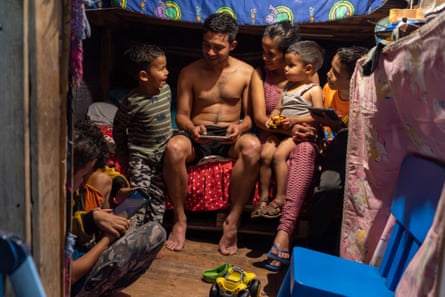
Edicson Parra, his wife, and their four children left Venezuela in August 2024 hoping to reach the US, and are now in Vallejo camp in Mexico City. “I wanted to go to the US,” says Parra, “but the American dream no longer exists for anyone; it’s a lie. Right now, they’re persecuting migrants – they may be good people, they may be bad people, but everyone is paying.”
-
Edicson Parra, his wife, Andrea, and their four children share a small room in the camp that serves as their home
Parra, who arrived with his family in December 2024, works on a construction site earning the equivalent of $20 a day, while his wife cares for the children. Like many such families in Mexico, they have lost hope as they find themselves in limbo.
“It’s hard to survive in Mexico,” Parra says. “Here, it’s the same as in Venezuela in some ways – because we are migrants and we don’t have rights”
-
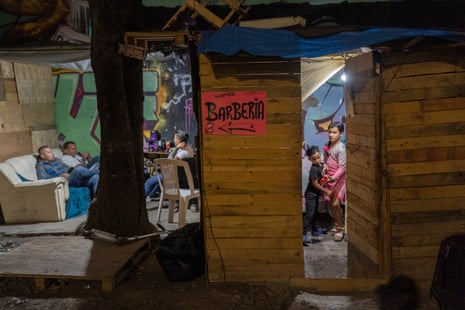
Matias and Sophia (right) wait inside their home while their father, Ronel Salazar, cuts hair at the migrant camp at night. Ronel, his wife, Genesis, and their two children have been out of Venezuela for 7 years and were living in Peru when they decided to attempt to reach the United States. The family was briefly held hostage in Veracruz for a fee required to cross cartel territory. After months of travel, the family has been in the camp since April and plans to apply for asylum in Mexico and stay in Mexico City.
-
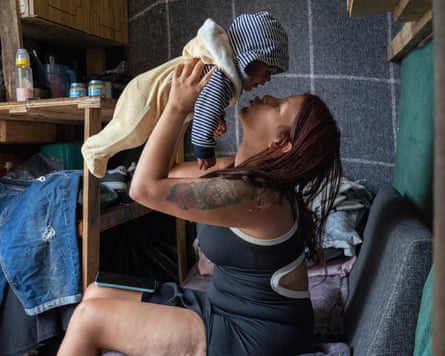
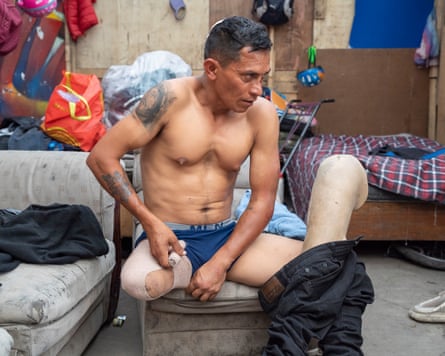
Left: Angela Ortegana Garboza, 24, with her seven-month-old child, Dylan. Right: Andrés Castro, who lost his leg trying to reach the US 10 years ago.
Angela Ortegana Garboza, 24, is a single mother from Venezuela. She was sexually assaulted twice while crossing the Darién Gap before she arrived at the same camp as Parra’s family in May. She has two more children in Venezuela and hopes to reach the US to send money to her family back home.
Another of the camp’s residents is Andrés Castro, who lost his leg falling from the notorious train known as “the Beast”, a well-known route for migrants heading to the US border, when he tried to reach America 10 years ago. After being sent back to Honduras to recover, he has returned to Mexico with the same dream, and sells candy at a traffic stop to earn money.
Many of the migrants at the camp have been waiting for months to put their case at the border, but in January last year, the Trump administration terminated the Customs and Border Protection app, which facilitated appointments for migrants seeking asylum. Now, they have no way forward.
In 2022, thousands of Venezuelans were deported to Mexico after the Biden administration expanded Title 42, a public health law used during Trump’s first term to deport migrants during Covid. With cooperation from the Mexican government, migrants were bused to cities throughout Mexico, including various districts in Mexico City, with little to no infrastructure in place. With the influx of people, a lack of resources provided by the government, and overwhelmed shelters, six makeshift camps were set up in Mexico City, housing about 3,000 people, according to the Central Border Monitoring Group.
-
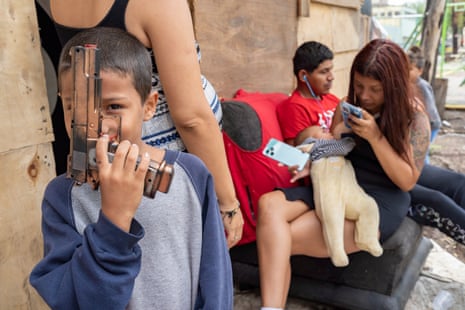
A boy poses for a portrait with a toy gun at the Mexico City encampment.
-
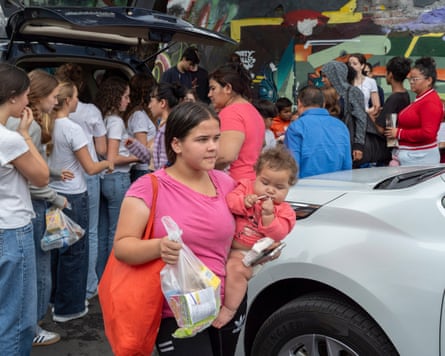
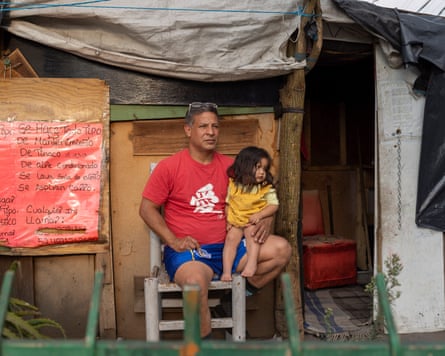
Left: Every Friday, a local church group donates food and clothing to people living in the camp. Right: Luis Guevara holds his daughter outside their home in the camp. Guevara, his wife, Rosely, and their four children self-deported from the US after realising Trump would be the next president. The family is from Venezuela
Vallejo is one of the last migrant camps remaining in Mexico City, where more than 200 people, mostly families, live in pallet and plastic shelters alongside a railway track. Without running water or sanitation, living conditions are grim. Its residents also live in fear of the camp being dismantled.
Each family has faced their own difficult journey, overcoming painful obstacles in their attempts to reach a more dignified life, but now find little hope of crossing the border to the US. Some say they will wait it out to see if the border opens, others plan to return to their countries, and many are left with no option but to build a new life in Mexico.
-
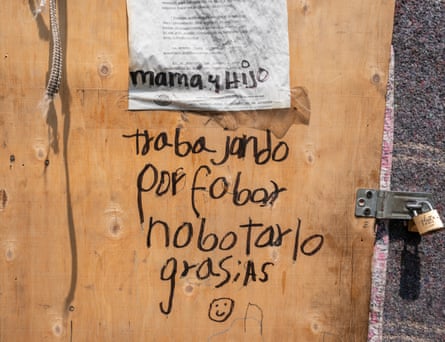
A note on the door of one home reads: ‘Mother and child working, please do not destroy it, thank you.’ The camp is mostly made up of families with children enrolled in a nearby school