.png) 2 months ago
24
2 months ago
24
You may not have given much thought to air quality, nor to air purifiers, if you’re lucky enough never to have had hay fever or any of the many other health conditions connected to airborne particles.
But air pollution – including industrial emissions, exhaust fumes and dust – is one of the gravest environmental health risks in the UK. Densely populated and low-income areas feel the worst effects. It’s a global problem, explored in Beth Gardiner’s book Choked.
While you can’t do much about the air quality outdoors, a good air purifier will sanitise the air inside your home, invisibly yet measurably making the space conducive to better health. These electrical appliances work by drawing in air and passing it through one or more filters, which capture unhealthy particles such as dust, pollens, pet dander and fumes (often known as VOCs).
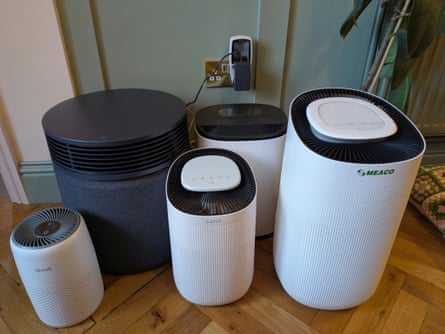
Purifiers are more varied than you might think, with differences in effectiveness, purification range, filtration, additional functionalities and controls. I tested 10 popular models and selected the seven best air purifiers to feature.
At a glance
-
Best air purifier overall:
Blueair Blue Signature large
-
Best budget air purifier:
Levoit Core Mini LAP-C161-WUK
-
Best mid-size air purifier:
MeacoClean CA-Hepa 76x5
-
Best small air purifier:
Sans air purifier Mini
Why you can trust me
Air purifiers are among the countless products I’ve tested for publications including the Filter over the past decade. Much like electric heaters, they require a rigorous approach to testing with repeatable conditions and careful measurement. The reviews below should give you some useful intel on how well each purifier cleans the air, not just how nice it looks and whether I enjoyed pressing the buttons.
While every product review deserves time and care, I take my research especially seriously when testing health-focused products, such as purifiers. My approach to this article was grounded in extensive reading on air quality and its effects.
Some brands didn’t want their purifiers back after testing. These units have been donated to the Cat Action Trust 1977, a small national charity dedicated to the welfare of feral cats.
How I tested
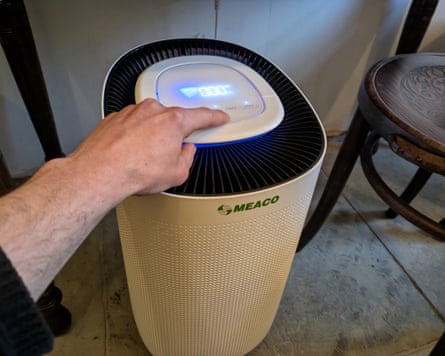
The crux of my testing was finding out how effectively the purifiers sanitised the air in my home. To prepare for testing each model, I degraded the air quality (by cooking, doing DIY, or lighting a cosily health-ruining wood fire) until my air quality monitor indicated that the air’s PM2.5 particulate count was higher than 5μg/m³. That means every cubic metre of air contained over five micrograms of particulates with a diameter of 2.5 micrometres or less. (PM2.5 particles are considered particularly harmful, and several ordinary household activities pushed the count past 10μg/m³ in my experience.)
I then set each purifier running at its highest fan setting and observed the improvement in air quality, as measured by the monitor. After an hour, I noted the air quality and calculated the nominal and percentage reduction in the PM2.5 count. At the same time, I measured the purifier’s electricity use with a power meter and its noise levels using a sound meter.
Many people use their air purifier continuously, not just in short bursts, so I also assessed each model’s performance when working steadily on a low or auto setting. Finally, I took into account design, ease of operation, and additional functionalities such as dehumidification and cooling.
The best air purifiers for your home in 2026
Best air purifier overall:
Blueair Blue Signature Large
Blue Air
Blue Signature Large
from £369
What we love
Superior purification and attractive design
What we don’t love
Too large and too expensive for many homes
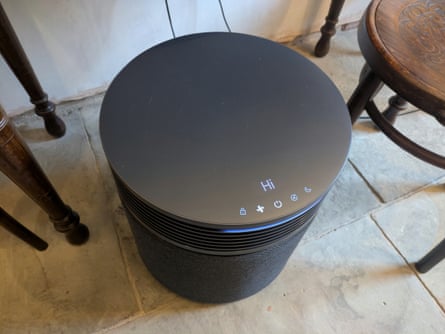
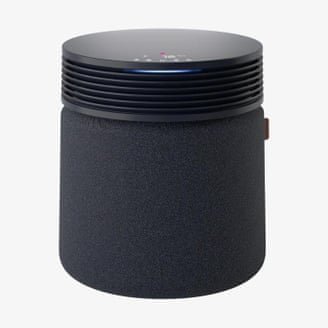
Designed to capture 99.97% of airborne particles in a large home, this super-sized, Scandi-chic Blueair purifier leaves no molecule unaccosted in pursuit of wholesome air.
Why we love it
Above all, this purifier takes first place because it was by far the most powerful purifier I tested, slashing my home’s particulate count to a mere trace (PM2.5: 0.5μg/m³) within 15 minutes when used on the highest setting.
The wide footprint may be off-putting to some, but you can make use of the space vertically by using this purifier as a table, placed either directly on to the floor or raised on feet (sold separately). You’ll need to leave some of the surface clear so that you can see the subtly integrated digital display, which incorporates mode selection and air-quality readouts.
Most of the time, you’ll use this purifier’s lower fan settings, which sound and feel tranquil. The purifier can choose an option to suit the current air quality via its auto mode, so there’s rarely a need for manual input. Remote operation via app is also available.
It’s a shame that … using this purifier (or other powerful models) on a high fan speed creates a cooling effect as a result of the air circulating. That’s fine in warm weather, but not ideal during winter.
Filtration: seven-stage HepaSilent filter (mechanical and electrostatic) captures particles as small as 0.1 microns
Recommended for spaces up to: 65m² (floor area)
Air quality improvement in one hour (PM2.5): 22 to 0.4μg/m³
Percentage air quality improvement in one hour: 98%
Power use in one hour: 0.038kWh
Maximum operating noise: 62dB
Size: 40 x 40 x 44cm (WDH)
Blue Air
Blue Signature Large
from £369
What we love
Superior purification and attractive design
What we don’t love
Too large and too expensive for many homes
Best budget air purifier:
Levoit Core Mini LAP-C161-WUK
Levoit
Core Mini air purifier LAP-C161-WUK
from £39.99
What we love
Superb energy efficiency; good purification in small spaces
What we don’t love
Insufficient power for large rooms
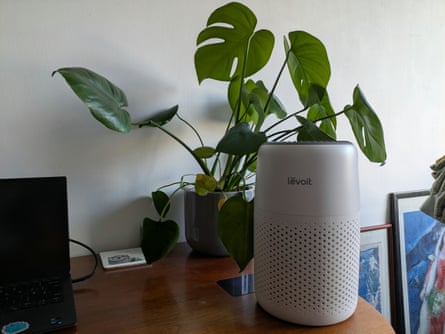
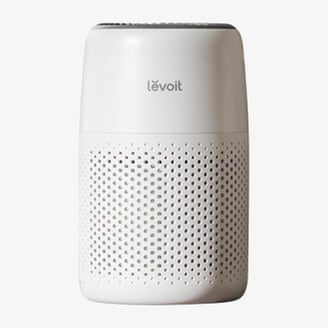
This miniature, bedside-friendly purifier from Levoit keeps things relatively simple. It has three manually selectable fan speeds and an integrated scent pad compartment that can be used to fragrance the space with your choice of essential oils. (As with any essential oil diffuser, be careful to keep this away from pets.)
Why we love it
Some of the beefier purifiers I tested reduced my home’s PM2.5 concentration rapidly; this one worked steadily – but effectively – to gradually capture particles in its three-stage filter. It trapped about half of the airborne PM2.5 matter in my kitchen within an hour of low-energy purification, making a meaningful difference to the air quality.
Exceptionally small and lightweight, this purifier proved convenient to move around the house: place it on your desk, or sleep with it at your bedside. It’s a quiet operator, especially when used on the lowest fan speed setting, and it used a negligible amount of electricity over the course of an hour.
It’s a shame that … it’s only just powerful enough for purifying at close quarters, perhaps on a desk or bedside table in a small room. So, while this purifier will suit some users well, and although it’s brilliant for the price, others will need a higher-spec model.
Filtration: CoreMini-RF three-layer Hepa filter
Recommended for spaces up to: 34m² (floor area)
Air quality improvement in one hour (PM2.5): 9.8 to 4.2μg/m³
Percentage air quality improvement in one hour: 57%
Power use in one hour: 0.006kWh
Maximum operating noise: 52dB
Size: 16.5 x 16.5 x 26.4cm (WDH)
Levoit
Core Mini air purifier LAP-C161-WUK
from £39.99
What we love
Superb energy efficiency; good purification in small spaces
What we don’t love
Insufficient power for large rooms
Best mid-size air purifier:
MeacoClean CA-Hepa 76x5
MeacoClean
CA-Hepa 76x5
£200
What we love
The best purification at a mid-market price
What we don’t love
PM2.5 readouts are not always reliable
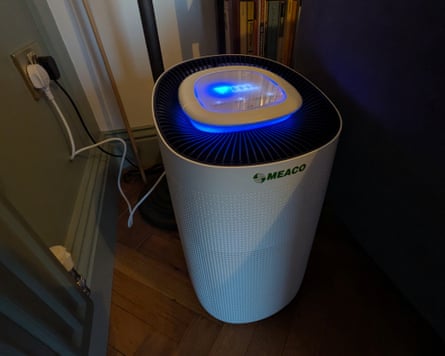
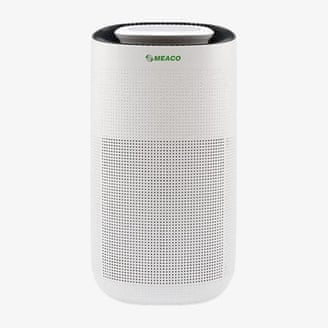
If you’re taking your air quality seriously but don’t want to splurge on an ultra-premium purifier, this powerful Meaco model for spaces up to 126m³ would be my recommendation.
Why we love it
I was impressed at how rapidly the PM2.5 count in my kitchen dropped with this purifier running on its high setting. Within 10 minutes, the level of these small particulates had fallen by 80%. The lower of the two fan speeds usually proved more than adequate, which was a relief, since it’s quiet, unlike the high setting.
The integrated handle is a nice touch, barely noticeable around the display. You can do plenty with the on-unit control buttons: switching modes, setting timed purification, adjusting the use of status lights and optionally activating ionisation, which sends out purifying particles into the room. There’s also the option to control the purifier via a third-party app called SmartLife, which I found easy to set up on my smartphone.
It’s a shame that … the particulate sensor seemed not to register PM2.5 particles when the air quality was very good (but not perfect), displaying a zero value when my stand-alone air-quality monitor said otherwise.
Filtration: H13 Hepa filter
Recommended for spaces up to: 126m³ (room volume)
Air quality improvement in one hour (PM2.5): 10.8 to 1.2μg/m³
Percentage air quality improvement in one hour: 89%
Power use in one hour: 0.044kWh
Maximum operating noise: 69dB
Size: 30.3 x 27 x 49.7cm (WDH)
MeacoClean
CA-Hepa 76x5
£200
What we love
The best purification at a mid-market price
What we don’t love
PM2.5 readouts are not always reliable
Best small air purifier:
Sans air purifier Mini
Sans
Air purifier Mini
£199.99
What we love
Excellent, compact design; decent purification performance
What we don’t love
Setup was relatively fiddly, and it won’t suit large spaces
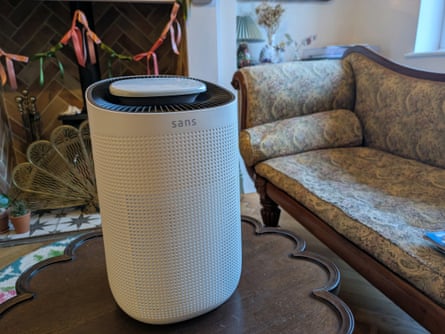
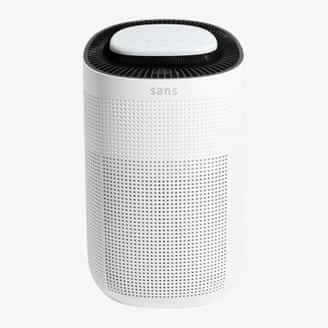
This purifier makes great use of space, with its filter compartment taking up most of its volume. As well as Hepa filtration, there’s also a formidable activated carbon layer (almost half a kilogram of the stuff) to soak up gases.
Why we love it
Used on the highest of its three fan speed settings, this purifier rapidly reduced the PM2.5 count in my kitchen after an unplanned toast-burning session. It took only eight minutes to reduce airborne particulates by 50%, and made further marginal improvement within an hour.
The Sans Mini uses light particularly well, with adaptive coloured lighting to indicate air purity levels, and an internal ultraviolet (UV-C) light that’s said to kill germs. The digital display gives good detail on your air quality, with readouts on the levels of PM2.5, larger PM10 particulates and VOCs picked up by the purifier’s sensors.
Rather than a manual speed setting, I used the auto mode. This selects an appropriate fan speed based on the air quality, so the purifier can usually run quietly and efficiently – until someone burns their toast and the air quality dips.
It’s a shame that … it’s fiddly removing the filter from its packaging during setup. Watch your fingernails while separating the parts.
Filtration: Hepa filter captures particulates as small as 0.3 microns in diameter; activated carbon filter; anti-pathogen UV-C light
Recommended for spaces up to: 46m² (floor area)
Air quality improvement in one hour (PM2.5): 10.2 to 4μg/m³
Percentage air quality improvement in one hour: 61%
Power use in one hour: 0.025kWh
Maximum operating noise: 61dB
Size: 20 x 23 x 36cm (WDH)
Sans
Air purifier Mini
£199.99
What we love
Excellent, compact design; decent purification performance
What we don’t love
Setup was relatively fiddly, and it won’t suit large spaces
The best of the rest
SwitchBot air purifier table
SwitchBot
Air purifier table
from £169.99
What we love
Fun design with useful phone-charging tabletop
What we don’t love
Expensive, relative to its specs
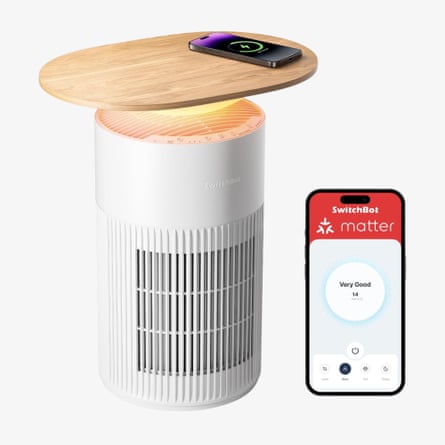
Best for: tech extras
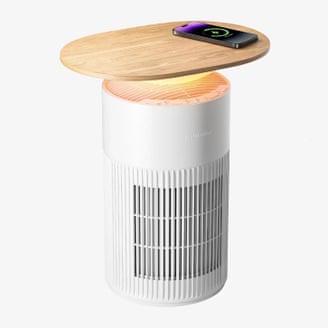
Ideal for tech aficionados who love a host of features, this SwitchBot purifier incorporates a scent tray that can be filled with essential oils to act as a diffuser, timed purification and a nicely integrated LED that changes colour to give you a quick read on the air quality. You can even activate it via Alexa.
The oval-shaped table on top of the purifier is a lovely touch – and a friend of mine was pleasantly surprised to discover it can wirelessly charge a smartphone when they placed their mobile on top of it.
It didn’t make the final cut because … relative to the price, this purifier’s performance is good but not excellent.
Filtration: Hepa and activated carbon; recommended for spaces up to: 33m² (floor area); air quality improvement in one hour (PM2.5): 10.1 to 4.3μg/m³; percentage air quality improvement in one hour: 57%; power use in one hour: 0.045kWh; maximum operating noise: 62dB; size: 29 x 42 x 49.8cm (WDH)
SwitchBot
Air purifier table
from £169.99
What we love
Fun design with useful phone-charging tabletop
What we don’t love
Expensive, relative to its specs
MeacoDry Arete One 6l dehumidifer and air purifier
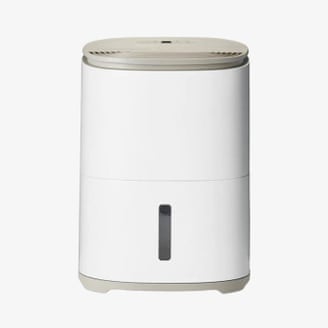
MeacoDry
Arete One 6l dehumidifier and air purifier
from £129.99
What we love
Useful combination of dehumidification and purification
What we don’t love
Purification functionality is basic
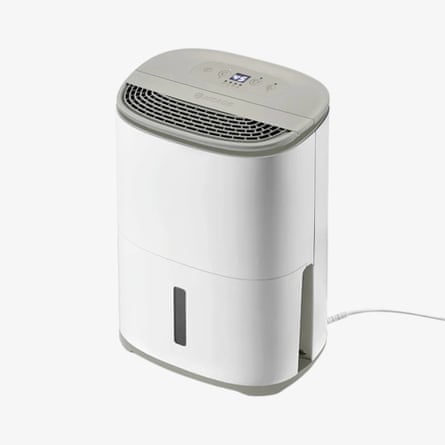
Best for: a dehumidifier and air purifier in one
If you live in one of the millions of UK homes affected by damp and mould, then it might be a good idea to invest in a dehumidifier. This Meaco model also purifies, so it can efficiently tackle two concerns at once.
Most of the functionality is focused on dehumidification, but the Arete One still does a good job of gently, quietly purifying the air, which it sucks through an H13 Hepa filter. Within seven minutes, it had pushed my air-quality monitor’s readings out of the yellow and into the green.
It didn’t make the final cut because … I’d have appreciated more control over the purification, such as different speed settings. It’s also pretty heavy.
Filtration: Hepa or activated carbon; recommended for spaces up to: 25m² (floor area); air quality improvement in one hour (PM2.5): 10.9 to 3.7μg/m³; percentage air quality improvement in one hour: 66%; power use in one hour: 0.006kWh; maximum operating noise: 48dB; size: 31.9 x 23.7 x 47.2 cm (WDH)
MeacoDry
Arete One 6l dehumidifier and air purifier
from £129.99
What we love
Useful combination of dehumidification and purification
What we don’t love
Purification functionality is basic
Blueair Mini Restful sunrise clock air purifier
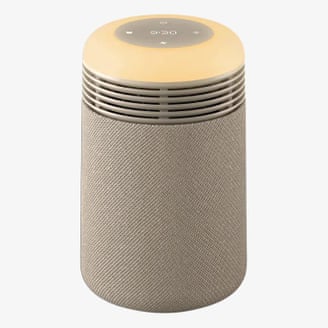
Blueair
Mini Restful sunrise clock air purifier
from £169
What we love
Perfect for use in the bedroom
What we don’t love
Less relevant for other parts of the home
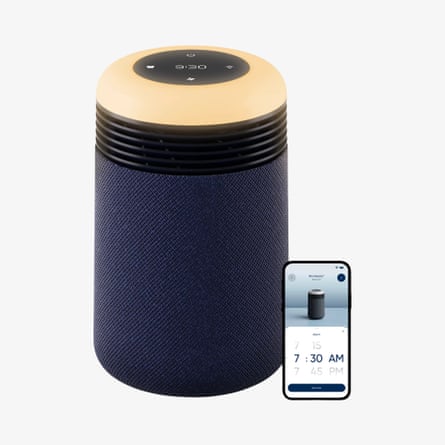
Also reviewed for my roundup of the best sunrise alarm clocks, this one-of-a-kind Blueair purifier features dawn simulation to brighten your mornings and reduce grogginess upon waking.
I found that it worked nicely on my bedroom floor, and considering its neat proportions, the purification performance was impressive. Switching between the fan speeds gave me plenty of options to deal with peaks and troughs in air quality, and the purification performance proved very good in a mid-size room.
It didn’t make the final cut because … its full functionality as a sunrise alarm clock is only relevant for bedrooms – which is great if that’s where you want your purifier, but otherwise limiting.
Filtration: HepaSilent filter with mechanical and electrostatic filtration; recommended for spaces up to: 31m² (floor area); air quality improvement in one hour (PM2.5): 12.1 to 3.7μg/m³; percentage air quality improvement in one hour: 69%; power use in one hour: 0.038kWh; maximum operating noise: 50dB; size: 17 x 17 x 28.3cm (WDH)
Blueair
Mini Restful sunrise clock air purifier
from £169
What we love
Perfect for use in the bedroom
What we don’t love
Less relevant for other parts of the home
What you need to know
What do air purifiers remove from the air?
An air purifier should remove various small particles – referred to as “particulates” – from the air inside a room or building. These may include dust, pollens, pet hair and dander, and fumes from cooking or heating with solid fuel.
Exactly which particles are captured depends on a purifier’s filter(s). Many filters are engineered to capture specific sizes of particulates that are regarded as unhealthy or unsanitary – especially tiny PM2.5 particles, which are less than 2.5 micrometres across.
The type of filter affects the purification effect. Hepa (High Efficiency Particulate Air) filters capture a rogue’s gallery of microscopic particles, including dust, pollen, mould spores and bacteria. Activated carbon filters are known for trapping volatile organic compounds (VOCs): gases (including odorous ones) such as cooking or paint fumes. For thorough purification, it could pay to get an air purifier with both of these filter types: Hepa and activated carbon.
Unfortunately, when an air purifier’s filter becomes saturated, it will no longer work effectively – so you’ll need to replace it.
How often should air purifier filters be replaced?
Air purifier brands often recommend replacing filters after six months or a year. However, a filter’s effectiveness decreases mostly through the accumulation of particulates, not through the passing of time.
It would be a shame to buy and use more filters than you really need to, so I’d recommend deciding when to replace a purifier’s filters based on its effectiveness. This is hard to gauge by sight or scent, but you can pick up a reasonably priced air quality monitor (like the one I used to test the purifiers above) and use its readings to confirm that your purifier is still improving your air quality.
What is the ideal air quality for a home?
The WHO advises that the annual average fine particle (PM2.5) level should be under five micrograms per cubic metre, as an average throughout the year. You would hope to achieve at least the same air-purity standards in your home – but as I’ve found when using an air-quality sensor, routine activities such as cooking, lighting a wood-burning stove, rigorously testing cordless drills, or even stroking a pet can push the particulate count far higher.
While spikes in air pollution linked to daily activities are hard to avoid, using an air purifier can help to ensure that the PM2.5 count averages out at under 5μg/m³ in the long run.
If you don’t have one, other helpful measures could include limiting polluting activities, opening windows regularly (if the air quality outside is good)and making good use of your vacuum cleaner.
For more, read the best dehumidifiers and how to stop hay fever
Pete Wise is a journalist from Leeds, specialising in product reviews and features on nutrition, music, DIY and traditional crafts. The air in Pete’s home is subject to a vibrant assortment of pollutants, including cat hair, stove fumes and construction dust. He breathed a little easier while testing air purifiers for the Filter