.png) 3 months ago
91
3 months ago
91
Whether you love sleeping under the stars or only do so under duress, a decent camping mattress will at least help ensure you are well-rested and better equipped to handle the wider thrills and spills of outdoor living.
The days when your only choice was between a foam roll mat or a leaky airbed and foot pump are long gone. From self-inflating mattresses to lightweight sleeping pads and insulated airbeds, the comfort and portability of sleeping mats have dramatically improved. But with so many types of camping mattresses available, costing from tens to hundreds of pounds, it can be difficult to know where to start.
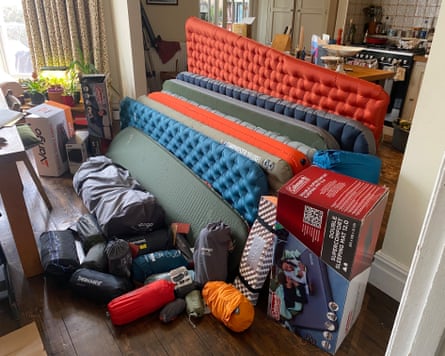
To save you the sleepless night of an ill-informed choice, I tested 27 and shortlisted the best camping mattresses for various scenarios.
At a glance
-
Best camping mattress overall:
Therm-a-Rest NeoLoft
-
Best budget camping mattress:
Decathlon Simond MT500 XL inflatable trekking mattress
-
Best double mattress:
Big Agnes Rapide SL insulated tent floor pad
-
Best self-inflating mattress for luxury camping:
Coleman Supercomfort self-inflating double sleeping mat
-
Best sleeping mat for expeditions:
Alpkit Radiant insulated inflatable camping mat
Why you should trust me
As a keen camper and festival goer, not to mention the parent of two adventurous teens, I’ve done my fair share of backpacking and car-based camping trips, and had the bruised hips and backache to prove it. Particularly memorable was the night my self-inflating mat punctured while wild camping on Mont Lozère in the south of France, as well as the time we ignored the yellow weather warning at Port Eliot festival in Cornwall, and spent the night reinforcing our collapsing tent as the sleeping area gradually filled with water.
I am also a science journalist and the author of a book on circadian rhythms and sleep, so I recognise the importance of a good night’s sleep for physical recovery, brain function and wellbeing.
How I tested

I assessed each mattress on comfort, durability, packability, and how easy they were to inflate and deflate. Comfort was assessed by placing each mattress on a hard wooden floor on top of several sharp stones, lying on it inside a sleeping bag on my back and side, and rolling between positions for 20 minutes. As a wriggly side sleeper, I was particularly vigilant for any pressure points around my hips or shoulders, or mattresses that were overly narrow or slippery. Points were deducted if I could feel the stones, couldn’t comfortably stretch out, or for shiny surfaces that caused me to slither off the mattress.
I assessed durability by lightly jumping on each mattress five times (against manufacturers’ instructions) in bare feet, and falling on to it from standing – as might happen if you were to stumble into your tent in the middle of the night without a torch. I also gently stabbed and scratched at the surface of each mattress with a pointy stone, and sprayed the underside with water, to see how easily it soaked through. Mattresses were left overnight with two 20kg boxes on them to check for any signs of deflation. Further points were deducted for mattresses that were excessively difficult to pack away after use or needed a large storage space.
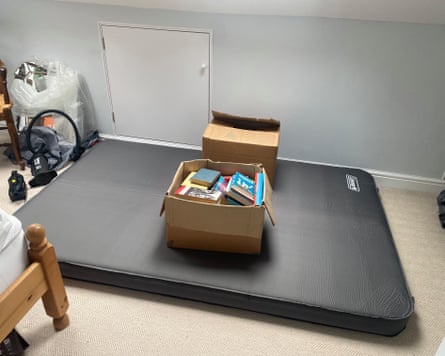
I’ve also included the R value, or thermal resistance, of each mattress. This measures how well it resists heat transfer from your body to the cold ground. A lower R value means less insulation, which is better in warmer weather, but less good for winter camping (see more below, in the What you need to know section).
I tested 27 mattresses in total, and rated them for different camping scenarios, including family camping holidays, summer or winter backpacking expeditions, glamping, festivals and weekends away for two. I also enlisted my back-sleeping husband – a keen winter mountaineer – and comfort-seeking kids, aged 12 and 14, for their perspectives. Below are the nine best camping mattresses from my experiments.
Mattresses were either returned to the manufacturer or donated to Kitsquad, a scheme that helps low-income people get out into the great outdoors, or the People’s Republic of Stokes Croft, which supports people rough sleeping in Bristol.
The best camping mattresses and sleeping mats in 2026

Best camping mattress overall:
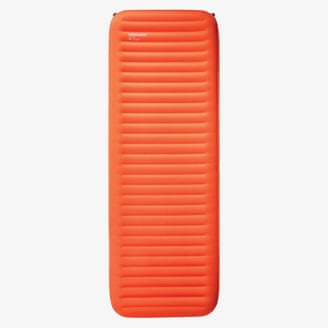
Therm-a-Rest NeoLoft
Therm-a-Rest
NeoLoft
from £225.25
What we love
Hits the sweet spot between comfort and easy packability
What we don’t love
The price and occasional crackle of static electricity
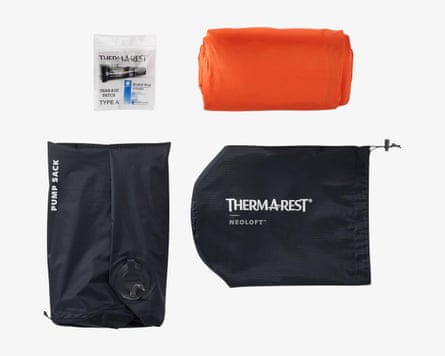
If you crave the comfort of an airbed but need something compact and lightweight enough to carry in your backpack, Therm-a-Rest’s NeoLoft regular wide camping mat could be the answer. With a packed size not much larger than a 1L water bottle, chambers that rise to form subtle side rails when the pad is inflated, and internal insulation, this pad isn’t cheap, but it should dramatically boost your chances of a good night’s sleep.
Why we love it
This mattress merges comfort with packability, making it a practical option for family camping holidays and backpacking alike. It feels soft and warm to lie on; it’s wide enough for back or side sleepers; and the side rails gently cradle you while you sleep.
We tested the regular wide single mat, which was fine for sleepers up to 5ft 10, but taller people may prefer the large version, which is 198cm long (6ft 5). We’ve taken this mattress on several camping trips, and it was so comfortable that my children fought over who got to sleep on it. Lumpy ground is imperceptible through its 11.7cm loft, even when sleeping on your side, and while softly springy, this mattress thankfully lacks the trampoline-like bounce of a conventional airbed.
It’s a shame that … while the surface of the mattress is super-soft, it does generate some static if you roll around too much.
Weight: 850g
Dimensions (packed): 29 x 15cm
Dimensions (inflated): 185 x 66 x 12cm (LWH)
R value: 4.7
Self-inflating: no
Pump included: yes, pump sack (a bag that fills with air and connects to the mattress valve to inflate it)
Therm-a-Rest
NeoLoft
from £225.25
What we love
Hits the sweet spot between comfort and easy packability
What we don’t love
The price and occasional crackle of static electricity
Best budget camping mattress:
Decathlon Simond MT500 XL inflatable trekking mattress
Decathlon
Simond MT500 XL inflatable trekking mattress
£49.99
What we love
Comfortable and versatile mattress for summer camping
What we don’t love
You’ll get greater comfort if you spend a bit more
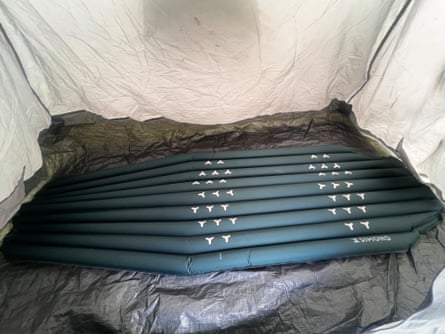
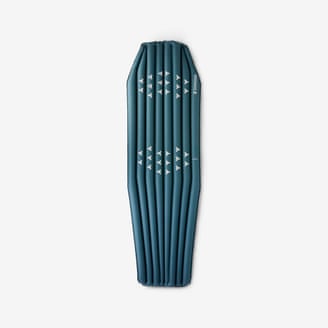
Decathlon is a reliable go-to for affordable outdoor gear, and its own-brand Simond sleeping pad lives up to expectations. Its vertical air-filled chambers absorbed uneven ground and even larger stones with ease, to create a comfortable sleeping surface for a budget price, and its compact pack size makes it a practical choice for campers without a car. It also comes in a slightly smaller L version (measuring 180 x 52cm) costing £44.99, and an insulated three-season version costing £69.99.
Why we love it
This is a comfortable and versatile sleeping pad suitable for most summer camping scenarios. As a side sleeper, prone to waking up and rolling over multiple times each night, I appreciated the generous width of the XL pad, as well as the silicone patches on the mattress’s surface, which helped prevent my sleeping bag from sliding off. Though considerably thinner than the Therm-a-Rest, this mattress absorbed lumps and bumps well, and I was unable to feel stones when lying on my side – even when placed directly underneath my hips.
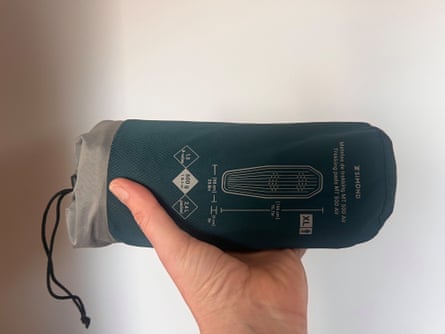
This is a lightweight and easily packable mat, which could fit inside a rucksack during expeditions.
It’s a shame that … my younger family members disliked being able to feel the vertical grooves when lying on the mattress without a sleeping bag – although these were barely perceptible once wrapped inside one.
Weight: 600g
Dimensions (packed): 28 x 10.5cm
Dimensions (inflated): 195 x 60 x 5cm (LWH)
R value: 1.5
Self-inflating: no
Pump included: no, inflate by mouth
Decathlon
Simond MT500 XL inflatable trekking mattress
£49.99
What we love
Comfortable and versatile mattress for summer camping
What we don’t love
You’ll get greater comfort if you spend a bit more
Best double mattress:
Big Agnes Rapide SL insulated tent floor pad
Big Agnes
Big Agnes Rapide SL insulated tent floor pad
£244.95
What we love
Romance and comfort on camping expeditions
What we don’t love
Relatively expensive, and small for a double mattress
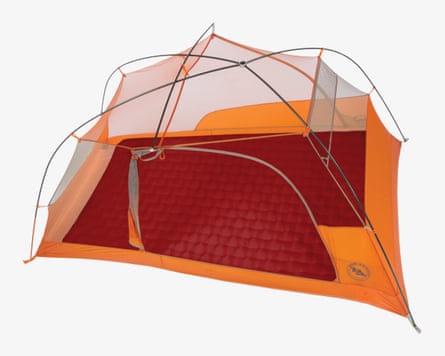
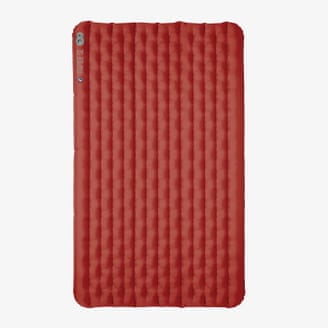
A night under canvas with your partner might sound romantic, but sharing the wrong mattress can make for an uncomfortable experience, with one partner being bounced awake when the other turns over, or slumped on to the hard rocky floor when their partner goes out to pee (yes, I speak from experience). This inflatable sleeping pad is extremely comfortable, tapered to fit in most two-man tents, insulated enough to see you through the colder months, and packing down small enough to fit into a backpack.
Why we love it
I’ve spent years grumbling about sharing a two-man tent with my husband, because we couldn’t find two compatible, comfortable mattresses that would fit. This is the solution. It fitted into the two-man expedition tent that my husband is illogically attached to, despite my grumbles about the lack of storage space, but it also worked well in our family tent, where recently I enjoyed one of my best camping sleeps ever, with no hip or backache the following morning.
Like our other best mattress picks, stones and rough ground were imperceptible through its surface, and I wasn’t bounced awake at any point, even when my husband crawled out to make breakfast, while I dozed on.
It’s a shame that … it’s relatively narrow for a double mattress. This is deliberate, as it’s designed to fit inside the average two-person tent, and my husband and I are both relatively slim, so it wasn’t a problem for us. However, larger couples, or those looking for more space, may find it a bit cramped. It was also relatively difficult to get the deflated mattress back inside its stuff sack.
Weight: 1.22kg
Dimensions (packed): 29 x 14cm
Dimensions (inflated): 198 x 127 x 9cm (LWH); 102cm wide at tapered end
R value: 4.8
Self-inflating: no
Pump included: yes, pump sack
Big Agnes
Big Agnes Rapide SL insulated tent floor pad
£244.95
What we love
Romance and comfort on camping expeditions
What we don’t love
Relatively expensive, and small for a double mattress
Best self-inflating mattress for luxury camping:
Coleman Supercomfort self-inflating sleeping mat
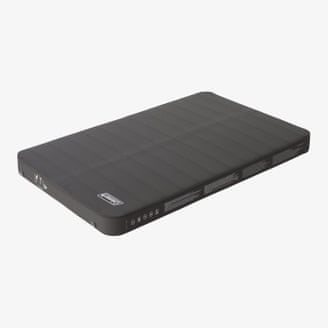
Coleman
Supercomfort self-inflating double sleeping mat
£195
What we love
Wide and comfortable with minimal motion transfer
What we don’t love
Bulky, and difficult to deflate and pack
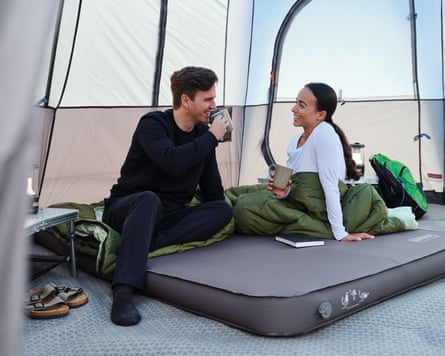
This 12cm-thick self-inflating mattress gradually fills with air when the valves are twisted open. It comes in single and double sizes and is filled with polyester foam. All this makes for a more bed-like feel than the inflatable “air pads” we tested, and helps to insulate it from the cold ground. Although the mattress is self-inflating, its travel bag doubles as a pump sack to add further inflation and create a firmer sleeping surface, if preferred.
Why we love it
It’s very wide and comfortable, and there’s minimal motion transfer when two sleepers lie side by side. We tried the double, and I barely noticed when my husband deliberately rolled around and climbed off the mattress.
Any lumps and bumps are absorbed with ease, and stones are imperceptible when placed under it. Weighing 6kg, this mattress is suitable only for car-based camping trips or camper vans, but we would certainly consider packing it for a week-long camping holiday. Its high thermal resistance (R value) would make it usable in winter conditions.
It’s a shame that … this mattress is too big for backpacking, and the double mattress takes a bit of effort to pack away: you need to fold it in half lengthways, and lie on its surface to squeeze out enough air to begin the process of rolling it up.
Weight: 6kg
Dimensions (packed): 65 x 32cm
Dimensions (inflated): 200 x 128 x 12cm (LWH)
R value: 12.9
Self-inflating: yes
Pump included: yes, pump-sack
Coleman
Supercomfort self-inflating double sleeping mat
£195
What we love
Wide and comfortable with minimal motion transfer
What we don’t love
Bulky, and difficult to deflate and pack
Best sleeping mat for expeditions:
Alpkit Radiant insulated inflatable camping mat
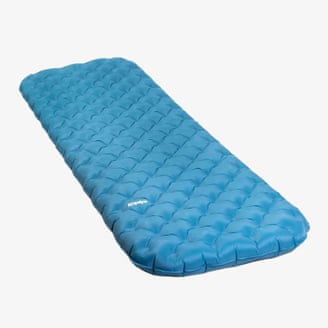
Alpkit
Radiant insulated inflatable camping mat
£109.99
What we love
Dependable all-season sleeping pad that’s impressively comfy
What we don’t love
Its shiny surface may cause sleeping bags to slither off
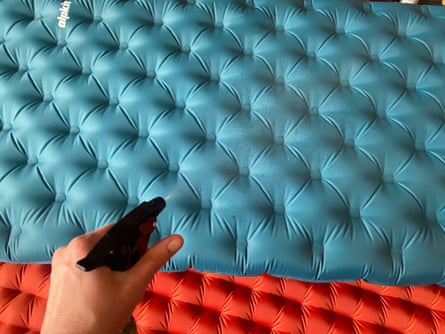
This is a lightweight and compact sleeping pad with excellent insulation, making it suitable for all sorts of outdoor adventures – including winter expeditions.
Why we love it
While there are wider and marginally more comfortable lightweight mats, Alpkit’s Radiant provides superb cushioning on rocky ground, and wins extra points for its relatively low price, high thermal resistance, 100% recycled outer fabric and water-resistant surface, which I tested by spraying it with a water bottle and leaving it for 30 minutes to soak in (it didn’t).
Its high R value means it should keep you warm in all weather conditions. Weighing only 600g – less than two tins of baked beans – it will easily fit inside a rucksack, making it suitable for summer and winter expeditions alike.
It’s a shame that … the surface of the mat is a little shiny and slippery.
Weight: 600g
Dimensions (packed): 25 x 11cm
Dimensions (inflated): 194 x 62 x 9cm (LWH)
R value: 7.2
Self-inflating: no
Pump included: yes, pump sack
Alpkit
Radiant insulated inflatable camping mat
£109.99
What we love
Dependable all-season sleeping pad that’s impressively comfy
What we don’t love
Its shiny surface may cause sleeping bags to slither off
The best of the rest
Sea To Summit Ether Light XR
Sea To Summit
Ether Light XR (wide)
£187
What we love
Lightweight and comfortable with a clever pillow system
What we don’t love
Relatively expensive
Best for: expeditions
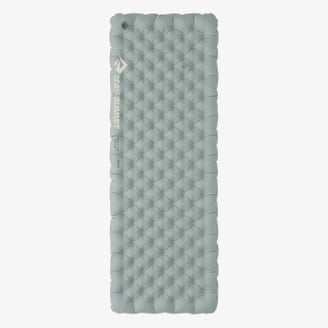
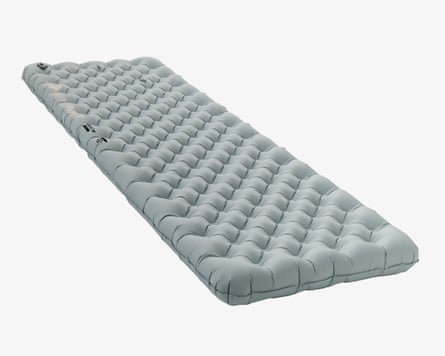
This is an excellent lightweight inflatable sleeping mat, particularly when used in combination with Sea to Summit’s Aeros pillow (see below), which attaches to its surface using adhesive hook and loop patches. Measuring 64cm across and 10cm thick, the wide version of the Ether Light XR I tested is slightly more comfortable than the smaller size available (larger sizes are also available). My husband also had no grumbles about warmth when he used it to sleep in a Scottish bothy in March.
It didn’t make the final cut because … although this was a worthy contender for best expedition mattress, it was narrowly pipped to the post by Alpkit’s Radiant on the grounds of price, eco-credentials and insulation (though it still has a four-season rating).
Weight: 665g; dimensions (packed): 24 x 12cm; dimensions (inflated): 183 x 64 x 10cm (LWH); R value: 4.1; self-inflating: no; pump included: yes, pump sack
Sea To Summit
Ether Light XR (wide)
£187
What we love
Lightweight and comfortable with a clever pillow system
What we don’t love
Relatively expensive
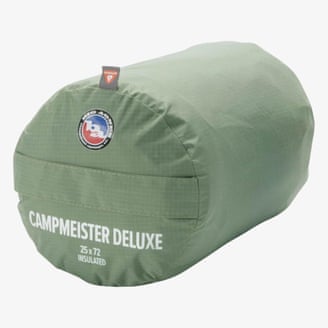
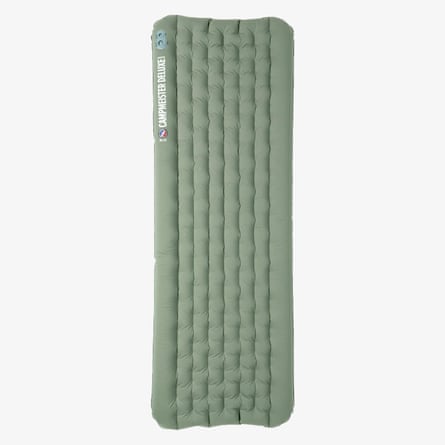
Big Agnes Campmeister Deluxe insulated
Big Agnes
Campmeister Deluxe insulated
from £187.95
What we love
Winter-ready comfort with a tough, stable design
What we don’t love
Relatively expensive and heavy for its class
Best for: winter camping
Another great option for winter camping – especially if comfort is a priority. This inflatable sleeping mat is 11cm thick and 63.5cm wide, with slightly raised edges to prevent you rolling off in the night. With tough 70-denier ripstop fabric on the underside, this feels like a robust mat that’s built to last.
It didn’t make the final cut because … insulation is similar to Alpkit’s Radiant, but weighing 907g, it’s more than 300g heavier. Although this is unlikely to bother the average camper, serious mountaineers may prefer a lighter, smaller mat.
Weight: 907g; dimensions (packed): 20 x 14cm; dimensions (inflated): 183 x 64 x 11cm; R value: 7; self-inflating: no; pump included: yes, pump sack
Big Agnes
Campmeister Deluxe insulated
from £187.95
What we love
Winter-ready comfort with a tough, stable design
What we don’t love
Relatively expensive and heavy for its class
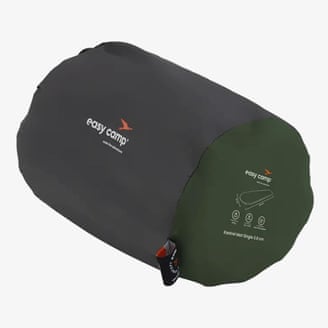
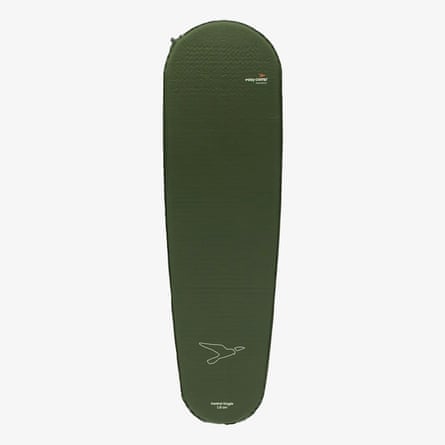
Easy Camp Kestrel
Easy Camp
Kestrel single
from £32.95
What we love
A budget-friendly mat for smaller sleepers
What we don’t love
Not the most comfortable; narrow
Best for: family camping on a budget and festivals
This 3.8cm self-inflating mat isn’t the most comfortable we tested and, measuring 51cm across in a single size, it’s quite narrow. Even so, rocks were barely perceptible through its surface, and my back-sleeping husband reported feeling very comfortable on it. A 5cm-thick version is also available, which should provide side sleepers with a little more cushioning. This mat is also considerably cheaper than many of our other top picks, making it a great budget option, particularly for festivals and for kids or smaller adults.
It didn’t make the final cut because … adults may find it too narrow for comfort, and side sleepers a little too thin.
Weight: 945g; dimensions (packed): 28 x 16cm; dimensions (inflated): 182 x 51 x 4cm (LWH); R value: 3; self-inflating: yes; pump included: no, but this is unnecessary
Easy Camp
Kestrel single
from £32.95
What we love
A budget-friendly mat for smaller sleepers
What we don’t love
Not the most comfortable; narrow
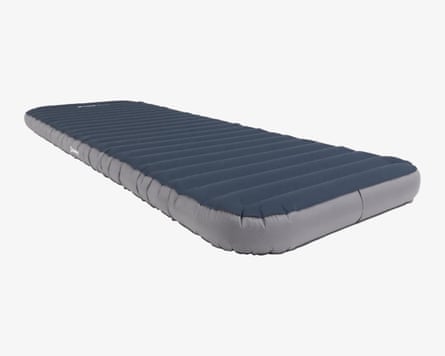
Outwell Dreamscape insulated
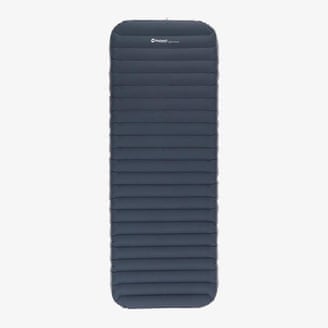
Outwell
Dreamscape insulated
£120
What we love
Lofty comfort without clamminess
What we don’t love
Requires foot pump to inflate
Best for: family camping
If you like the bouncy loft of an airbed but find them unpleasantly cold and clammy to sleep on, this insulated version is a great alternative. Although the Therm-a-Rest NeoLoft is lighter and considerably more portable, the Dreamscape is cheaper and would be fine for car-based camping trips from spring to autumn. It does require a foot pump or a large pair of lungs to inflate it, though.
It didn’t make the final cut because … it’s not as portable as some of our top picks.
Weight: 1.7kg; dimensions (packed): 39 x 17cm; dimensions (inflated): 205 x 77 x 12cm (LWH); R value: 3.8; self-inflating: no; pump included: no
Outwell
Dreamscape insulated
£120
What we love
Lofty comfort without clamminess
What we don’t love
Requires foot pump to inflate
Also consider
Camping pillow
While many people sling their regular pillow into the car as a token luxury on camping trips, this doesn’t work if you’re backpacking, when a lumpy pile of clothes is the make-do option. The necessity of packing pillows is also a frequent flashpoint for arguments when packing for family camping trips (believe me, I know).
Thankfully, there are now inflatable pillows that are small enough to fit in your pocket, and compressible foam or microfibre pillows that take up far less space than a regular pillow. I tested eight camping pillows and would highly recommend Sea to Summit’s Aeros Ultralight pillow (£38.50 at Decathlon) for a super-packable inflatable pillow or Vango’s Deep Sleep Memory pillow (£33.99 at Amazon) for a supremely comfortable alternative, provided you have more space.
What you need to know
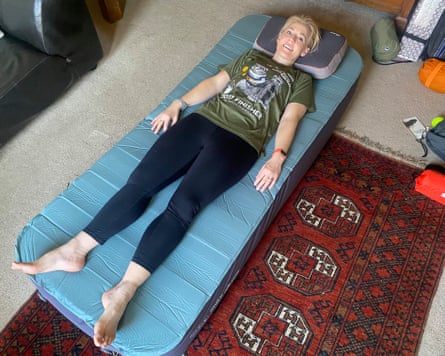
What’s the difference between an airbed, sleeping pad, foam roll mat and self-inflating mattress?
From glamping to Alpine mountaineering, there are different types of camping trip, and different mattresses will suit some better than others.
Airbeds are large, inflatable mattresses, often high and bouncy, inflated with a foot- or electric-powered pump (some even have one built in). Although they’re very comfy, they’re poorly insulated, can feel cold and clammy to lie on, and tend to be susceptible to punctures. They’re also relatively heavy and bulky, making them unsuitable for backpacking, while those sharing a double airbed may be bounced awake by restless partners.
Sleeping pads are ultralight inflatable mattresses designed for backpacking and mountaineering. Although they’re thinner and less bouncy than airbeds, they’re extremely comfortable and often incorporate insulating materials, making them suitable for camping in colder conditions, including winter when it comes to high-spec versions. Most also come with air sacks to aid inflation (see below) and puncture repair kits.
Closed-cell foam roll mats aren’t particularly comfortable, but virtually indestructible. They’re designed to provide a basic layer of padding, waterproofing and insulation between you and the ground. Being made from foam, they also tend to retain body heat well. Because of these properties, some backpackers choose to combine them with a basic air pad. They’re usually secured to the outside of a backpack with elasticated straps.
Self-inflating mattresses consist of an open-cell foam core inside an air-tight fabric shell, with a valve that allows in air to inflate the mattress when it’s opened – although they often require a top-up of air from your lungs to make them firmer. Comfort ranges from moderate to high, depending on the thickness of the mattress, and the foam core tends to provide good insulation. However, they’re heavier and bulkier than air pads, and still susceptible to punctures. They’re deflated by opening back up the valve, and squeezing out the air, rolling as you go, and then closing the valve.
How long do camping mattresses last, and are they repairable?
The lifespan of a camping mattress depends on its type, quality and how well it’s cared for, but closed-cell foam mattresses tend to be the most durable, and airbeds the least so. Both self-inflating mats and air pads can also suffer from punctures and valve or seam failures, but self-inflating mattresses are often constructed from thicker fabrics and are less likely to fully deflate if punctured.
To extend the life of your camping mattress, you could consider using a groundsheet to reduce the risk of punctures from sharp rocks, sticks and rough terrain, and avoid leaving inflatable mattresses in the sun. Care should also be taken not to over-inflate air mattresses, while foam or self-inflating mats should ideally be stored unrolled, with inflation valves left open to maintain the loft and integrity of the foam.
How do I inflate my camping mattress?
It depends on the mattress, but airbeds tend to require a foot- or electric pump, while air pads are inflated by mouth, or using a “pump-sack” – a lightweight, air-filled bag, that helps to keep moisture out of the pad (also important for longevity) and is more efficient than inflating by mouth.
What’s an R value, and why is it important?
The R value of a camping mattress measures how well it resists heat transfer from your body to the cold ground. A lower R value means less insulation, which is better in warmer weather, but less good for winter camping. Foam-based mattresses tend to have the highest R values, but some air pads incorporate other insulating materials, making them suitable for winter camping expeditions. As a general rule of thumb, R values of 1 to 2 tend to be sufficient for summer camping; R values of 2 to 4.5 are suitable for spring through to autumn, while for winter camping or other cold climates, you’ll need an R value of 4 to 5 or higher.
How to dispose of old camping mattresses
Camping mattresses are often made from a mix of materials – such as foam, coated fabric, plastic valves and adhesives – which can make them difficult to recycle. Because of this, the best option is usually to repair, reuse or donate them.
If the mattress is still usable, consider selling it secondhand or giving it away locally. Some homeless charities may accept lightweight camping mats for use by people who are sleeping rough, while scout groups, cadet units and schools may be able to use them for expeditions such as the Duke of Edinburgh’s award. In the UK, Kit Squad – a charity that supports people with low incomes to get outdoors – accepts donated gear that still has life in it – including sleeping mats.
Minor damage can often be repaired. Small punctures can often be glued or patched, using patch kits supplied with the mattress or bought separately (such as this £5.99 one from Decathlon), so it’s worth checking the manufacturer’s website before throwing away a deflating mattress. Some brands also offer warranties against defects in materials or workmanship and may repair other damage for a fee.
If the mattress is beyond repair or reuse, check with your local household waste recycling centre to see whether they accept camping mats or bulky mixed-material items.
Don’t put camping mattresses in your household recycling bin, as most cannot be processed through standard kerbside recycling, and avoid burning them, as this creates pollution.
For more camping advice from the Filter:
The best genuinely comfortable camping chairs
The best tents, tested
The best cool boxes and bags for camping, picnics and festivals
Linda Geddes is a former Guardian science correspondent, known for inserting herself into her own mini-science experiments (like the time she spent a week with a clown, a comic and some toddlers). This extends to product testing, where she delights in devising rigorous ways to distinguish high-performance stuff from marketing puff. Outside work, she can frequently be found swimming in rivers, dangling from cliffs and trudging the dawn walk to the campsite Portaloo