.png) 2 months ago
66
2 months ago
66
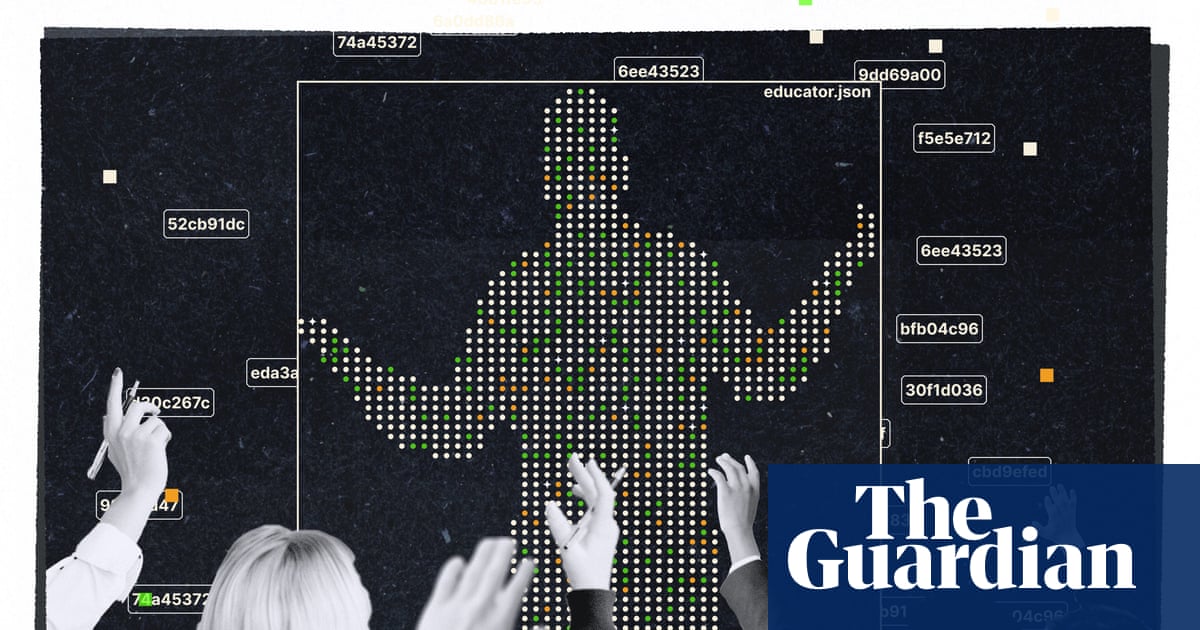
This felt like the year that AI really arrived. It is on our phones and laptops; it is creeping into digital and corporate infrastructure; it is changing the way we learn, work and create; and the global economy rests on the stratospheric valuations of the corporate giants vying to control it.
But the unchecked rush to go faster and further could extinguish humanity, according to the surprisingly readable and chillingly plausible If Anyone Builds It, Everyone Dies (Bodley Head), by computer scientists Eliezer Yudkowsky and Nate Soares, which argues against creating superintelligent AI able to cognitively outpace Homo sapiens in all departments. “Even an AI that cares about understanding the universe is likely to annihilate humans as a side-effect,” they write, “because humans are not the most efficient method for producing truths … out of all possible ways to arrange matter.” Not exactly cheery Christmas reading but, as the machines literally calculate our demise, you’ll finally grasp all that tech bro lingo about tokens, weights and maximising preferences.
Human extinction is not a new idea, muses historian Sadiah Qureshi in Vanished: An Unnatural History of Extinction (Allen Lane), shortlisted for this year’s Royal Society Trivedi science book prize. Colonial expansion and the persecution of Indigenous peoples implicitly relied on Darwinian theories about some species being fated to outcompete others. Extinction, she points out, is a concept entwined with politics and social justice, whether in the 19th-century erasure of the Beothuk people in Newfoundland or current plans to “de-extinct” woolly mammoths so they can roam the land once more. Whose land, she rightly asks.
The idea of the landscape, as well as people, having rights, is explored by Robert Macfarlane in the immersive and important Is a River Alive? (Hamish Hamilton). By telling the stories of three rivers under threat in different parts of the world, he floats a thesis that is both ancient and radical: that rivers deserve recognition as fellow living beings, along with the legal protections that accompany it. The book, shortlisted for the Wainwright prize for conservation writing, “was written with the rivers who flow through its pages”, he declares, using pronouns that wash away any doubt as to his passion for the cause.
That awe at the natural world is shared by biologist Neil Shubin, who has led expeditions to the Arctic and Antarctica and takes the reader to the Ends of the Earth (Oneworld), also shortlisted for the Royal Society science book prize. “Ice has come and gone for billions of years … has sculpted our world and paved the way for the origin of our species,” Shubin says. But those geographical extremes are increasingly vulnerable, as climate change intensifies and treaties come under strain. This is polar exploration, but without the frostbite.
after newsletter promotion
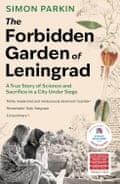
Just below the north pole, inside the Norwegian permafrost, lies the Svalbard Global Seed Vault, intended to help humanity revive after an apocalypse. It contains a consignment from the first ever seed bank, started in the 1920s by Russian plant scientist Nikolai Vavilov, who dreamed of ending famine. In The Forbidden Garden of Leningrad (Sceptre), a powerful contender for this year’s Orwell prize, historian Simon Parkin uncovers the moving story of Vavilov and his colleagues, who fought to protect their collection as the city came under siege in 1941. Vavilov fell out of scientific and political favour, and was imprisoned with terrible consequences.
If this all feels too gloomy for gifting, then Super Agers (Simon & Schuster) might be just what you’re looking for. The cardiologist and medical professor Eric Topol, who recently conducted a review into the digital future of the NHS, has been studying the “Wellderly” – who seemingly defy the rigours of ageing – to offer evidence-based tips on longevity. Breakthroughs such as weight-loss drugs and AI will further change the game on chronic diseases, he promises. This is the one that’s going under Mum’s tree, in the hope that 80 really is the new 50.
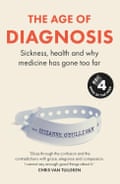
Two elegant offerings from neurologists stand out, in an Oliver Sacks sort of way, for using patient stories to tell us something about ourselves. In The Age of Diagnosis (Hodder), Suzanne O’Sullivan courageously questions medicine’s well-intentioned enthusiasm for attaching labels – think ADHD, anxiety – to aspects of the human condition. This is sensitive political territory, given the public conversation about the 2.8m people who are economically inactive due to long-term illness, but it deserves a hearing. And in Our Brains, Our Selves (Canongate), winner of the Royal Society prize, Masud Husain sensitively explores how our sense of identity can go awry when disease strikes. The story of the woman who thought she was having an affair with a man who was really her husband illustrates that “the way in which people behave can be radically altered [by brain disorders], sometimes shockingly so”.
Now, geography of sorts: Proto (William Collins) is science writer Laura Spinney’s fluid account of how Proto-Indo-European, a painstakingly reconstructed ancient tongue, became the precursor for so many languages. Its descendants gave us Dante’s Inferno, the Rig Veda (the oldest scripture in Hinduism) and Tolkien’s The Lord of the Rings. “Almost every second person on Earth speaks Indo-European,” Spinney writes, setting out on a global scientific odyssey that uses evidence from linguistics, archaeology and genetics to piece together its history.
No Christmas book list is complete, of course, without a doorstopper biography – and, in Crick (Profile), Matthew Cobb gives us the definitive backstory of one of the towering figures of 20th-century science. Born in Northampton into a middle-class family, Francis Crick was an unexceptional young physicist who, with James Watson and Maurice Wilkins, went on to codiscover the double helix structure of DNA in 1953 and win a Nobel prize. Cobb captures the intellectual restlessness of a man who chased problems (and women) rather than disciplines, and who mixed with artists and beat poets. Crick, who died in 2004 in California, spent his later career trying to unravel the secrets of consciousness.
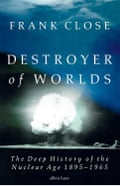
Talking of towering figures, anyone left intellectually unsated by recent Oppenheimer-mania will relish Destroyer of Worlds (Allen Lane), in which physicist Frank Close ventures beyond the Manhattan project to tell the gripping story of the nuclear age. Beginning with the 19th-century discovery of a smudge on a photographic plate, Close spins a history that, via Hiroshima, Nagasaki and a lot of nimbly explained physics, closes seven decades later with the Tsar Bomba, a Soviet weapon detonated in 1961.
It was second in explosive power only to the meteorite impact that wiped out the dinosaurs. A big enough hydrogen bomb, Close writes, “would signal the end of history. Its mushroom cloud ascending towards outer space would be humanity’s final vision.”
Can we please not tell the superintelligent AI?
Anjana Ahuja is a science writer and columnist for the Financial Times.