.png) 2 months ago
38
2 months ago
38
Salmon don’t know that they swim upstream. Some ancient instinct impels them; they don’t think about it any more than trees think about growing. You are a British person of a certain age and bearing. You are buying a barbecue.
But this half-century-old compulsion often ends before it starts. Few products are marketed with as much machismo as BBQs, and the jargon makes them surprisingly tricky to buy. While we all enjoy the unintended high camp of a snap-jet ignition, it’s unclear if such features are essentials or optional extras. Add in the tedious difference between planchas and kamados, and you can easily spend hundreds of pounds on what is essentially a hot metal box.
So, I took on the gruelling, pitiable task of eating a lot of burgers – and in doing so tracked down the best affordable, straightforward barbecues that just make great food. If you need something simple for grilling a few bangers, you’ll find it here.
At a glance
-
Best BBQ overall:
Weber Bar-B-Kettle charcoal barbecue
-
Best budget BBQ:
Argos Home drum charcoal BBQ with cover and utensils
-
Best gas BBQ:
Weber Spirit E-335
-
Best electric BBQ:
Ninja Woodfire electric BBQ grill & smoker
Why you should trust me
I’ve been a product tester my entire career, and part of that has meant near-annual testing of BBQs. I’ve tested dozens of models over the years, from cheap disposable grills to £3,000 kamados, and written countless articles about how to use them. Besides barbecues, I’ve tested plenty of other indoor and outdoor cooking products, from air fryers and food processors to pizza ovens and camp stoves, so I have years of experience testing cooking gadgets.
How I tested
Starting in drizzly March, I timed how long it took to build every barbecue I’d be testing. Thankfully, you’ll only have to do this once, but it’s worth knowing if it takes 15 minutes or two hours to put your new grill together, or whether it will be a struggle for those with mobility problems. You don’t want to buy a barbecue the day of a party only to faff around with an Allen key while assorted in-laws wait for their sausages.
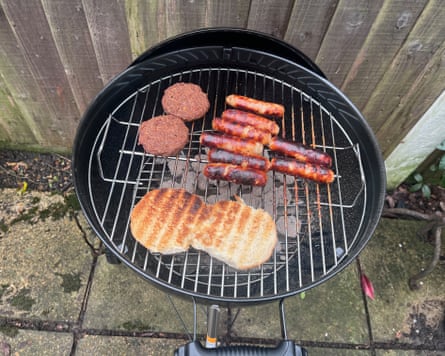
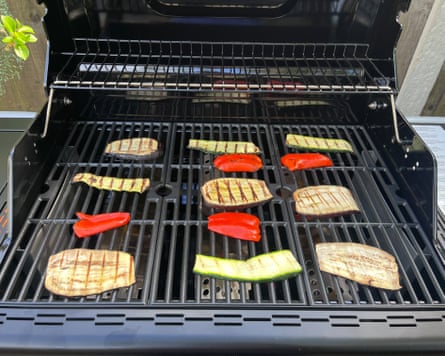
I cooked the same meals on each BBQ. First, I grilled courgettes, peppers and aubergines to check for cold spots, as some barbecues tend to be cool at the edges and scorching in the middle. Then I cooked halloumi – if the heat is too low, it won’t develop those delicious golden grill marks or release cleanly from the grates.
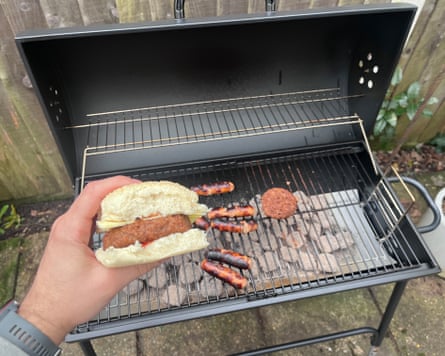
Next up were pork sausages and veggie burgers, before tackling a whole spatchcocked chicken to show how well a barbecue handles cooking at lower temperatures and retains moisture with the lid closed. And for those concerned about what I did with all that food? Well, it was used in countless curries and pasta bakes, so nothing went to waste.
Where a grill had bonus features – a smoking attachment, a side burner or even the ability to bake a cake – I tested these too.
At every stage, I used an infrared thermometer to measure the temperature of the grill grates, the handle and the exterior of the barbecue to assess safety and to time how long each took to reach a good grilling temperature of 200C.
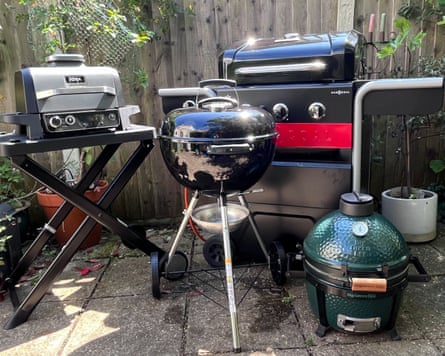
I tested six BBQs from a long list of several dozen of the most popular on sale at British retailers. I looked at customer reviews to avoid testing universally derided barbecues. I also filtered by price – I wanted BBQs below £1,000, and most on this list come in under £500. I wanted models covering different barbecue types, and I also looked at bonus features, such as the ability to use both gas and charcoal.
The best BBQs in 2026
Best BBQ overall:
Weber Bar-B-Kettle charcoal barbecue
Weber
Bar-B-Kettle charcoal barbecue
from £99
What we love
Makes incredibly tasty food; easy to build; fair price
What we don’t love
Could be small for big parties; burns through fuel
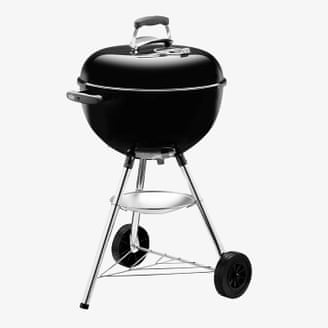
Weber claims this “iconic” kettle is “the barbecue made for everyone” – and it’s true. I’ve used this model many times over the years, and it remains the best BBQ for most people. It’s effortless to light and use, it makes great food, and it’s easy to store. Whether you’re a barbecue obsessive or just need something for the odd burger, this will get the job done.
Why we love it
This barbecue makes incredible food without any faff. To put it together, Weber points you to the Bilt app for instructions – and before you roll your eyes, the clear 3D pics for each step of the process meant it was built and ready to use in just 35mins 27secs. Everything fits together easily, and the barbecue feels sturdy and safe. Its kettle design is super-efficient, too, heating the grill evenly to 200C in 39mins 52secs, minus a tiny cold spot at one edge.
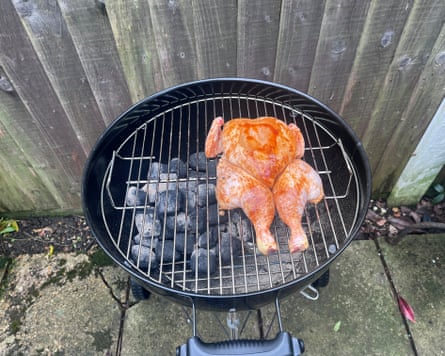
Most importantly, the food cooked on this barbecue tasted incredible. Sausages and burgers were perfectly seared, and it never dried them out. The lid fits well, so the chicken was cooked to perfection, with a crispy, smoky skin and deliciously juicy inside. The 47cm diameter offers a good amount of grilling space, but it’s compact enough to store in a shed or greenhouse.
Made from steel and aluminium, it’s largely recyclable, and since Weber offers a selection of spare parts, it’s repairable if any of those parts break. You can often find it for less than £100, hundreds of pounds cheaper than top-line models such as Weber’s own Master Touch.
It’s a shame that … it’s too efficient, if anything: the charcoal needed topping up after about an hour of testing. I tested the 47cm model, which is perfect for a family of four, but the 57cm model might be better for larger get-togethers. If you’re above 6ft you may find it sits a little low, but you’re hardly stooping.
Total cooking area: 1,548cm²
Fuel type: charcoal
Dimensions: 47 x 56 x 91cm (WDH)https://www.weber.com/GB/en/charcoal-barbecues/kettle/bar-b-kettle/1502055.html
Additional features: built-in lid thermometer, ash catcher, tool hooks, lower wire rack
Weber
Bar-B-Kettle charcoal barbecue
from £99
What we love
Makes incredibly tasty food; easy to build; fair price
What we don’t love
Could be small for big parties; burns through fuel
Best budget BBQ:
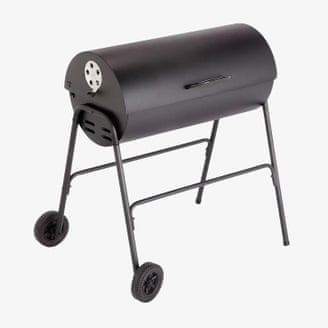
Argos Home drum charcoal BBQ with cover and utensils
Argos
Home drum charcoal BBQ with cover and utensils
£49.50
What we love
Affordable, yet food tastes great
What we don’t love
Flimsy parts
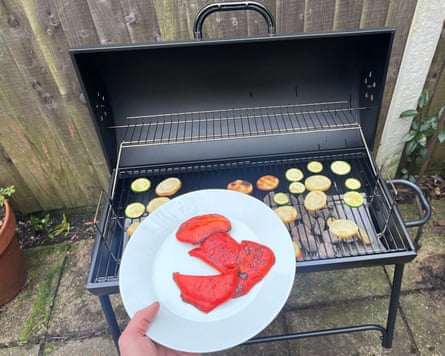
This is almost as basic a barbecue as you can buy, but it’s capable of making tasty food for a low price. It’s neither the most attractive nor the sturdiest, but it offers incredibly good value, especially as it comes with tools and a cover.
Why we love it
You don’t need much to barbecue, and this budget grill from Argos has everything you need and a little more. Putting it together was quick and easy, and it was stable enough.
It might not make the best BBQ food I’ve ever tasted, but it did produce consistent results that are exceptional for the price. In fact, food cooked on here tasted better than that cooked on gas barbecues costing 30 times as much. Burgers and sausages had a great sear, and the chicken was perfectly juicy. Cooking veggies revealed a slight coolness along all the edges of the grill, but not enough to be a dealbreaker.
Like other charcoal BBQs, it’s easy to recycle, and Argos offers replacement parts. It also comes with useful extras such as a spatula and tongs, while the adjustable charcoal tray helps you control the heat. For an affordable option to cook the occasional sausage, this is all you need.
It’s a shame that … the various parts of this barbecue are poorly machined, so it takes a little finagling to ensure they all fit together correctly. This also means the lid doesn’t close as neatly as more expensive models, so the chicken was a smidgeon drier. Cleaning the ash out of this grill was a little tricky, and its carbon steel construction means it’s prone to rust.
Total cooking area: 2,485cm²
Fuel type: charcoal
Dimensions: 93 x 64.5 x 90cm (WDH)
Additional features: weather cover, utensil set, warming rack
Argos
Home drum charcoal BBQ with cover and utensils
£49.50
What we love
Affordable, yet food tastes great
What we don’t love
Flimsy parts
Best gas BBQ:
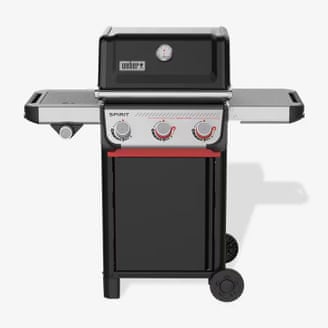
Weber Spirit E-335
What we love
Simple and easy to use
What we don’t love
The low-heat burner is a little pointless
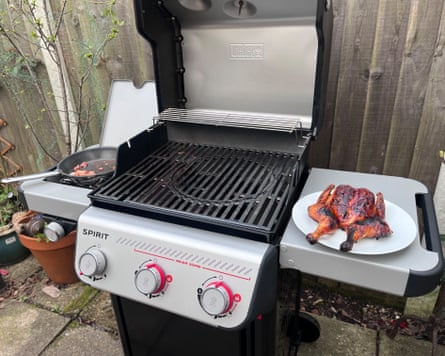
This simple gas barbecue makes it easy to cater to a crowd. It excels at all the boring bits that make for a great gas BBQ. It’s so simple to use, you’ll hardly notice you’re cooking on it.
Why we love it
It may lack the smart features such as a wifi thermometer or access to AI recipes (for reference, see briskit.ai) seen on other gas barbecues at this price, but they’re hardly essential. What the Weber Spirit does have is three main burners, a side burner, a handy table for plates and tools, and a warming rack for foods such as corn on the cob and burger buns. And unlike the majority of gas barbecues, it’s simple to build and requires very little faffing about with wiring and gas lines.
It’s a strange compliment, but the results were unremarkable – in a good way. A great tool is one you don’t notice while using it, and that’s true here. It’s as simple as cooking on a kitchen hob, with none of the hassle of lighting charcoal. It’s efficient, too, reaching grilling temperature in just 7mins 50secs – impressively fast by barbecue standards.
It was never going to beat a charcoal barbecue for flavour, but burgers and sausages were reliably tasty, and the powerful side burner cooked delicious bacon lardons for embellishing the burgers. It would be just as useful for making a pepper sauce for steak, or crispy onions for topping hotdogs.
The Weber Spirit is safe, reliable and will last for years, with replacement parts available.
It’s a shame that … I didn’t find its low-heat burner useful. Note that you may need two people to assemble the grill box. It’s a touch expensive, too.
Total cooking area: 2,894cm²
Fuel type: gas
Dimensions: 123 x 67.5 x 117cm (WDH)
Additional features: built-in thermometer, side burner, sear zone, enclosed cabinet, warming rack
Weber
Spirit E-335
£699
What we love
Simple and easy to use
What we don’t love
The low-heat burner is a little pointless
Best electric BBQ:
Ninja Woodfire electric BBQ grill & smoker
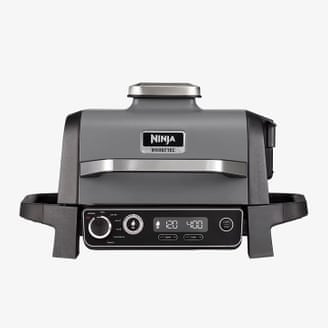
SharkNinja
Woodfire electric BBQ grill & smoker OG701UK
from £229
What we love
Easy barbecuing for those averse to outdoor cooking
What we don’t love
Ongoing cost of wood pellets
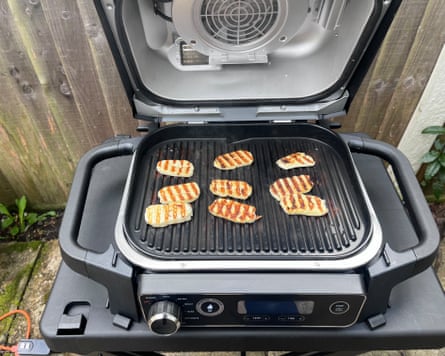
The Ninja Woodfire is the barbecue for people who hate to barbecue. It’s essentially a big air fryer. However, unlike the sterile flavour associated with other electric grills, its smoke attachment will make your food taste like it’s been cooked on a more traditional BBQ.
Why we love it
If the thought of fitting gas regulators or building a fire fills you with dread, this is the barbecue for you. It’s simple to set up, as straightforward as plugging in a kettle. It works just like an air fryer; it takes a few minutes to heat up, then runs a timed cooking programme. Unlike an air fryer, however, it has a wood pellet smokebox offset from the grill to infuse food with a smoky flavour.
The results are enjoyable – if slightly strange. Despite being of the same variety cooked on other models, the sausages ended up tasting more like frankfurters than British bangers – although they were delicious. The burgers were tasty if slightly dry, and the chicken I made with the roast function was well-cooked and tasty, even if it wasn’t technically barbecued.
The Woodfire’s hotplate-style design made better halloumi than any other grill on test, as well as a delicious rack of ribs using the smoke function (plus a dousing of my auntie’s homemade hot sauce). It actually has an air fry function, too, which cooked unremarkable cheesy hash brown bites, and a bake function, which I used to make a delicious banana bread.
It’s a shame that … this was the only barbecue to emit noise – although at 55dB, it’s hardly deafening. The bigger issue is that it relies on the smokebox: without it, the grilled vegetables I made tasted no different from those cooked in a pan. And the smoke pellets are an ongoing expense – at £14.99 a bag, they work out at £1.30 a use – which feels pricey, given the barbecue’s already high price.
Total cooking area: 1,240cm²
Fuel type: electric and wood pellets
Dimensions: 57 x 51 x 41cm (WDH)
Bonus features: digital control panel, smoker box, air fry/roast modes
SharkNinja
Woodfire electric BBQ grill & smoker OG701UK
from £229
What we love
Easy barbecuing for those averse to outdoor cooking
What we don’t love
Ongoing cost of wood pellets
The best of the rest
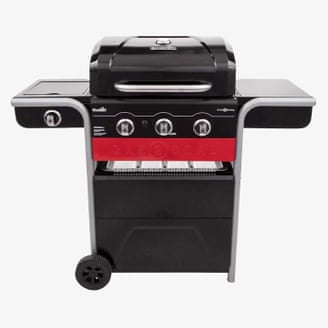
Char-Broil Gas2Coal 330
Char-Broil
Gas2Coal 330
from £468.99
What we love
Great charcoal function
What we don’t love
Awful to build
Best for: a gas/charcoal hybrid BBQ
This clever barbecue can cook using gas and charcoal. The gas function is fairly unremarkable, with food tasting about average for a gas barbecue. Place a tray over the gas burners, however, and it turns into a charcoal barbecue. Add some briquettes, turn on the burners, and the charcoal will be blistering hot in just 15 minutes – no faff or fiddling with firelighters.
The fuel change made a huge difference – burgers, sausages and barbecue chicken legs all tasted much better. Plus, it’s an efficient way to cook on charcoal: since the coals sit in a tray rather than a grate, they never drop through to the ash catcher, so remain hot for hours. Perfect for long cooking sessions.
It didn’t make the final cut because … this was awful to build. The manual didn’t match the instructions on the app, so it was a matter of guesswork. And it’s expensive: you could get a cheap charcoal barbecue for a fraction of the price.
Total cooking area: 2,793cm² (~3,300cm² with side burners); fuel type: gas and charcoal; dimensions: 133 x 62 x 116cm (WDH); additional features: built-in thermometer, charcoal tray insert, side shelves, warming rack, cabinet base
Char-Broil
Gas2Coal 330
from £468.99
What we love
Great charcoal function
What we don’t love
Awful to build
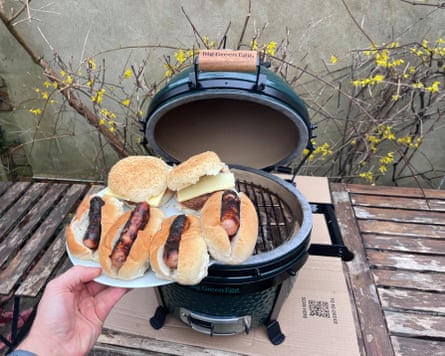
Big Green Egg Minimax
What we love
Looks good and food tastes even better
What we don’t love
Expensive
Best for: a kamado barbecue
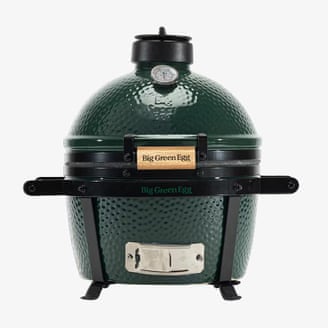
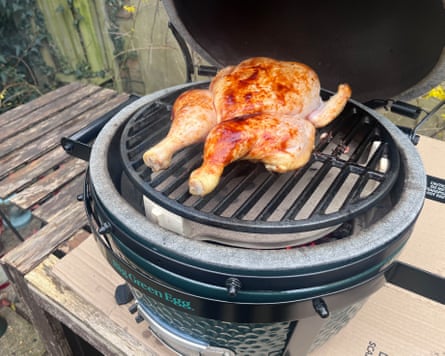
The Minimax is among the smallest and (relatively) cheapest kamado barbecues. This type of charcoal barbecue uses heat-efficient ceramic plates to reach super-hot temperatures, and the tight seal from its heavy lid means you can smoke, roast and more.
The brand’s lumpwood charcoal produced some of the best burgers and sausages on the test. The veggies were just as good – especially the aubergine, which I ate straight off the grill. An attachment (the brand calls this its convEGGtor) also created excellent indirect heat for roast chicken, resulting in the crispiest skin and juicy meat.
It didn’t make the final cut because … it’s expensive, and learning how to use it properly will be a steep learning curve for barbecuing newbies.
Total cooking area: 855cm²; fuel type: charcoal; dimensions: 54 x 56 x 59cm (WDH); additional features: built-in thermometer, ceramic shell, carrier stand, precision vent cap, hood
Big Green Egg
£925
What we love
Looks good and food tastes even better
What we don’t love
Expensive
What you need to know
What are the key features to look for?
Of all the features and extras to consider when buying a BBQ, the one that will make the biggest difference to your outdoor cooking journey is a lid. Not only does it make it easier to light the barbecue, but it also locks in moisture and maximises smoky flavour. A hinged lid is more convenient than a removable one.
To cook safely on a barbecue, it’s essential to have long-handled utensils such as heatproof tongs, spatulas and skewers, as well as heatproof gloves. Hooks are handy to store these tools when not in use. Other useful but non-essential features include an ash catcher for charcoal barbecues, saving you from scooping out used charcoal by hand afterwards. Warming racks, side burners and side tables can be helpful too.
A built-in thermometer can be handy as a rough guide, but it’s essentially giving a reading of the air temperature inside the barbecue rather than the grill. An infrared thermometer gun is more reliable for this, but really, what you need is a cheap probe thermometer to measure the internal heat of whatever you’re cooking.
Smart features and wifi connectivity can be fun to play around with, but they generally aren’t worth the premium you’ll pay for them.
Types of barbecues
Charcoal
Fuelled with either charcoal lumpwood or briquettes, charcoal barbecues are the cheapest and tastiest way to barbecue food. They can be messy, though, and there’s a bit of a learning curve to get the best results.
Gas
Once set up, gas barbecues are as simple as turning on a hob. They almost always run on tanks of propane, which you can buy from most garden centres, DIY shops or builders’ merchants, as well as some garages. You can also buy natural gas barbecues that draw from the mains in your home, although these require professional installation, which can be expensive. Propane can be a faff to organise, but once you have it, you can barbecue whenever you want.
Electric
Barbecues powered by electricity are the easiest to use – you just plug them in. Increasingly common in the UK, but you’ll need an outdoor power socket.
Kamado
Unlike steel charcoal barbecues, kamados are built with ceramic, which retains heat exceptionally well and reaches higher temperatures. They look good and cook incredible-tasting food, but they’re expensive – expect to pay about £1,000 or more for a mid-range model.
Smoker
Smoker barbecues are designed for American-style barbecue cooking. Rather than the classic blackened British sausage in a bun, these are made to cook low-and-slow dishes such as brisket and ribs.
Pellet smokers are electric barbecues that burn wood pellets at a constant temperature for hours, and often come with smart features, such as Bluetooth and wifi. You can also get offset smokers, which are charcoal barbecues that have a compartment for burning pellets or smoking wood. They’re much more difficult to master, but can cost the same as a standard charcoal barbecue.
Griddle
Also known as a plancha, a griddle is an outdoor grill that has a flat surface rather than a grate, on which you can cook small items such as shrimp and bacon lardons, or liquid ingredients such as eggs or pancake batter.
Gas vs charcoal
Barbecues sit on a spectrum, with maximum flavour at one end and maximum ease at the other.
There’s no two ways about it – food tastes best when cooked on a charcoal barbecue. This is because the juices from whatever you’re cooking drop on to the hot coals and burn into smoke, infusing food with a rich flavour that you can’t get from any other type of barbecue. However, getting great results requires practice, and all the ash and grease can make cleanup a pain.
At the other end sit electric barbecues – you can just plug them in, and they’re ready to go. They’re really just glorified hot plates, however, so sausages cooked on an electric grill won’t taste very different from those fried in a pan.
Gas models sit somewhere in the middle. Once you have the gas, you can have fairly good burgers whenever you want, but the gas bottle itself is a pain to organise. Few things are as tedious as lugging a 13kg propane tank to a DIY shop.
Environmentally, electric barbecues are best. Unlike gas or charcoal barbecues, electric barbecues do not produce direct emissions, and they use about as much electricity as an air fryer.
Charcoal briquettes are technically a renewable fuel, since they’re made from wood, but few sources of charcoal are FSC-certified. More importantly, charcoal barbecues emit more carbon dioxide than any other type of barbecue. Climate scientists at the University of Sheffield found that a charcoal barbecue for four releases more greenhouse gases than an 80-mile car journey.
Gas barbecues produce about half the emissions of charcoal barbecues. However, propane is not a renewable fuel, so it’s hardly environmentally friendly.
Can you buy a secondhand barbecue?
Many people buy barbecues they never actually use, so you can find lots of nearly-new models on sites such as Facebook Marketplace and Gumtree for about half the price of a new model. I found my favourite barbecue, the Weber Kettle, for £40 at the time of writing.
However, there are a few things to look for. While a little rust on the outside isn’t a red flag, much more than that could be a structural concern – you don’t want your barbecue collapsing mid-cook.
If you’re buying a gas barbecue secondhand, check the gas connector and ignition wiring for leaks or breaks. Wiring might prove trickier to sort, since you’ll have to source it directly from the barbecue’s manufacturer. Gas regulators are easy to replace yourself, though.
Once your barbecue arrives, give it a thorough clean to remove any carbonisation that could flake off into your food and make it taste bitter.
How to clean a barbecue
A clean barbecue is crucial for food and fire safety. An unclean grill can make you sick, and a buildup of grease and old food can become a fire risk.
Avoid using a wire grill brush to clean the barbecue, though. Over time, they break down and can leave tiny shards of metal in your food – which, if ingested, can cause internal damage.
Instead, use a nylon brush or wooden scraper to remove carbonisation – or even a scrunched-up ball of aluminium foil held in some tongs. It’s a little fiddly, but I’ve found it lifts all the carbon. For the outside of a barbecue, soapy water and a soft sponge will do the job.
For more, read the kitchen gadgets top chefs can’t live without
Alex David is a consumer journalist with a decade of experience as a product tester, especially in outdoor cooking. He has tested everything from beard oil and exercise bikes to pizza ovens and lawnmowers. When he isn’t testing the latest gadgets, he is pretending to read a book down the pub