.png) 3 months ago
67
3 months ago
67
There isn’t much I miss from my pre-Invisalign “gappy teeth” days, but it was far more difficult for food and plaque to get stuck in the gaps – something I took for granted at the time. Using floss between my pre-braces teeth was easy, but ultimately pointless, like using a pipe cleaner to buff the Dartford Tunnel.
With all the gaps closed, that’s no longer the case, and my water flosser has become a welcome part of my dental routine. A water flosser fires an intense jet of water between the teeth to dislodge debris and leave your mouth feeling fresher.
“Most people know they should be flossing, but in reality, it’s one of the most skipped steps in daily oral care,” says Dr Johannes Jacobs, the founder of Jacobs & Associates Dental Office. “Patients who struggle with traditional flossing routines often do far better with water flossers, and their gum health improves noticeably.”
Most of the dentists I spoke to favour floss or interdental brushes (such as TePe) – more on that in the what you need to know section below – but all agree that using a water flosser is better than doing nothing at all.
“The water flosser doesn’t provide the scraping action that traditional string floss does, but what it offers in return is accessibility and comfort,” says Jacobs. “For a lot of patients, that’s the deciding factor. If flossing is painful, frustrating or impossible – due to dexterity issues or appliances such as braces – it usually just doesn’t happen.
“A water flosser is easy to use, even for kids and older adults. That’s why I often recommend it – not as a replacement for floss across the board, but as a realistic alternative for those who aren’t flossing at all.”
For the past few months, I’ve been putting water flossers through their paces. Here are my findings.
At a glance
-
Best water flosser overall:
Waterpik Ultra Professional
-
Best budget water flosser:
Operan Cordless Oral Irrigator
-
Best cordless water flosser:
Philips Sonicare Cordless 3000
Why you should trust me
First off, because I have 32 teeth, as most adult humans do. A weird flex, granted, but a useful qualifier for anyone wanting to be taken seriously when it comes to assessing the merits of water flossers. Thanks to the aforementioned course of Invisalign, said teeth are also now close together, making them more of a sporting challenge for the water flossing contenders.
Perhaps more importantly, I’ve been professionally testing consumer technology for more than a decade now, and have previously trialled the best electric toothbrushes for the Filter. You can read more about the ins and outs of that here.
How I tested
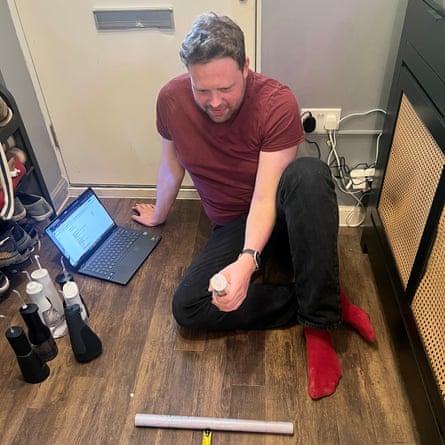
For the most part, the testing process is what you’d expect: using one water flosser after another, and lavishing the kind of attention on my teeth that they usually get only in the panicked hours before a dental checkup to avoid a tongue-lashing (by which I mean a dressing down, not some kind of novel oral treatment).
Each flosser was used multiple times, testing the various heads and settings, while making notes on features such as usability, controls and the slightly grim-sounding “mouth feel”. But there were also more off-the-wall tests to check the manufacturer’s specs – such as emptying a full water tank into a measuring cup to verify capacities, and testing power by measuring how far a jet could be fired across a room on a full battery.
I wouldn’t recommend repeating the latter test – it’s not scientific, with each flosser’s different heights and jet angles – but if you do insist on following my bad example, don’t do it in a carpeted area and ensure pets are safely locked away.
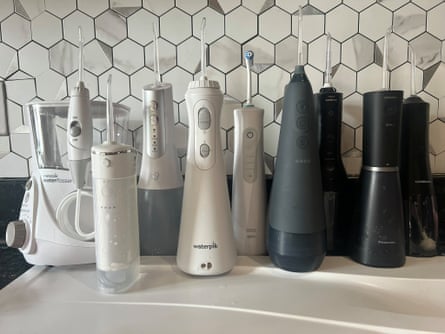
Samples were requested directly from manufacturers and retailers, with nine being provided from brands including Oral-B, Panasonic, Ordo, Waterpik and Philips. The water flossers were donated to Bridge2Aid, an oral health education charity, after testing.
The best water flossers in 2026
Best water flosser overall:
Waterpik Ultra Professional
Waterpik
Ultra Professional
from £64.99
What we love
Huge water capacity and power that handhelds can’t match
What we don’t love
Requires permanent residency on your countertop
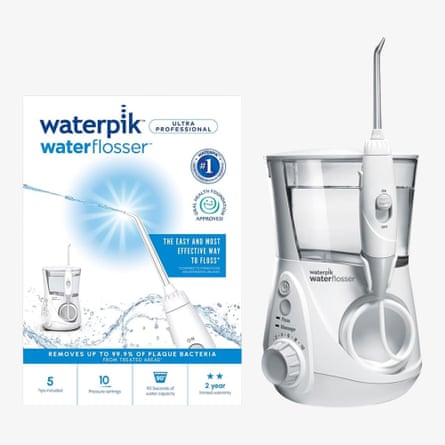
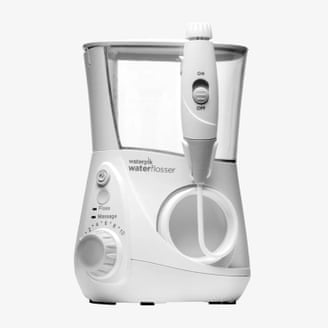
Countertop water flossers seem to be going out of style, and I could get hold of only one for our roundup. The Ultra Professional is a reminder of why this isn’t necessarily a good thing, providing not only the largest tank around but also the kind of flexibility its cordless brethren could only dream of.
Why we love it
Unlike cordless models, the water reservoir remains on your countertop at all times. That makes it easier to move the nozzle around your mouth and ensures the easy-to-fill tank’s 650ml of water is accessible at all times, no matter the angle from which you’re attacking your teeth. Too often with cordless models, I found a half-full tank turned to a dribble when spraying the backs of my lower teeth – that was never a problem here.
On top of that, it has 10 pressure settings increasing from 10PSI to 100PSI (pounds per square inch, a common measure of pressure), so you can choose what works for you. A generous number of heads (seven) are included, with three standard jet tips, one plaque seeker, another for orthodontics, a Pik Pocket and a toothbrush.
There are drawbacks to the countertop design. Obviously, it’s not travel-friendly (11.9 x 9.7 x 26.3cm WDH), and giants like me will have to stoop to use it. However, if you have the space, it’s an easy recommendation.
It’s a shame that … it’s a permanent resident on your countertop.
Tank size: 650ml
Heads: seven: jet (x3), plaque seeker, orthodontic, Pik Pocket, toothbrush
Pressure: 10-100PSI
Waterproof: not stated
Charging: not applicable
Waterpik
Ultra Professional
from £64.99
What we love
Huge water capacity and power that handhelds can’t match
What we don’t love
Requires permanent residency on your countertop
Best budget water flosser:
Operan Cordless Oral Irrigator
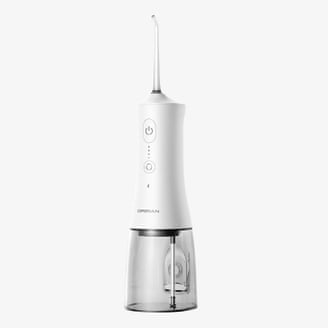
Operan
Cordless Oral Irrigator
£19.99
What we love
Great value with solid performance and IPX7 waterproofing
What we don’t love
Some reported reliability issues in reviews
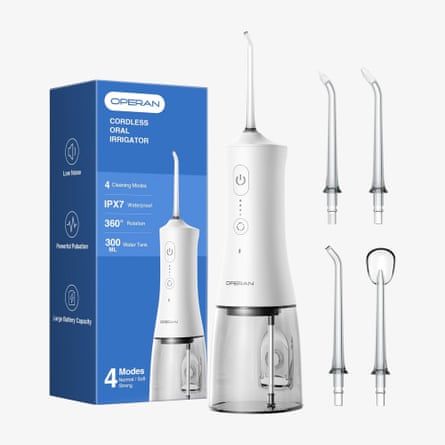
Most cordless water flossers sit in the £60 to £120 range, but Operan comes in at a fraction of that, while still achieving excellent results.
Why we love it
From the suspiciously low pricing, I was sure there would be something to complain about with the Cordless Oral Irrigator. But mouthful of a name aside, there really isn’t.
It’s easy to hold and has four noticeably different power settings, with a pleasant pulsing stream. It’s also quite effective when turned upside down, thanks to the generous 300ml tank and floating ball on the end of the reservoir tube (it’s not perfect, though, so it’s worth tackling the back of your teeth first, while the tank is full).
There are four tips in the box, including one for orthodontics and another for tongue scraping. The cherry on the cake? It has a water resistance rating of IPX7, so you can use it in the shower, if you like.
It’s a shame that … some customers report reliability problems, although I had no issues.
Tank size: 300ml
Heads: four: jet, periodontal, orthodontic, tongue scraper
Pressure: 40-120PSI
Waterproof: IPX7
Charging: USB-C
Operan
Cordless Oral Irrigator
£19.99
What we love
Great value with solid performance and IPX7 waterproofing
What we don’t love
Some reported reliability issues in reviews
Best cordless water flosser:
Philips Sonicare Cordless 3000
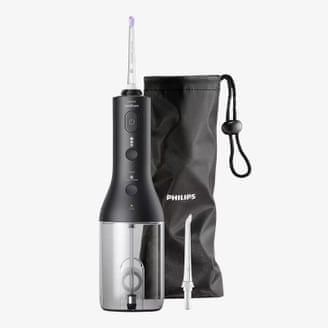
Philips
Sonicare Cordless 3000
from £79.99
What we love
Quad-stream tip fires water in four directions at once
What we don’t love
Orthodontics and periodontal pockets aren’t catered to
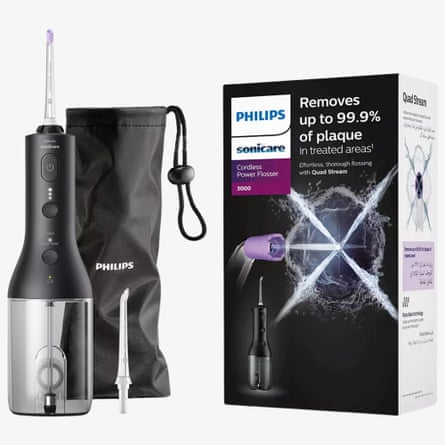
The best of the cordless bunch is the Philips Sonicare Cordless 3000. It offers a great combination of design, power and capacity, although it’s not ideal for those with orthodontics or periodontal pockets as it comes with just two tips.
Why we love it
The main thing that sets the Sonicare Cordless 3000 apart is its special Quad Stream tip, which fires water in four directions at once. While that might be bad news if you accidentally turn it on outside your mouth, it provides good, powerful coverage across multiple teeth and gum areas at the same time as a result.
It also comes with a standard jet tip for a more intense stream, and both provide a decent amount of power. While Philips doesn’t list a PSI figure, in my unscientific laminate-soaking distance test, it landed in the top half, and it feels like it provides a good level of pressure in the mouth, too. More importantly, it comes with a “deep clean” setting with a more thorough pulsing jet of water.
The water tank holds a decent 250ml, and is transparent so you can easily keep an eye on how much is left. One thing to note, however, is the charging method: my unit came with a bespoke power cable, but other versions pack USB-C. Philips’s PR confirmed that they’re otherwise identical, but USB-C is undoubtedly more handy if you lose the original cable.
It’s a shame that … it comes with only two tips.
Tank size: 250ml
Heads: two: Quad Stream, jet
Pressure: not stated
Waterproof: not stated
Charging: USB-C/figure 8
Philips
Sonicare Cordless 3000
from £79.99
What we love
Quad-stream tip fires water in four directions at once
What we don’t love
Orthodontics and periodontal pockets aren’t catered to
The best of the rest

Ordo Hydro Sonic
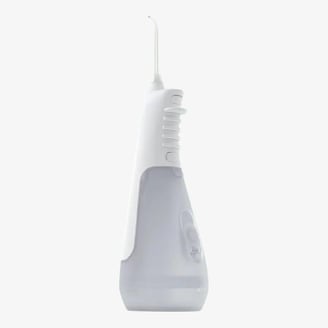
Ordo
Hydro Sonic
from £59.99
What we love
Competitively priced, powerful and with IPX7 waterproofing
What we don’t love
Slightly basic design, which struggles when upside down
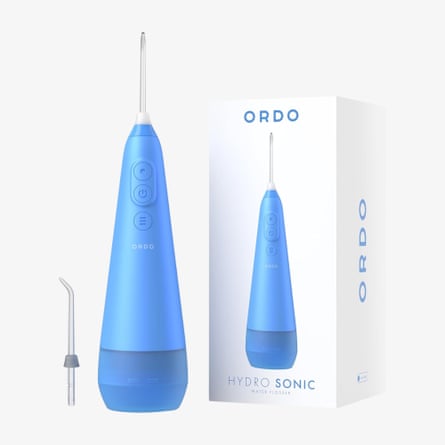
Best for: raw power
With an official rating of 160PSI, the Hydro Sonic officially provides a third more power than its rivals, which is great if your gums can handle the force. The travel lock is also handy to avoid a soggy bag, should you forget to empty the tank.
With an RRP of £60, it’s also competitively priced, though it’s undoubtedly a basic solution, with only three power settings, no automatic pulse option, and just two jet tips in the box. The design, while distinctive and available in various cheerful colours, makes it difficult to tell how much water is left in the tank at a glance. It also sometimes struggles when turned upside down to tackle the backs of your teeth.
It didn’t make the final cut because … it’s somewhat basic in its functionality.
Tank size: 260ml; heads: two: jet (x2); pressure: 80-160PSI; waterproof: IPX7; charging: USB-C
Ordo
Hydro Sonic
from £59.99
What we love
Competitively priced, powerful and with IPX7 waterproofing
What we don’t love
Slightly basic design, which struggles when upside down
Spotlight water flosser
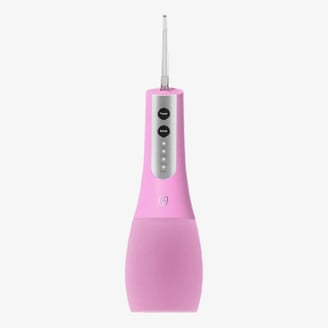
Spotlight
Water flosser
£69.99
What we love
Biggest tank capacity in a cordless model; solid all rounder
What we don’t love
Tank has to be unscrewed for refills; no USB-C charging
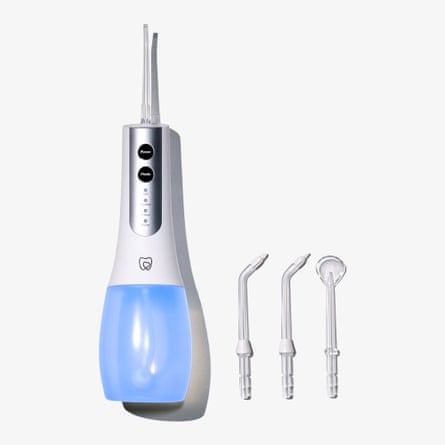
Best for: capacity
If you want a cordless flosser with a generous water capacity, then the Spotlight is top of the tree, holding a massive 400ml in its bulbous tank. Unlike other cordless models, it means you can use it over multiple sessions – and there’s a built-in UV light setting to sterilise the water, if you don’t like the idea of nasties swimming in it.
That’s something of a gimmick, but it’s a nice extra to have in an all-around great water flosser. It is pretty powerful, comes with four different heads, offers three operating modes, and is pretty good at working upside down, thanks to the Hydro Gravity Ball at the end of the reservoir tube.
There are two downsides: it charges with a bundled figure-8 charger rather than USB-C, and the water tank has to be unscrewed every time you need to fill it. Given I managed to incorrectly align it a couple of times, that may get messy – but that should at least let you test the IPX7 waterproof rating.
It didn’t make the final cut because … the tank is a pain to fill, and it uses a figure-8 charger rather than USB-C.
Tank size: 400ml; heads: four: jet, orthodontic, periodontal pocket sprinkler, tongue scraper; pressure: 60-120PSI; waterproof: IPX7; charging: figure-8
Spotlight
Water flosser
£69.99
What we love
Biggest tank capacity in a cordless model; solid all rounder
What we don’t love
Tank has to be unscrewed for refills; no USB-C charging
Icy Bear water flosser
Icy Bear
Water flosser
£59.99
What we love
Can collapse into a smaller size for travel
What we don’t love
The pull-out design can cause problems
Best for: travel
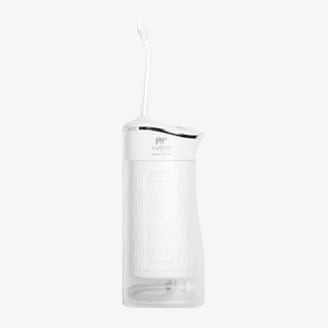
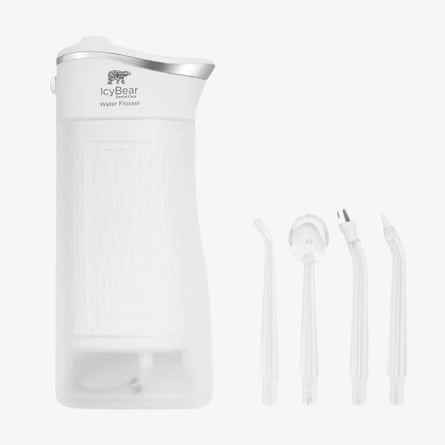
Plenty of water flossers include travel cases in the box, but from the selection I tested, only the Icy Bear flosser gets physically smaller when not in use. The body of the flosser slips down into the tank, reducing its size by about a third: clever!
This design does come with some drawbacks, however. It’s slower to fill than other models, and it can sometimes leak a little – something countered by its IPX7 waterproof rating. The design also requires a long press to turn on and off, which is great to avoid accidental leaks in your bag, but less good when your mouth is rapidly filling with water and you need to breathe without soaking the mirror.
It didn’t make the final cut because … the pull-out design is not without its problems.
Tank size: 200ml; heads: four: jet, orthodontic, periodontal, tongue scraper; pressure: not stated; waterproof: IPX7; charging: USB-C
Icy Bear
Water flosser
£59.99
What we love
Can collapse into a smaller size for travel
What we don’t love
The pull-out design can cause problems
What you need to know

How to use a water flosser
Part of the appeal of water flossers is how simple they are to use: just fill the tank, and then work the flosser along the gumline, spraying between the teeth. You may find your flosser comes with different attachments that require an adjusted technique, but that’s the basic operation.
Dr Flavio Pisani, a senior clinical lecturer at the University of Lancashire’s School of Medicine and Dentistry, recommends intermittent spraying, and some flossers have this pulsing action as a built-in setting.
“It should be an alternate flowing and oozing that makes the power efficient,” he says. Otherwise, you could “just get your mouth full of water without any effect”.
Some people like to add a little mouthwash to the water, but Pisani says the evidence doesn’t support this as being any more effective.
“I think it’s really only going to make people feel fresher,” says Dr Sam Jethwa, president of the British Academy of Cosmetic Dentistry, “rather than any other benefit.”
How do water flossers work?
Dental floss and interdental brushes physically scrub the area between teeth, but water flossers delegate the job to a pressurised jet of water. The idea is that the water can help dislodge food debris, plaque and bacteria from between the teeth without the downsides of traditional methods, like having to find the perfect fit and the wasteful nature of disposable products.
Of course, water flossers bring their own downsides, such as the larger space they take up and the need for charging or a power socket. From an ecological perspective, they obviously also use a lot of water, and most contain a battery, though on the sustainability flipside, they’re not single-use like floss dispensers or plastic picks.
However, the bigger question is whether they are as effective, and not everyone is convinced.
Water flossers vs regular flossing
From speaking to several dentists, the consensus is that water flossers aren’t a replacement for mechanical flossing, but they have their place. They are, as Caitlin Miller, head of dental hygiene and therapy at Bupa Dental Care UK, told me while I was testing toothbrushes, “better than nothing” for patients who won’t use floss or interdental brushes.
Jethwa agrees. “The example I give patients is a boat sitting in a dock for a long time – it’s got algae on the bottom. Get a hose pipe to try to get it off, it’s not going to do anything. You need the water, but you need the mechanical movement there,” he says.
“So I wouldn’t say that they’re a replacement for floss. It may be better to use a water flosser if you’re not using anything.”
Pisani is open to water flossers’ potential, but says there is “not strong evidence” of their efficacy compared with traditional interdental cleaning.
“There’s recent evidence from a study over four weeks of using water flossers compared to TePe brushes, and the [results] are quite similar,” he says. But there’s a catch: “The problem is that this study was not giving the group using interdental brushes the size that fit their teeth.”
Hopefully, further study will reveal more, but don’t expect anything overnight. “We have reached a consensus about electric toothbrushes, but bear in mind they’ve been available since the 1980s,” Pisani continues. “We found the evidence about the better use of electric toothbrushes about 10 years ago.”
For now, Pisani doesn’t recommend seeing water flossers as an outright replacement, but insists that interdental cleaning is crucial. “I tell my students and patients that if I were sent to a desert island with only one tool, I would definitely bring my TePe [interdental brushes] with me, rather than a toothbrush, because gum disease starts in between teeth or in between implants.”
“If a water flosser encourages people who are doing very little in addition to brushing to do something, then it’s a good thing,” says Jethwa. “But what I wouldn’t encourage is for people who are flossing well, using interdental brushes and achieving good oral hygiene to think that this is an easier way of achieving the same thing.”
How often should you use a water flosser?
As the jury is out on their efficacy, it’s hard to give a definitive answer. Yet, as most experts suggest you should floss at least once a day, water flossers should theoretically at least match that schedule.
Given Miller sees water flossers as an “adjunct” to traditional flossing methods, a routine where the two are used in tandem might be optimal. “It should be something you don’t need to rely on every time,” says Pisani. “I would keep the old-fashioned TePe brushes for the night, and keep [water flossers] for the morning.”
Can water flossers damage gums?
The broad consensus seems to be that water flossers can’t damage gums if used correctly, and are generally more gentle than manual flossing.
That said, it makes sense to start off on lower power settings and to build up, especially if you have sensitive gums.
“I was using one for a little while, and the powerful settings were almost unbearable to use, so I put it down to one of the lowest settings,” says Jethra. “But I don’t have that type of dentistry in my mouth [such as braces] that needs a higher setting.”
Are water flossers good for those with braces?
If you’re wearing braces, you may find a water flosser to be especially effective at removing debris that gets caught in the wires and brackets. Look for water flossers with an attachable orthodontic tip, such as those from WaterPik, Spotlight and IcyBear listed above. These attachments tend to have tapered bristles, making them more effective at dislodging debris from the intricate parts of orthodontics, where standard tips struggle. Once attached, the technique is pretty similar to other attachments: gently move the flosser along the gumline, using the brush all around the brace to dislodge any nasties.
Key features to look for
Since most water flossers do the same thing, it’s worth focusing on the differences.
For example, tank size is important. If you’re doing a thorough clean, then some of the smaller capacities won’t be enough. Yet this directly plays off against usability and portability, so it’s a balancing act.
Power sometimes turns up in the specifications under PSI – or pounds per square inch. While a higher pressure may be more effective at pushing out debris, it can prove uncomfortable, especially on sensitive mouths, so the flexibility of power is arguably more important than the raw PSI figure.
If you’re looking at a cordless model, as most of the ones in this guide are, it’s also worth considering how they’re charged. Some power up using USB-C, which is undoubtedly more convenient than a proprietary lead, as most folk have several cables lying around. Finally, some people like to floss while in the shower. If that’s you, then look for one that has IPX7 protection.
For more:
The best electric toothbrushes, tested
Suri 2.0 electric toothbrush review
How to make your toothbrush last longer – and keep it out of landfill
Alan Martin is a writer who has been putting products, including phones, gaming devices and wearables, through their paces for more than a decade. Since he added dental products to his areas of expertise, his teeth have never been happier