.png) 3 hours ago
3
3 hours ago
3
In summer 2015, ITV revived its 00s reality format Celebrity Love Island, a show that was remembered mostly as a drunken, downmarket rival to Big Brother. Its new, slick, civilian Love Island was a slow-burn at first, but by 2017 it was one of British TV’s biggest hits. While it remains among ITV’s hottest properties, viewing figures are now more modest, with 600,000 people tuning in for its 2026 launch. Tastes have changed, but the fact that three people associated with the show – former contestants Mike Thalassitis and Sophie Gradon, and Caroline Flack, the presenter for five series – took their lives, may also have made viewers wary.
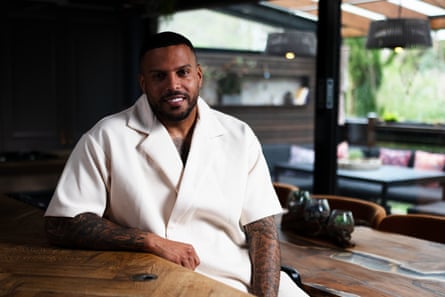
Timed to coincide with the finale of the latest series of Love Island on Monday, Prime Video has released this two-parter about the apparent “curse” that stalks the programme. It opens with former contestant Anton Danyluk, who appeared on the show in 2019, declaring that there is “no higher high than the summer you’re preparing for Love Island”. But a stint in the show’s Mallorcan villa proved less of a high for some. Luis Morrison – a 2015 Islander – says it feels “disgusting” and “embarrassing” to watch the show back. “Everyone was having sex and stuff,” he says. Malin Andersson, a 2016 contestant, says, looking back, the show feels “quite toxic … so superficial and artificial”. Watching footage of herself coming into the villa for a post-elimination row with her partner, Terry, Andersson alleges there was much meddling on the part of the programme-makers: “The producers are fucking with people who can feel deep things!”
So far, so not shocking; these are all criticisms that could have been levelled at Celebrity Love Island in 2005, or pretty much any other reality dating show. But towards the end of the first episode and into the second, things get darker. Steven Douglass – a close friend of Gradon’s – speaks about her “zest for life” before the show, and the “spark” that faded once she was in the public eye and a victim of relentless trolling. Thalassitis was given the nickname “Muggy Mike” for his apparently sneaky behaviour. Former Big Brother psychologist Linda Papadopoulos says here it was a label that was reductive: “You’re distilling down a multidimensional human being into a catchphrase.” Gradon died in 2018, Thalassitis in 2019. There was, says journalist Caroline Frost, “a pattern forming” around Love Island.
The problem, of course, is that such deaths are incredibly complex, and more complicated than The Curse of Love Island is equipped to deal with. Papadopoulos says: “This isn’t about trying to point at a show, or a company, or a person.” Yet much of the documentary concentrates on the programme rather than the online vitriol, financial pressures, family problems, existing mental health conditions, relationship problems, rolling media coverage, or the mind-bending reality of instant renown. Marcel Somerville, who appeared in the 2017 series, says: “If the care that is currently being offered to contestants was being offered back then, it might have had a better bearing for Mike.” Except that the increase in care for Love Island’s contestants – therapy, contact for 14 months, plus advice on finances, social media and adjusting to their new lives – only came about because of those tragedies. We can ask whether more could have been done earlier, but we will never know whether it would have made a difference. Dave Read, who has managed many former Islanders, including Thalassitis, says the media have got it “so wrong” when it comes to plotting a straight line between the show and his death.
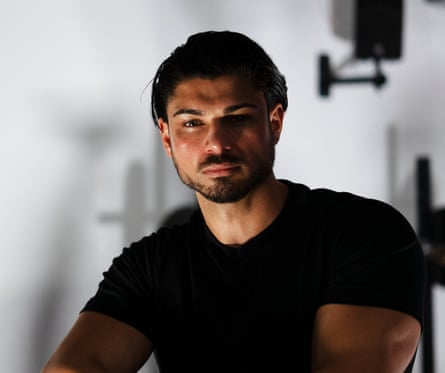
Danyluk’s frank testimony, rooted in two experiences on the show, is the programme’s saving grace. As reported in the press in 2024, he became a heavy drinker and drug user after Love Island, and tried to take his own life. Incredibly, he would later return for Love Island: All Stars in 2024, unable to shake the feeling that he had more reality mileage left in him, and wanting “to close that chapter of my life”. It was an experience which, he says, felt “a lot more produced” than it had the first time around. There was more support for contestants the second time, but that increased duty of care was, as he tells it, undercut by the producers provoking situations that were “causing a spiral effect online”. “I wouldn’t do reality TV ever again,” he says.
Read says: “You need skin like a rhinoceros to be able to deal with this industry. That’s not a Love Island thing, that’s the whole industry. It’s savage.” Indeed, the Curse of Love Island makes many valid points about the difficulties of the reality world, but it seems to forget that Love Island doesn’t exist in a vacuum. The philosopher Mark Fisher wrote in Capitalist Realism in 2009: “Reality TV is continually haunted by questions about fiction and illusion.” In the years since, the massive expansion of social media has only intensified that uncanny boundary between real life and entertainment, performance and documentary, pathos and bathos. Surely the problem here is not so much the Curse of Love Island, but the well-worn curse of overnight fame.
The Curse of Love Island is on Prime Video now.
In the UK and Ireland, Samaritans can be contacted on freephone 116 123. In the US, you can call or text the National Suicide Prevention Lifeline on 988, chat on 988lifeline.org, or text HOME to 741741 to connect with a crisis counselor. In Australia, the crisis support service Lifeline is 13 11 14. Other international helplines can be found at befrienders.org