.png) 3 months ago
66
3 months ago
66
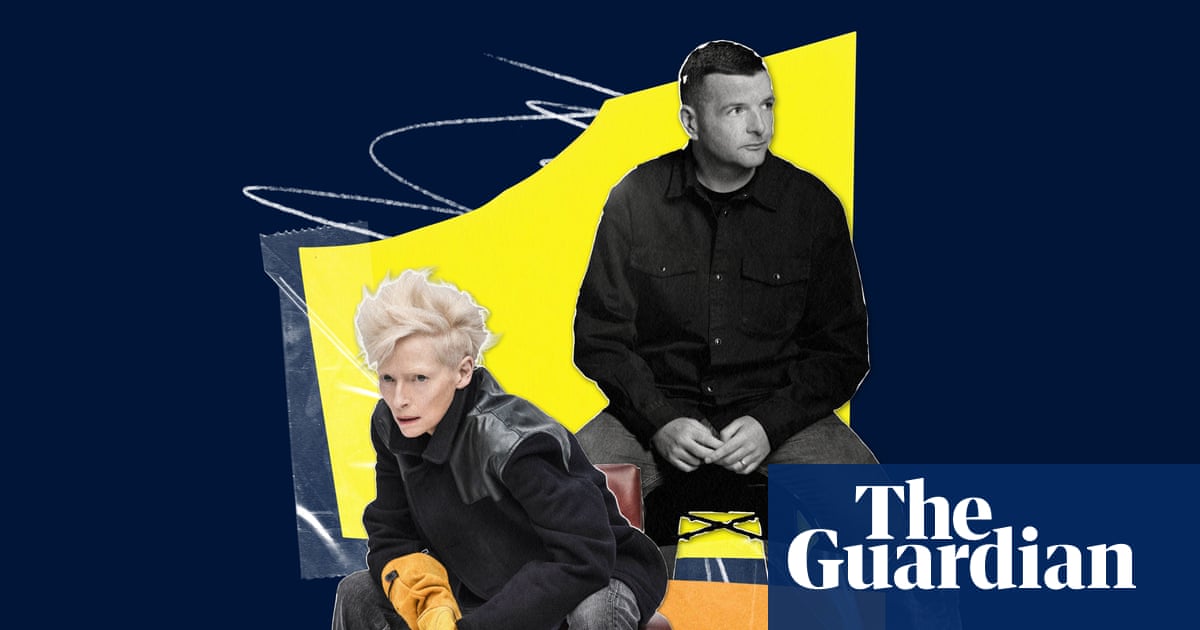
Not many actors are relieved when they have to film an eye-poppingly explicit sex scene, but that was the case with Jamie Bell on Half Man. His role involved chemsex in saunas, dogging in car parks and illicit quickies in library loos. “Honestly, I was so grateful to be shooting that stuff and not fucking 16-page dialogue scenes, where you’re emoting and it’s so intense,” says Bell. “On days when my character had to have sex with random people, I’d think: ‘Thank God!’ Frankly, it came as a welcome reprieve.”
Richard Gadd’s first TV show since the Emmy-gobbling global Netflix hit Baby Reindeer, Half Man chronicles the combustible, codependent relationship between two “brothers from another lover”. Niall (Bell) is bookish, bullied and closeted. Ruben (Gadd) is the swaggeringly violent ex-con son of his mother’s girlfriend. The six-part drama – which reaches its devastating finale next week – traces the inseparable duo’s toxic relationship across three decades.
It’s no-holds-barred TV, full of sex, violence and gut-punch plot twists. “It’s a brutal, beastly thing that Richard has created,” says Bell. “I’d be lying if I said it was easy or fun to make.”
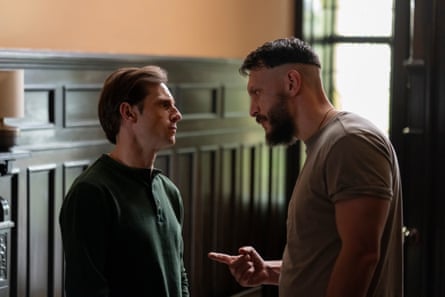
The role of Niall was written specifically for him. “I didn’t realise that when I initially read the scripts,” says Bell. “But later, when I met Richard in Los Angeles to discuss it, he said he wrote it with me in mind. I was incredibly flattered … It’s a sensory experience reading Richard’s material. He truly takes you to those places in your own life. It probes experiences you’ve kept hidden away somewhere and chosen to forget.”
Gadd never intended to play Ruben himself until Bell persuaded him. “When we first met, we didn’t know who was going to play Ruben,” he says. “I was like: ‘Well, why don’t you?’ It seemed obvious to me. For Richard, it meant putting his body through hell, on top of writing and producing. When I suggested it, I didn’t realise what the demands on him would be. But I’m grateful he relented.”
Was Bell already an admirer of Gadd’s work? “Not at first. My wife [American actor Kate Mara] had been watching Baby Reindeer, so I’d seen Richard’s face – usually accompanied by Kate going: ‘Oh my God, this show is wild!’ I went: ‘Hang on, I think I have a script from this guy. He’s making a new show.’ She was like: ‘Well, you’re an idiot if you don’t do it.’ When I did sit down and watched Baby Reindeer, I was blown away.”
He was drawn to his Half Man character’s complexity. “I thought: ‘Woah, this man is on such a destructive downward spiral …’ He’s got everything he wanted in life but still can’t accept who he is. Niall is living as several different people and he’s not comfortable with any of them.”
Bell really empathised with gentle Niall being drawn to such an aggressive alpha male. “Ruben is this disaster of a man. A bull in a china shop, destroying everything and everyone in his wake. Why doesn’t Niall step away? Partly self-preservation. Niall feels vulnerable whereas Ruben is intimidatingly powerful. He can be Niall’s protector. People fear him. Because of that, Niall latches on to him almost parasitically. Ruben becomes his life support system. I understood that 100%.
“I grew up in an all-female household and did ballet, so I used to attach myself to tough, troubled guys too. Not my kind of crowd at all but I’d rather have them on my team than not.”
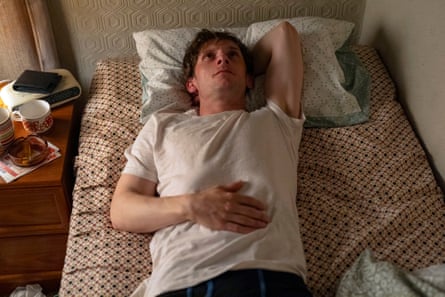
He also relates to Niall’s self-loathing. “I’ve had that for ever,” he says. “It’s gotten worse as I’ve got older. I love what I do and I’m blessed that I still get to do it after all these years but I can’t watch anything I’m in. I hate the finality of it. You leave going: ‘You fucked that one up. Ruined it. You’re just not good enough.’ I forget that it’s just a job, not life or death. Other actors have told me to chill out but I don’t know how.”
Niall struggles with his sexuality to the extent that he undergoes conversion therapy. As a straight man, Bell felt an acute sense of responsibility portraying that. “It’s the centre of the character,” he says. “The basis of all his issues. I took that very seriously. Niall’s self-hate goes beyond shame or societal pressure. Somehow, his own sexuality doesn’t sit right within his worldview. That, to me, is beyond sad. ‘Be yourself’ is the simplest advice yet at times, the hardest to adhere to.” As a result of his turmoil, Niall goes to some dark places sexually. “Because of his repression, everything is guarded and hidden. That becomes the excitement. It’s an addiction. He gets a kick from dangerous sex.”
With its portrayal of male rage and damaged antiheroes, Half Man taps into debates about toxic masculinity. Does Bell believe his gender is in crisis? “Look at who are the majority transgressors in this world,” he says. “It’s men, on all fronts – not just misogyny but conflict, crime, everything. It’s important to shine a light on that. The conversation is ongoing. Hopefully this show adds something.”
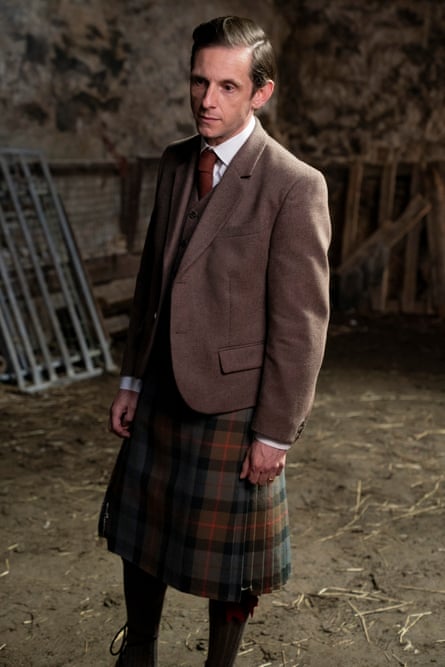
Bell’s father walked out before he was born, leaving him to be raised by his mother and elder sister. What’s his own relationship with masculinity? “There is a clear theme throughout my work of parental dysfunction,” he says. “I must exude it because these roles come to me. People must go: ‘Orphans? Fathers and sons? Get Bell for that!’ In All of Us Strangers [Andrew Haigh’s 2023 film], you hear how Andrew Scott is talking to his father [played by Bell] and naturally it makes you reflect on your own parenting. That was a haunting, eye-opening experience.”
Half Man is full of bone-crunching violence. Gadd transformed his physique to play bruiser Ruben. Did Bell have to undergo fight training? “No, thankfully,” he says. “Niall is normally on the receiving end. There was a line in the script that says: ‘Niall is totally physically incapable.’ I was like, ‘Great! That’s easy.’”
The climactic episode features a pivotal two-hander that Gadd has described as the best thing he’s ever written. “That was one of the first scenes I read and the one that made me do the show,” says Bell. “I was like: ‘Wow, if we could sustain this long scene, bring all these men’s history to it and lay it all out on the table, that’d be a great piece of television.’ There’s nothing to cut to, no guns or gimmicks, just two men looking at each other and coming clean.” There’s also a memorable vomiting scene in the finale. “Throwing up on screen is always bizarre,” says Bell. “You fill your mouth with oatmeal, banana, peas and carrots, then spew it out.”
He’s currently shooting his starring role in the as-yet-untitled Peaky Blinders sequel series, leading the period gangster saga into its next chapter. Set in 1950s Birmingham, it sees Bell take over the role of crime kingpin Tommy Shelby’s son and heir Duke – played by Barry Keoghan in film spin-off The Immortal Man. Details are top secret but I can reveal that Bell is sporting a sharp short-back-and-sides haircut and is heading off to filming after we speak. “I’m thrilled to be part of it,” he says. “The show has such a great legacy and an incredible fanbase. People have high expectations, as they should. We hope to bring them something different and exciting.”
Was he a Peaky fan before landing the part? “First and foremost, I’m a longtime Steven Knight fan, dating back to his film scripts like Dirty Pretty Things and Locke. Steve seemed surprised when I told him that! What I admire is how he’s created this entire universe in his own back yard. Peaky takes its cues from classic Hollywood – it’s totally a western at heart – but transposed on to an urban working-class environment and given grand scale. It’s such a treat stepping into that.” He’s savouring the show’s signature tailoring, too. “It does so much work for you. You put on that iconic cap and you’re away.”
Knight is outspoken about working-class representation in the arts. Does Bell agree that it’s an issue? “I wish it wasn’t,” he says. “I came from a small town in County Durham called Billingham. There weren’t a ton of opportunities but we did have the Billingham Forum theatre. My mum took me to see touring West End shows there and that’s what gave me the bug. Reaching out to those places opens young people’s eyes and inspires their ambitions. That’s why it’s so vital local theatres get funding to remain open. It’s about access and exposure.”
Next up is The Uprising, Paul Greengrass’s film about the 1381 Peasants’ Revolt. “Paul has long been one of my favourite film-makers. I saw Bloody Sunday when I was 16 and it changed my life. The level of detail he pumps into his movies is unrivalled, so it was bucket list stuff to work with him.” Is there any truth to whispers of a long-awaited sequel to Steven Spielberg’s Tintin? “Those rumours have been rumbling for 20 years!” grins Bell. “But I love Tintin and the intrepid boy reporter all grown up could be interesting.”
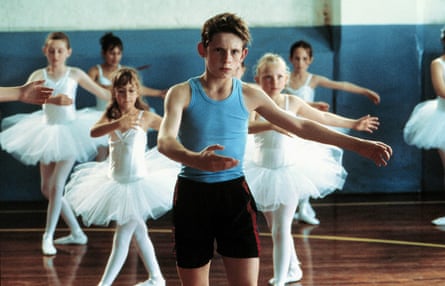
To many, Bell will for ever be preserved in aspic as Billy Elliot, the role that catapulted him to overnight fame. Aged 13, he beat 2,000 other boys to the part and became the youngest ever best actor winner at the Baftas. He’s a rare child star to achieve career longevity. “I’m just grateful to still be working, because these stories frequently don’t end up that way.”
He laughs. “I turned 40 recently, would you believe? Personally, I’m fine with ageing. I just feel terrible telling people. Many still think of me as a child, so when I say I’m a 40-year-old father of three, it scares them. They go: ‘Wait, no, you’re a boy dancing on top of a toilet!’” With Half Man and Peaky Blinders, Jamie Bell is now dancing into his box set drama era. So far, he hasn’t put a foot wrong.
Half Man continues on 26 May at 10.40pm on BBC One and concludes on 29 May on BBC iPlayer. In the US, it is streaming on HBO Max and Hulu.