.png) 2 months ago
52
2 months ago
52
Key events
How do I get motivated again after a spell of not running?
Sunshinelondon84: I go through spells of running and not – but haven’t been running much since having my son (five years ago!) What motivates you to get out of the house again (and keep it up) after a long spell of not running?
Sarah: After having my children it took longer than I expected to get some routine back in my training. Having young children can be exhausting so finding the motivation for running is not always easy. But motivation isn’t always what you need when you’re coming back to sport. In fact, I think discipline is more important at the start, because motivation often comes after you’ve pushed through that difficult first phase where you have to drag yourself out the door. Showing up consistently is what builds motivation.
In terms of keeping yourself accountable I would say get a coach – there are lots of online coaches now who offer guidance and make sure that you stick to a programme. This is slightly different to a personal trainer and involves someone checking in with you weekly, so it’s also a lot less expensive. If you don’t like the idea of a coach then find motivation through friends: maybe set a date to run with someone once a week. You’re less likely to scrap that plan if you’ve committed and also you’ll find motivation through them, especially if they are very committed.
Increasing strength without lifting dumbells
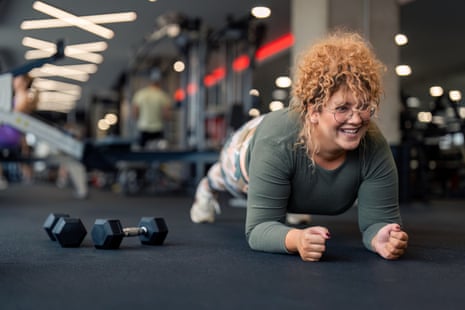
SophiaC asks I find the gym and lifting weights pretty boring and exercise classes too hectic (I’m dyspraxic and get mixed up with left and right). What (if any) strength training exercises would you recommend to help a middle-aged park runner avoid injuries?
Sarah: For a middle-aged recreational runner, I’d opt for exercises that protect against common injuries. So focus on calves, glutes, hips, core and balance. Calf raises are going to be a high priority to protect the achilles tendon, ankles and plantar fascia. Step ups and deadlifts will be good for the glutes and posterior chain.
Single leg exercises will also help protect against injuries as they often come from one leg being stronger than the other. Balance might be harder if you are dyspraxic so make sure you take it slow and don’t put too much pressure on yourself. You could try one leg stands, as well as single leg deadlifts using a support if you need it. Lateral band walks can help with pelvic stability.
Finally, never ignore your core – so many people do. This is the foundation of the body and a strong core protects against a range of injuries. Side planks are good, as well as planks, deadbugs and hollow holds (when you’ve built up a bit of strength) as this focuses on the deep core. Work on your balance too, and make sure that you incorporate exercises that challenge this into your routine.
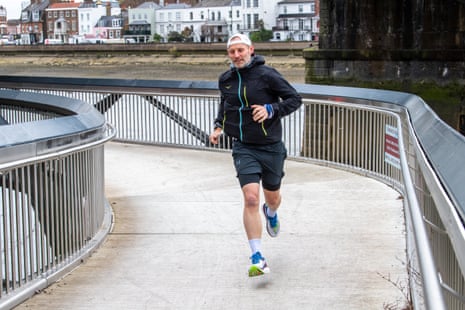
Best shorts for a trail runner?
Redstar1000 asks: What are the best running shorts for a middle-aged man, size M/L who loves trail-running?
Kieran: I really like the HOKA Aero.
Pricey sport beverages are not the only option
Mogie asks: What’s your go to recipe for a home made energy/electrolyte drink? Those tabs and powders are way too expensive.
Kieran: I sometimes just eat honey or maple syrup and add some regular salt. You can dilute it with water if you want to drink as you run.
What's your most unforgettable run?
NotsoSpeedyBecs asks: Hello you two, if there was one run (not race) you could do again, what would it be?
Sarah: I had an ex-boyfriend who lived in Germany and we used to do long runs in Mülheim an der Ruhr. It was just the most beautiful open expanse of green and trails.
Kieran: A few years back I did a solo lap of Lake Garda, 100 miles in three days carrying all my own kit and ending each day with delicious Italian pasta. It was a stunning (and cheap) way to see Garda.

Tips for time improvement
JonCClements: If I want to break 20 minutes for a 5k – current personal best 20:00. What’s the single best training I can do to achieve this?
Sarah: Love this question because I am currently trying to break 19 minutes for my 5k time again. So my advice would be to see running as a holistic thing and don’t forget to strength train, because that will give you the power to push in those hard moments of a 5k.
I’d also make sure that you are doing some speed work: a good drill for a 5k is 1k repeats at faster than race pace for around five or six efforts, with a rest in between each set. Lastly, keep your running volume high so mix it up with some longer distances and slower pace running to build your aerobic engine.
But really, if I could give one piece of advice it’s keep showing up. Consistency is the only way to get the times you want because your body adapts the more training you give it. Week in, week out it’s not about being the best but chipping away at your goals until three months later you get to where you want to be. Make the runs where you are pushing yourself challenging, you don’t want them to be too easy. Also, get plenty of rest in between hard sessions. Nutrition is also important, as will be sleep and hydration.
Kieran: I turned 48 this year and ran my fastest ever 5km about six months ago. Sometimes it’s tempting to think that to run faster we need to do lots of fast running but I got there by building consistent volume in my training. For me that was moving from 30 mile weeks, steadily up to 50 mile weeks (though your numbers may be different).
I put a big focus on the easy miles, lower heart rate runs below 130BPM heart rate. A lot of what I call “gumping”, just running easy for fun. I mixed in one targeted speedier session each week, an interval run or a fast parkrun but I made sure I came to those sessions fresh, so I’d hit my targets. And also one longer run up to 90 minutes or so.
What’s best, jogging or fast walking?
Redstar1000 asks: Is light jogging really better from a cardio and fitness point of view than fast walking?
Sarah: Interesting question – I’d caveat this by saying it depends how fast you are walking but generally jogging is going to elevate your heart rate a lot more and increase your vo2 (the maximum amount of oxygen your body can use during intense exercise). If you struggle with running though I’d say walking is a fantastic alternative and a great option if you’re older and want to keep active. If you want to get more out of it then walk up hills or push the pace.
Going to the gym? Treadmill-friendly shoes recommended
Chopwoodlookgood asks: Would you recommend a specific shoe or type of shoe for treadmill running? 5 to 10km distance three times a week.
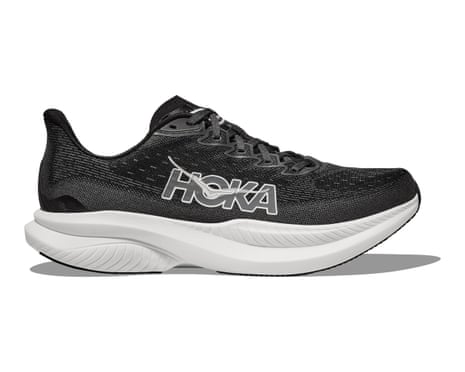
Kieran: You don’t necessarily need a different shoe for the road and the treadmill. But there has been a growing trend for shoes with big stacks of soft and bouncy midsole foam. They soften the impact of road running and help propel you round your next parkrun, but they don’t always feel as stable and reliable as you might want, on already-bouncy treadmill belts. In response, some brands have released treadmill specific shoes, like the Adidas Treadflow. They pack a firmer, more traditional midsole but my suggestion would be to look at regular shoes that use less energetic foams, like EVA or EVA blends. The good news is they can be cheaper. Shoes like a HOKA Mach 6 or Puma Velocity Nitro 4 could be good options.
Ouch! How can I lessen foot pain?
IscoBusquet asks: My first full marathon was a disastrous go at the Bristol to Bath which left me with terrible plantar fasciitis. What are the best ways to mitigate the foot pain?
Sarah: Sorry to hear this. Without knowing your training block, if you got this after a full marathon, I am wondering whether you did too much too soon? One of the most common causes of this sort of pain is a large increase in running load. Regardless, with any more runs it’s worth trying to build up more slowly. Reduce the running volume and also look at getting a pair of trainers that support your feet. You can also do some specific stretches for plantar fasciitis and use certain massage techniques that can help.

Shorts rubbing you up the wrong way?
Franglais asks: Which running shorts for women would you recommend to eliminate chafing? Also (a bit off topic) any recommendations for what to wear for a first sprint triathlon, which involves a sea swim? Again worried about chafing especially with salt water in the mix!
Sarah: For chafing I think fit matters more than brand. I always think you need to go smaller on sizing for running leggings or shorts, because a snug fit is often better – snug but not restrictive. For shorts I am a big fan of Lululemon or Sweaty Betty shorts. I am afraid I don’t have any triathlon experience so cannot offer anything more specific on that.
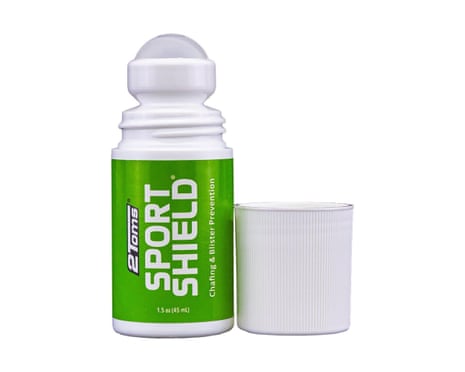
Kieran: I swear by an anti-chafe roll-on oil called 2Toms Sportshield. It’s been my go-to for 15 years and I’ve relied on it for some big adventures like the Marathon Des Sables, my 67-day run across Europe, and for every marathon since 2015. It’s easy to apply (to all the nooks and crannies), I find one application lasts all day and protects all your soft bits.
Running is booming - what's the future?
comradest asks: With running becoming ever more popular where do you see the future of the sport? Not just shoes, but tech, races and the running subculture.
Kieran: Wow, that’s a big question. I hope that running’s popularity continues to boom. It’s been great watching clubs and communities spring up all over the place, helping people to find a running tribe or community that reflects their needs and gets them out running. Whether that’s parkrun, online-only running clubs or a Friday night run club rave (those are a thing by the way).
Technology will also continue to inspire and empower with AI and AI-powered apps providing the tools – and with it the confidence – to get started without the cost of a coach. But I also wonder if we’ll move away from the obsession with tracking and stats, to a more simple approach to running. A bit of a backlash to the Strava generation where we tune into our bodies rather than judge everything based on what a watch might say.
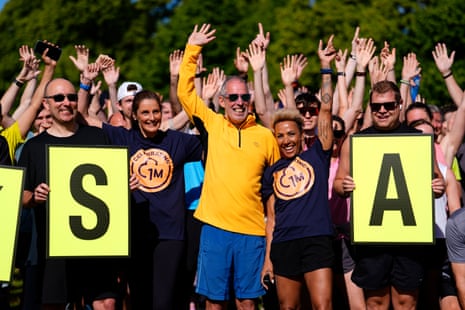
Photograph: Jordan Pettitt/PA
What's your soundtrack and any headphone recommendations?
BadAtCrosswords asks: Do you listen to anything while you run? If so, do you have any recommendations for headphones/earphones?
Sarah: I am a 1990s kid so I love running to Eminem or something that can motivate me with lyrics!
Kieran: My running playlists lurch from cheesy house music to The Greatest Showman soundtrack. I love the new Shokz OpenFit Air. They’re lightweight, clip on, open-ear style headphones that let you hear some of the world around, won’t drop out your ears and have a good battery life. If you prefer in-ear style buds, the Beats Powerbeats Fit are also excellent.
How do I stop getting bored running?
Rad_Mobile asks: I find I’m completely bored after about five mins of running, although I do force myself to push it to 10 minutes which usually gets me to about 1.5k. How can I overcome this to run further?
Kieran: The first 15 minutes of every run is always the worst. So I never judge a run based on how I feel. I just tell myself that if I still hate it after 15 minutes, it’s ok to go home, happy that you tried. I also think it’s ok to be bored. In fact, in a world of hyper connected, always on, boredom is a muscle we need to flex more often. I also love turning those early moments into a little challenge, adventure or giving yourself a reward. Run until you’ve seen 15 red cars, arrange to meet a friend 15 minutes away, on a brand new route or to a lovely cafe.
Sarah: I’d suggest trying to run with a friend. I used to run with a neighbour and we spent the whole time chatting/ gossipping/ laughing – it was a great way to catch up. Either that or find a juicy true crime podcast (if that’s your jam). Another option is to make the run functional, so if you need to get to another part of London then run instead of getting on the tube. It’s going to be just as boring (if not more) sitting down underground – and then you know your run has a specific purpose.
For me, my favourite and most enjoyable runs are ones on holiday where I can combine running with exploring a new place – and seeing new sights. Perhaps you could make the route a bit more exciting? I also sometimes use a run as my ‘problem solving’ time, and I used to run a lot when I was writing my dissertation. I’d go out with a question I needed to answer and come back with an answer.
Running for office – what's with MPs in shorts?
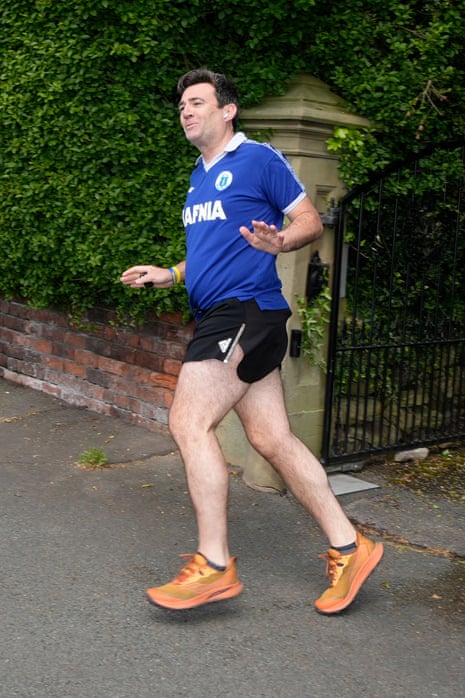
Fromey asks: What is it with politicians and running photo ops? Boris, Obama, and recently Andy Burnham. And I wonder why female politicians aren’t often seen out running in this way?
Kieran: There are a lot of signals being sent when you see a politician running: strength, motivation, energy, verve and vitality. It says: “I care about my health and fitness”. Running is arguably perceived as a more accessible activity that’s normal, simple, affordable. I also think they love being seen moving on foot, through their local neighbourhood, suggesting they’re connected, one of the people, doing what the people do.
Running has also become hugely popular so plenty of celebrities of all stripes love a running photo op, too. But when you see Boris running in big baggy tees and shorts, and Andy Burnham in his Everton shirt, it does make runners question the authenticity. I’ve seen lots of people on social suggest a ‘real runner’ probably wouldn’t wear that. As for female politicians, Liz Truss loved a running photo op – say no more.
Running is hard on my joints – advice please!
senoj1 asks: I’m reasonably fit but heavy – 110kg – and running is hard on the knees and joints. I do enjoy a run though, particularly a trail run, but would like to build up to go longer than 5k. Any tips? How do I build up safely? And why is going downhill harder than going uphill, joints wise? Can you give us permission to stop for a walk?
Sarah: If you’re heavier it’s always worth building up a bit more slowly to longer runs and also taking the pace down. Joints and bones can take months to build up a tolerance that might come more quickly from a cardio perspective. I’d suggest slowing down more than you think – make sure you can hold a conversation while running – as well as using run-walk intervals to gradually get the distance up. This is definitely acceptable!
Strength training is also key for heavier runners – think squats, lunges, step ups, glute bridges and core work. Another tip is to choose forgiving surfaces like dirt tracks or gravel paths – even heading to an athletics track. Finally, shorten your stride and think shorter and quicker steps, landing under the body rather than foot out in front. This reduces braking forces and stress on the knees. It’s also worth looking at what shoes you’re running in and making sure they have enough cushioning.
Running downhill can often be harder for runners who are heavier because of the impact, so try to let gravity help you and avoid overstriding here. Leaning forward can help. Think about it this way: the uphill challenges your engine and the downhill your brakes!
How can I conquer back pain to run free?
TeeDubyaBee asks: Whenever I start running again, I love it but it always eventually leads to exacerbating a recurring back problem and a trip to the chiropractor. Could this be surmountable as I’d love to, figuratively and literally, leap this hurdle to my enjoyment?
Sarah: I am sorry to hear about your back problems. It is definitely worth checking it out with a physio for a more holistic take before doing anything. A lot of back problems stem from a weak core so it could be worth focusing on building that up, which you can do slowly over time (after checking with your physio that it’s suitable). They can give you some specific exercises to do and then it will be a case of committing to that over time. Progress isn’t always quick but in the long run it will make running much easier.

Can kit help running in high temperatures?
Rupes_manuva asks: I am living in the south of Spain. I do plenty of running (and have spent plenty on kit over the years). When the temperature starts going up, my motivation seriously declines - I find running the heat particularly unpleasant. What one piece of killer kit would you recommend that really helps when running in the heat?
Kieran: Running in the heat raises your heart rate as the body works to cool itself. So running at paces you’d usually find easy feel more effortful. That can be a big demotivator. There’s not really one killer piece of kit to make hot-weather runs more enjoyable. Lightweight, sweat-wicking technical running gear works to a point, and when I ran the length of the Danube, often covering more 30 miles in 35 degrees, I used a combination of a hydration vest, electrolytes and salt tablets (Precision Fuel and Hydration products are excellent) to ensure I was well hydrated.
I’d also run holding ice to help bring down my core temperature. But for me, heat training preparation is really the secret weapon. I spend time in saunas and take hot baths so that when the time comes to face the heat, my body is more acclimated to the conditions and I’m more resilient to higher temperatures.
Welcome to the Conversation
The Filter’s running expert, Kieran Alger, and the Guardian’s consumer affair correspondent, Sarah Marsh (and personal trainer/runner), will be answering all your running questions on Thursday 18 June at midday BST.
No question is too detailed or too silly – from how to recover from a race to kit you don’t need to waste your money on. Or perhaps you’d like to know about how to manage post-partum running; which politician is the best photo-op jogger; or which, if any, AI training programmes are the best to set you up for success. Post your questions below now.
In the meantime here’s some of our best recent journalism about putting one foot in front of the other: