.png) 1 hour ago
4
1 hour ago
4
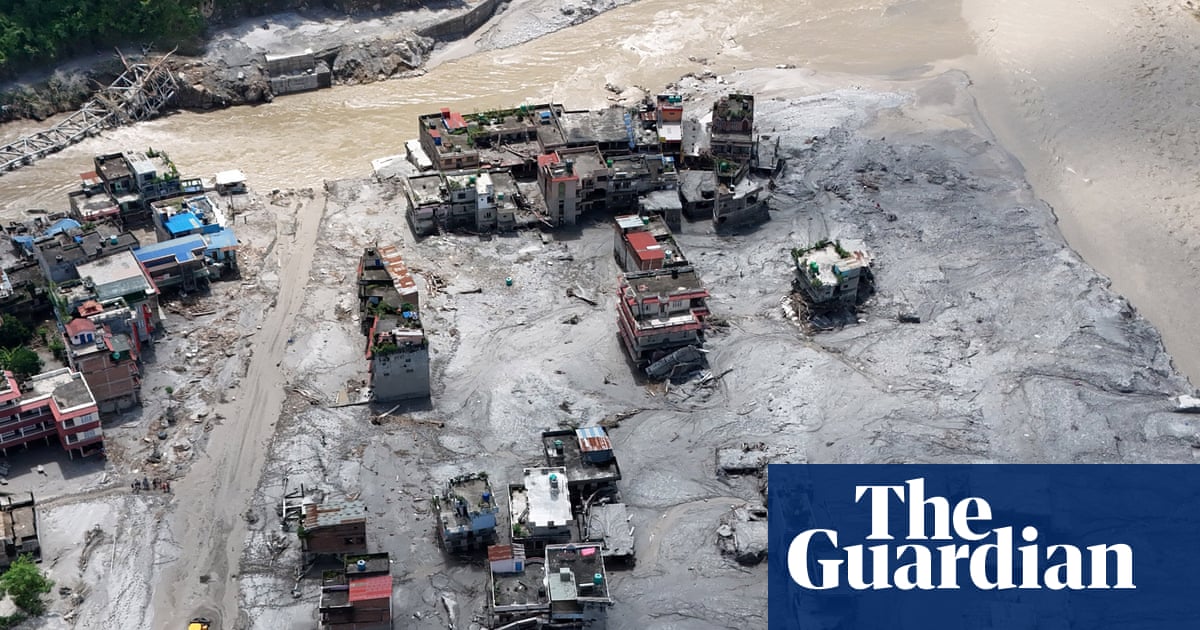
Thousands of people in Nepal and Tibet are in desperate need of emergency assistance following Wednesday’s disaster. With 360 people confirmed dead, more than 1,300 others are still missing as search and rescue operations continue. The precise sequence of events linking glacier collapse to flash floods is yet to be confirmed. But there is no doubting the enormous destructive power of the brown torrent that can be seen on video clips surging down the steeply sided Himalayan valleys, sweeping away everyone and everything in its path.
Testimony from survivors about terrifying near-escapes and losses is reminiscent of previous disasters, including the 2004 tsunami. With some of the worst-affected areas still cut off and accessible only by helicopter, there is a high level of uncertainty about the total number of people who have died or homes that have been destroyed. Existing medical, food, shelter and sanitation supplies will need to be replenished. Pledges of help for locally led relief efforts from foreign governments and agencies, following reports that hundreds of those missing were tourists or pilgrims, must lead to swift action. People need basics including electricity and clean water before they can start to rebuild and recover.
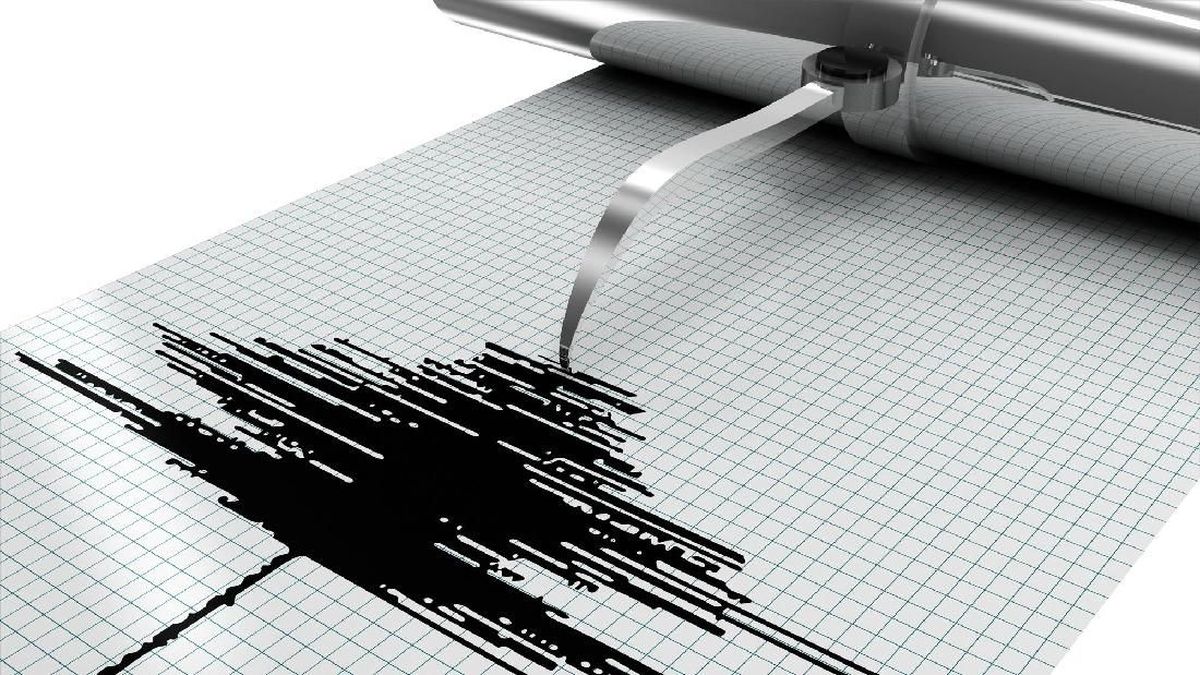
Satellite images of the glacier and affected rivers are among crucial pieces of evidence used by scientists to piece together an account of what happened. Initial reports of an earthquake were later discounted, with seismic activity instead attributed to the impact of the glacier collapse and ice-rock avalanche. Nepalese authorities have issued warnings about the high risk of further floods. Women and children who have been displaced are particularly vulnerable to further harm, including disease and trafficking.
As with other disasters that are widely recognised to be climate-related, it is unwise to jump too swiftly to conclusions. Tectonic movement, which leads glaciers to change their shape over time, is a natural process. But already, multiple glaciologists and other earth scientists have pointed to global heating as a crucial destabilising factor. Higher temperatures are well established to be altering mountain environments worldwide, with the Himalayas warming twice as fast as the global average. As the Intergovernmental Panel on Climate Change has pointed out, this puts the region and its people at heightened risk not only from avalanches, landslides and floods, but also from freshwater shortages caused by retreating glaciers.
The implications of this may seem overwhelming. While millions – and perhaps billions – of people around the world accept that greenhouse gas emissions have altered the Earth’s atmosphere, the impact of human activity on the geology of mountains is a less familiar idea. Once the immediate humanitarian crisis in Nepal has eased, and survivors have been helped to safety, this is the reality that must be addressed.
Mitigation of the climate threat through the transition away from fossil fuels remains essential. But resilience and adaptation measures also offer vital protection, particular to communities in exposed locations. As mountains become more dangerous, early-warning systems must be strengthened. Disaster preparedness should be prioritised at a national level and in aid budgets so that agencies are better equipped to react. Governments must rally round the people of Nepal and Tibet, and prepare to support similarly afflicted parts of the world in future.