.png) 3 months ago
85
3 months ago
85
When the present pope adopted his regnal name, he explained the choice by reference to a 19th-century predecessor who used the papacy to address the great social question of his time. In the 1891 encyclical, Rerum Novarum (Of New Things), Pope Leo XIII analysed the social forces unleashed by the Industrial Revolution, and outlined principles for a just settlement between the forces of capital and labour. Leo XIV hopes to do something similar in relation to the accelerating digital upheaval of our own age.
As anxiety grows over big tech’s impact on how we work and live, such ambition should be applauded. The early fruits of the pope’s work were presented in the Vatican on Monday after the publication of his first encyclical, Magnifica Humanitas (Magnificent Humanity). In 42,000 or so words the document itemises the daunting challenges posed by developments in artificial intelligence, and urges political leaders to safeguard human dignity as new technologies emerge at a pace which is outstripping ethical regulation and control.
At its core is a salutary emphasis on the unique value and status of human beings. The pope underlines the importance of defending their interests against the threat of a dystopia in which the social role of large swathes of the population is usurped by machines. This is a moral starting point that can inform debate in areas from the provision of care to the ethics of autonomous warfare. As one speaker at the document’s launch noted, human flourishing and freedom will be gravely compromised should individuals be reduced to the status of “user tools of an algorithmic order”.
Such observations are particularly timely, given Donald Trump’s decision last week to postpone an executive order that would have mandated safety reviews of new AI models. As a technological arms race unfolds, the reckless hubris, profit-seeking and lack of accountability of figures such as Elon Musk represent a threat to the common good. As Magnifica Humanitas argues, state regulation is needed to ensure that the extraordinary innovations and benefits that AI can deliver are used for the good of all.
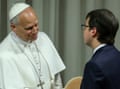
Remarkably, the presentation of Pope Leo’s encyclical included an address by Christopher Olah, the atheist co-founder of Anthropic. Excoriated by Mr Trump after it refused to endorse the use of some of its tools for warfare and mass surveillance, Anthropic appears to be positioning itself as the ethically respectable face of AI. Mr Olah’s presence led to some charges of “popewashing”, but the Vatican presumably sees such collaboration as symbolising a necessary moral dialogue.
That seems a sensible approach, despite Anthropic’s distinctly un-Catholic claims for the potentially soulful qualities of its large language models known as Claude. The extraordinary spectacle of a papal encyclical co-presented with a world-leading machine learning researcher illustrates the uncharted nature of the territory we are in.
The pope’s intervention is, naturally, informed by a theological perspective. But a humanity first message is one that the secular world can get behind. As Leo puts it: “Each generation inherits the task of shaping its own era, of guiding history to become a place where the dignity of every person is safeguarded, justice is promoted and fraternity is made possible.” Magnifica Humanitas is an important contribution to a crucial debate.