.png) 3 months ago
83
3 months ago
83
This year’s UN climate talks in Brazil’s Belém ended without a major breakthrough. The text of the final agreement lacked a deal to shift away from fossil fuels, delayed crucial finance and the “mutirão” decision contained no roadmap to halt and reverse deforestation. But the multilateral system at Cop30 held together at a point when its collapse felt close. This ought to be a warning: next year’s conference of the parties must strike a better bargain between the rich and poor world.
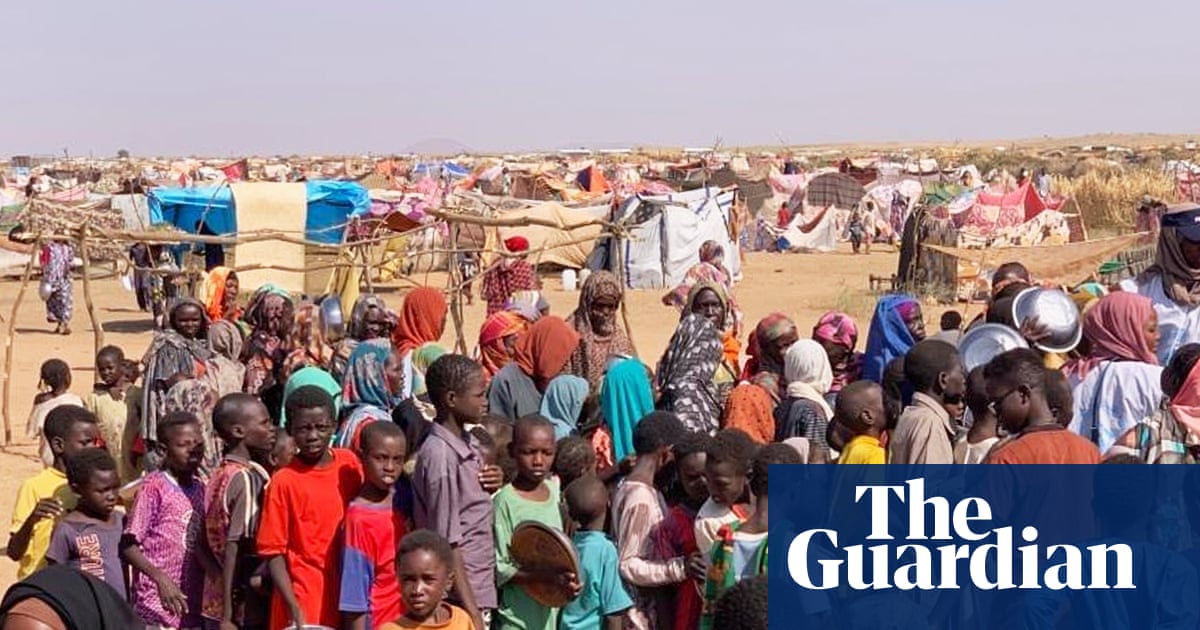
Developing countries are far from united on some issues. Over rare earth minerals China sees any move as targeting its dominance, while Africa sees it as essential for governance. Elsewhere petrostates did not support Colombia’s call for a fossil fuel phase-out. Yet the global south broadly coheres around a simple principle: its nations must be equipped to survive a climate emergency they did not create. That means cash to build flood defences, make agricultural systems resilient, protect coastlines and rebuild after disasters strike. They also demand front-loaded finance to transition to clean, green economic growth.
But climate finance is a hard sell in the global north. Rightwing populists in the west rail against cash being spent on climate and foreigners. Any issue that fuses the two becomes a difficult political terrain. Then there is the broader geopolitics – one in which spiky confrontations have become the norm. For parts of the rich world, clean industrialisation of the global south isn’t a priority – it’s an economic threat.
Donald Trump did not send a team to Brazil, the first time since 1995 America was not officially represented at the annual climate summit. This may not have been entirely unwelcome. The US, which owes the largest climate debt in the world, has blocked meaningful finance deals for years – and its reshoring agenda is designed to keep key industries at home. This is not entirely without logic: some analysts say China is the proof that the west has reason to fear too rapidly empowering poorer nations.
But such a narrow worldview will only hinder progress. As Evans Njewa, chair of the Least Developed Countries (LDC) group, stated bluntly after Cop30 ended, Belém was missing ambition. For him the world’s most vulnerable countries came seeking protection; they left with promises postponed. Yet the disappointment felt today is a spur for greater action tomorrow. The LDCs are looking to Cop31 in Turkey and, ultimately, to Cop32 in Ethiopia to change minds.
This year’s UN adaptation report could not be clearer: the scale of the task ahead is vast. Developing countries, it suggests, require more than $310bn per year by 2035 – yet they received only $26bn in 2023, down from $28bn the year before. Needs are rising faster than finance. The UN warns that without a dramatic course-correction the poorest countries will be left exposed to heatwaves, wildfires and floods.
The urgency of the crisis explains why African negotiators are so insistent that adaptation finance must be from the state, preferably in grant form. To imagine otherwise, they say, is delusional; currently private finance makes up only 5% of adaptation cash and most of that is philanthropic. Private capital will not build sea walls, restore mangroves or protect subsistence farmers. Cop30 underscored a simple reality: only by moving beyond symbolism and self-interest can the world secure its future.
-
Do you have an opinion on the issues raised in this article? If you would like to submit a response of up to 300 words by email to be considered for publication in our letters section, please click here.