.png) 2 months ago
63
2 months ago
63
The visitor to New Zealand’s South Island knows what they have to see. There’s a well-trodden circuit. Lake Tekapo and Mount Cook, to gaze at the stars. Queenstown, for a spot of daredevil adventure. The glaciers, Fox and Franz Josef. And then down to Milford Sound, for the fjord, cliffs and waterfalls. Each stop stunning, each one worthy of its place in a tourist trail so long-established they call it the southern loop.
But for those searching for something new, bent less on ticking off the New Zealand icons than on experiencing a region as brimming with natural beauty as it’s been relatively, and mysteriously, overlooked, there is another destination. Head to the place they’re calling Nelson Tasman.
For years, Nelson was somewhere you passed through, regarded as little more than a gateway from the North Island to the South. Travellers might hop on a plane from Auckland, land in Nelson and then set off in earnest. But in their dash southward they’d been missing out on an area that locals believe offers the best of both worlds: the stunning landscapes of the South Island combined with the gentler climate of the North. Nelson Tasman vies with Hawke’s Bay for the title of New Zealand’s sunniest spot and is nicely sheltered by the Richmond and Arthur mountains. I can testify that every day of the February week I spent in the area was blessed with blue skies and warm sunshine.
Given the patchiness of the New Zealand summer, that counts as a plus, but the weather is the least of it. The big draw, as the name suggests, is Abel Tasman national park, named for the 17th-century Dutch explorer who got close enough to New Zealand that cartographers would eventually name the country after a region of Holland, but not so close that he actually set foot on its land. (He withdrew after a clash between some of his men and a group of Māori who’d approached his ships in a waka, or canoe.)
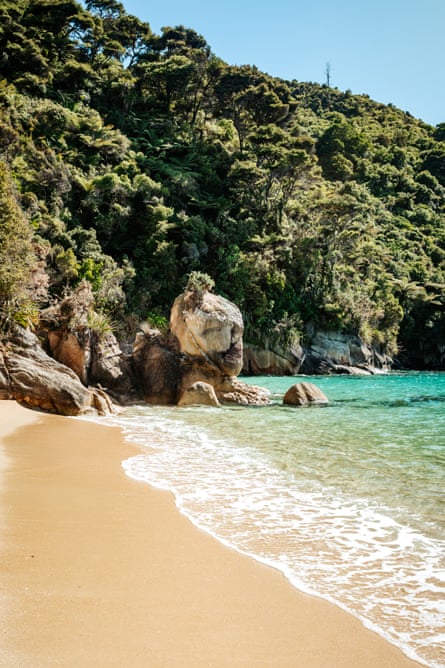
Now Abel Tasman is shorthand for a stretch of coast that is surely among the most beautiful in the world. (I first visited 26 years ago and had pined to return ever since.) Mostly accessible only by boat, it combines coves of golden sand and turquoise water, with hillsides teeming with native bush. Day trips are possible but the ache you’ll feel when you tear yourself away will be too much to bear. Better to give it several days.
Travellers on a budget can do that, thanks to the camping grounds that are dotted along the coastline (from NZ$21 an adult), clean and unfussily maintained by the Department of Conservation rather than a commercial outfit. Those who prefer a roof over their heads tend to go with Wilsons, a family firm with roots in Abel Tasman going back to the 1840s, that runs three- or five-day treks through the park (from NZ$1,740 a person twin share). You progress from one lodge – a cluster of simple wooden cabins – to the next either on water, sea-kayaking from cove to cove, or on foot, hiking on trails that confirm why you made the journey to New Zealand in the first place.
Before long you’re in the lushness of the bush, the sounds of insects and birds a constant and unexpectedly loud chorus. You’re under five layers of canopy, introduced to 12 different kinds of orchid, including one that disguises itself as a praying mantis. There are lancewood trees, whose thin, long leaves are so strong, they can be used to patch up broken boots, and the five finger plant, whose shape resembles a hand so perfectly, it seems to salute you in greeting. There are fronds that curl like the top of a double bass; vines lacking only a leaping Tarzan; and trees that have stood for a thousand years. To walk among them is to be reminded of the gorgeousness of the planet we inhabit.
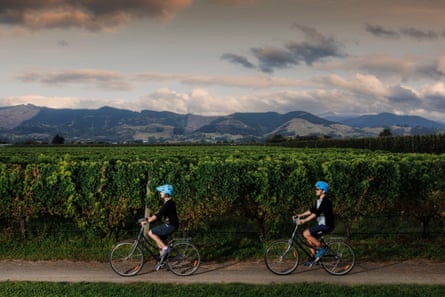
But Nelson Tasman does not end there. A new-ish innovation is the Great Taste Trail, a cycle route completed in 2022 that runs in a 200km loop and which allows you to bike in the countryside, through small, pretty towns and alongside the azure ocean, stopping to sample fresh food and locally produced fruit and wine. You don’t have to be an Olympic athlete or even super fit – Cycle Nelson will take you on a guided tour (from NZ$1,000 a person, minimum two people) or simply rent you an ebike (NZ$120 a day) – and nor do you have to do the whole thing: they’re happy to tailor a bespoke trip around you. A favourite stretch is a beach-to-beach route of 64km that takes in orchards, vineyards and sparkling views of Tasman Bay, and that can include an overnight stay among the restaurants and cafes of Māpua wharf. (Besides, who could resist a route that includes a place called Rabbit Island?)
You might stop to see the orange-billed oystercatchers or take a dip in the saltwater swimming baths at Motueka, sectioned off from the surrounding ocean and behind an expansive sand spit, which makes these waters invitingly tranquil. Incidentally, the “taste” in the Great Taste Trail does not refer solely to treats for the palate: besides the constantly changing landscape, the route also takes in working artist studios and galleries. And if there’s an adventurous cyclist among you, they’ll love the rugged, gnarly trails of the Kaiteriteri Mountain Bike Park.
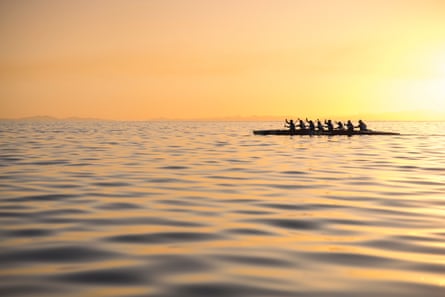
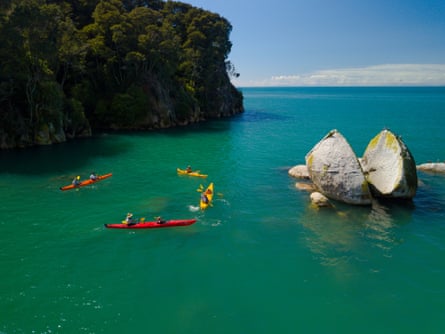
Kaiteriteri itself is a delight, with its waterfront cafes and ice-creams, and it’s from there that you can head out on the water in a distinctive, unexpectedly contemplative way. Waka Abel Tasman is a Māori-owned business that offers trips out in a traditional, double kayak (from NZ$110 a person). Yes, visitors learn to row in unison and stop on a spectacular beach, but the greater emphasis is on Māori language, tradition and ritual, as guides point out the significance of, among things, the small, uninhabited island you navigate past that is, in fact, an ancestral burial ground. In the wrong hands, such activities can often feel awkward, freighted with the risk of cultural condescension, but this is presented as an exercise less in tourist amusement than in Māori pride.
As for places to stay, there’s provision for both ends of the spectrum. Kaiteriteri boasts a campsite right by the beach (from NZ$70 a night), while high-end travellers will be drawn to the stunning Lodge by the Beach (from NZ$697 a night), right next to the delightfully named Split Apple Cove and with golden sands of its own. Visitors there, like anyone who spends a few days in Nelson Tasman, will find themselves itching to scrap whatever further travel plans they’d made – and stay a little longer.