.png) 4 hours ago
3
4 hours ago
3
Well done, I suppose, to whoever came up with the title of this documentary about the 1991 disappearance of 18-year-old Nicola Payne. It’s a concept so exceptionally horrifying – a brutal killing that continues on indefinitely – that it stands out even in the oversaturated and grimly sensationalist true-crime landscape. At least it bears no connection to the facts: there isn’t any suggestion that Nicola was subject to an unusually protracted death. Instead, The Never Ending Murder is about one family’s infinite struggle to endure such a loss.
It’s also a nightmarishly surreal title for what turns out to be not only a sensitive true-crime series, but a very conventional one. The story, narrated primarily by Nicola’s relatives, unfolds strictly chronologically. From her father, brothers and friends we learn that she was the longed-for daughter after four boys, a “tomboyish” girl who could often be found in the pub with her mates in the friendly working class area of Coventry she grew up in. At the time of her disappearance, she and her boyfriend Jason had recently had a baby boy called Owen, to whom she was utterly devoted.
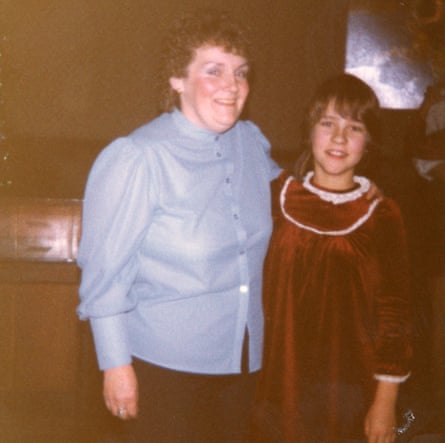
It was a misty December day when she left Jason’s house alone and set off for her family home. It should have been a six-minute journey across a piece of land nicknamed the Black Pad, so-called because it was once a railway line used for coal, which would stain the surrounding ground. Her father was quick to notice that Nicola hadn’t arrived and went out looking for her. Soon, the police joined him. As days turned into weeks and months, they investigated a vast number of leads and identified two suspects via a distinctive car. The men’s statements were “full of holes,” says Malcolm Ross, who led the initial investigation, but the evidence was ultimately insufficient. The pair fled to France, witnesses changed their stories and DNA testing was not yet widespread. The police couldn’t build a case against them.
Months turned into years and decades. Another detective took on the case. Martin Slevin was obsessive in his commitment to finding out what had happened to Nicola, and used modern technology to gather enough proof to charge the same two men in 2015. Yet, flaws in the original handling of some material evidence proved ruinous in court.
Knowing in advance that Nicola’s body has never been found and nobody has ever been convicted of her murder doesn’t prevent this programme from being a stomach-churningly stressful watch. In fact, it makes it worse: a strong sense of doom prevails as rewards are offered, new leads uncovered and hopes raised, before all potential breakthroughs dissolve into nothing.
There is a point when you wonder whether The Never Ending Murder Investigation might have been a better title. But that isn’t completely true either. When this series was originally released on Prime Video in 2023 (it has now been acquired by Channel 4), the case was still open but not particularly active. Yet, at that point the Payne family were making a considerable effort to keep the crime in the public consciousness in the hope that more witnesses would come forward. An aunt interviewed here says the next generation seemed keen to take on the mantle of publicising the case. Last year, however, Nicola’s brother, Nigel, announced they were closing the social media pages they had been using as a way to seek information related to her disappearance, telling the BBC that “for our own sanity, we’ve got to move on and live our own lives”. It’s a development that also calls into question the ethical justifications for re-broadcasting this programme.
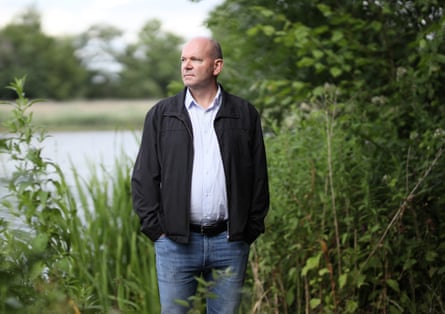
Still, conveying the emotional toll on those left behind is something this series does respectfully and effectively. Nicola’s mother Marilyn died in 2023, but we hear her discuss her feelings with heartrending frankness in footage broadcast on TV over the years. In 2001, she told a reporter that time had been no healer: “I feel worse now than I did the first Christmas that she went.” Later, she admitted that as more time passed, the more she felt she was “letting Nicola down”.
It can be interesting to hear how investigations get revived after long periods – numerous cold-case detective dramas are testament to that – but a reluctance to twist the case into salacious shapes means The Never Ending Murder is less a gripping true-crime thriller than a haunting portrait of ordinary people dealing with a heinous event. It’s about the long tail of grief for a missing person, the disappointments of a lengthy investigation, and the constant threat of violence against women. It will leave you with a sinking feeling and a profound sense of sorrow.