.png) 3 months ago
94
3 months ago
94
It is an all-too-familiar scenario: you reheat a bowl of last night’s noodles for lunch, devour it, then return to your desk and gradually droop over the course of the afternoon, to the point at which you are battling to keep your eyes open. Or perhaps you struggle with energy on waking up; or, after a busy start and strong coffee first thing, you begin to fade mid-morning. Or, like me, after dinner in the winter months, you are completely lethargic.
How common are such peaks and troughs in our energy levels? “If you’re having an active day, then you will naturally get tired because we are human, we’re not machines,” says Dr Linia Patel, a dietitian and nutritionist. “Getting tired at the end of the day, before you go to bed, is perfect. But getting tired at your desk is not great.” Chronic tiredness is something to see a doctor about, says Patel, as it could be a symptom of illness.
But the afternoon slump is perhaps the most common energy dip. “It can be seen across lots of different populations and has real-world implications,” says Dr Thomas Marjot, a hepatologist at Oxford University Hospitals with an interest in circadian rhythms and metabolism. “It could just make you feel rubbish and affect work performance, or it can cause people to nod off at the wheel and have road traffic accidents.”
Marjot explains that there are two processes at play that cause our energy levels to fluctuate. “One is sleep pressure, the natural tiredness that builds the longer we’ve been awake. The other is our circadian rhythm, the body’s internal clock, which gives us a daily pattern in alertness that starts to reduce in the afternoon.”
For most, it is at about 3pm when there is a dip in energy, says Marjot. “Sleep pressure has been rising for several hours, and at the same time the circadian alertness signal naturally dips. When those two things coincide, we feel the classic afternoon slump. You see the same pattern even in ‘bunker’ experiments, where people live for days with no clocks, daylight or meal cues, which shows that this afternoon dip is naturally built into our biology.”
So how can you get through a slump?
Go for a coffee
“You can artificially prop up your alertness using caffeine, which is the most readily available and socially acceptable stimulant,” says Marjot. How much caffeine and at what time you should stop so as to not affect your sleep depends on your tolerance, says Patel. “Some people are much faster metabolisers of caffeine than others. And for some, if they have caffeine, it will make them feel super anxious and their heart races.” Generally, it’s not advisable to have more than 400mg of caffeine a day. The caffeine content of drinks varies wildly but this roughly translates as two cups of coffee a day, and you should stop at around lunchtime. Energy drinks are not recommended, adds Patel, “as they are often high in sugar, stimulants and additives that may amplify raised heart rates, cause energy spikes and crashes, and disrupt sleep”.
Caffeine also affects our dopamine levels, which is our “lust for life”, says Dr Katie Cooper, a psychologist and author of This Book Will Give You Energy, which will be published by Quadrille in April. “If you go back to caveman days, dopamine was the thing that kept you moving forward, going out looking for resources, living another day. Transferring the idea of that back to the modern day, it keeps you energised for work or being productive.”
Plan your lunch carefully
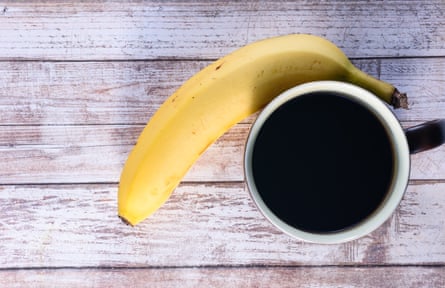
“We know that slumps are exacerbated significantly by a large lunch – then you get much worse afternoon dips in your ability to concentrate and increase in your sleepiness,” says Marjot. “The parasympathetic nervous system, which is largely responsible for rest and digest processes, is massively turned on with a large meal, so it’s unsurprising that you feel a bit sleepy.”
We can feel tired after lunch because “blood is going straight to your stomach to digest – that is the priority and there is less left for your brain”, says Patel. The key to addressing this, she says, is looking at what you are eating. “Having pasta at lunch is a recipe for you to feel super slump-ish in the afternoon. But if you instead include a small portion, a quarter of a plate’s worth of wholegrain carbohydrates, then that is enough to give you the energy you need, but not necessarily to give you a slump.” The rest of your plate should be a quarter protein – “if you want to be perky in the afternoon, you have to include some protein in your lunch” – and the rest vegetables or fruit. Patel concedes that this can be hard if you are grabbing a sandwich on the go, and suggests adding in a carrot and hummus pot or a hard-boiled egg to get the balance right. As a dietary supplement, B vitamins can give an added energy boost, she adds.
Some of us reach for sugar in an energy emergency, but this may be counter-productive: “You run the risk of having a sugar rush and then a second slump,” says Patel. Having some protein as well as chocolate would be a better plan.
There are certain foods that are naturally energy-boosting, says Patel. “A banana contains glucose, which gives you energy – it is why they are used a lot in sport.” But this could also cause a spike and crash. Instead, Patel suggests green tea for a “slow, focused, steady release of energy” through its combination of the amino acid L-theanine and a low dose of caffeine – so again, proceed with caution in the afternoon if you are sensitive to the latter.
Visit the water cooler
“Most of the time I find people who have a slump are also dehydrated,” says Patel: the guidance is 1.5 to 1.8 litres of water a day. “If you are mildly dehydrated, you’re not going to be as efficient.” The colour of your urine is the best way to check your hydration: “the clearer the better”, says Patel.
Take a walk

What you do after eating is almost as important as the food itself. Going straight back to a sedentary position at your desk is the exact opposite of what works best: a brief stroll outside. “Just that movement of walking and using different muscles in your body activates starting digesting and getting glucose to the muscles,” says Patel. “Getting some fresh air is also a fantastic way to keep yourself alert.”
Dr Katharina Lederle, a sleep therapist and chronobiologist (studying biological rhythms), advises her clients to get up every hour for a mini movement break to help boost alertness: “Sitting down for long periods is associated with poorer sleep, and can affect concentration negatively, whereas getting up regularly improves energy levels, attention and sleep.”
But Cooper adds it is important not to push yourself if you are very fatigued. “If you’re exhausted and then you cane yourself in the gym, it might give you a bit of a dopamine hit, but it is also going to leave you wiped out. Listen to your body, and if you’re too tired, go for a walk instead.”
Catch up with colleagues
Interacting with others is a guaranteed way to wake yourself up, says Lederle: a 2018 study showed that socialising during a micro-break had positive effects on performance. With the rise of working from home, this is not always easy to do, but Lederle says sending a message to a friend or even just looking at photos can have a similar effect.
Smartphones can trigger dopamine, but Cooper doesn’t recommend a quick scroll to overcome ennui. Instead, we should seek out more adaptive pursuits: “In caveman days, everyone would go out and explore; it would be an adventure. Variety is the spice of life. Being able to do little explorations within your day, like taking a different route home, will be energising because it’s new and it’s exciting.”
Extreme exposure to temperature, through an ice plunge or a sauna, can also liven things up by getting the blood circulating– and the fall in dopamine afterwards is slower than if you’d had a hot chocolate, says Cooper.
Get outdoors

The other thing to play with is light. “Light is a very powerful stimulator of the circadian system to signal alertness,” says Marjot. At this time of year, when leaving for work in the dark and getting home in the dark, it is important for workers to get out during the day “and get some daylight just to signal to the circadian system that it’s daytime and they should be awake”.
Sleep well – or nap
You can’t improve your daytime energy without also working on your night-time sleep. “If you wake up after a bad night’s sleep, you’re not going to have a good day,” says Cooper. Positive sleep hygiene, Marjot says, involves: “Morning daylight, avoiding caffeine in the afternoons, winding down 30-60 minutes before you go to bed, reducing your screen time in bed, and keeping your bedroom cool, dark and quiet.”

If you are really fighting to stay awake, is a nap OK? “There are different camps on that,” says Cooper. “If you’re someone who is chronically struggling with sleep, then I think you are better off not napping and getting outside for a walk instead.” But if you sleep well, a nap is fine, says Lederle. “When we have that dip in alertness, it is a great time to have a short nap if you are a napper: 20 minutes to half an hour, no longer than that, and then your alertness will rise again.”
Is there any hope for those of us who slump in the evening? “You would want to make it brighter in the afternoon to send your body alertness signals,” says Lederle. Failing that, “lean into it”, says Patel – and have an early night ready for an energised new day.