.png) 2 months ago
53
2 months ago
53
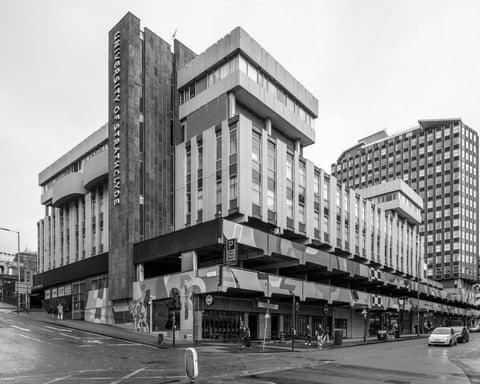
The imposing concrete buildings that defined British postwar architecture held a vision of the future – but many fell into disrepair. A new book finds the finest examples
Look past the neglect … McCance Building, Glasgow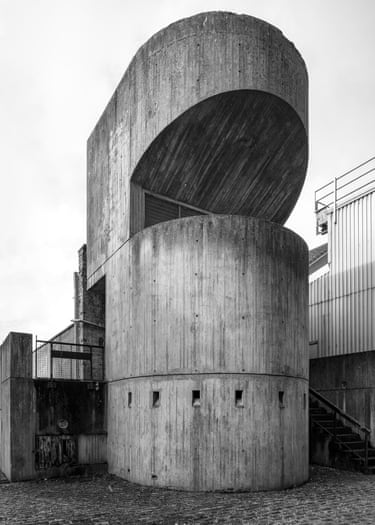
Thomas C Keay Ltd (former offices), Dundee, designed by Ronald Cuddon with Tandy, Halford and Mills, built 1970
Many of the buildings constructed in the socially motivated period of post-war architecture have now been repurposed, pulled down or left to slowly decay. But others still serve their community. These stadiums and homes, leisure centres and fire stations, churches and libraries, were built for a people and nation in flux, with the vision of a new era of opportunity. Brutal Scotland is available via Duckworth Books. All photography and quotes by Simon Phipps. Text by Catherine Slessor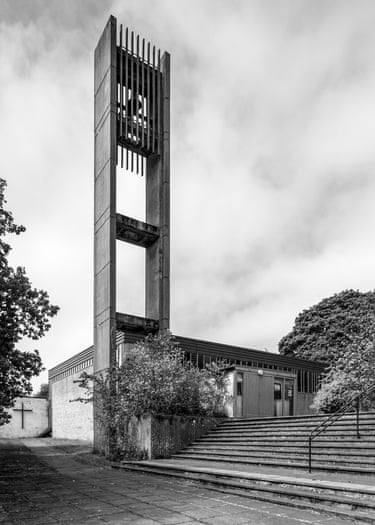
Kildrum Parish Church, Cumbernauld, designed by Alan Reiach & Partners, built 1960–62, listed A
Brutalism has played a critical part in architecture’s grand reflection on the way people should live in modern times. From the mid-1950s to the end of the 1970s, the Brutalist era produced some of the boldest, most uncompromising architecture in Britain, constructed on a scale unlikely to be repeated. Impelled by ambitions of nation-building, Scotland’s outstanding cache of Brutalist buildings gave shape to how people lived, worked, studied, shopped, worshipped and spent their leisure time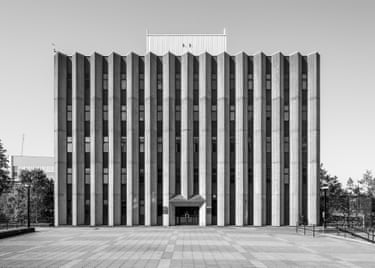
Wolfson Centre, Glasgow, designed by Morris & Steedman, built 1969–72, listed B
Building on a grand scale came about largely in response to the destruction wrought by the second world war, allied to population growth, migration and pre-war slum clearance initiatives. A new Britain emerged, dedicated to challenging what the politician William Beveridge identified as the five evils: want, disease, ignorance, squalor and idleness. In 1945, the Labour government introduced the National Health Service, nationalised and invested in heavy industry, and initiated a programme of new towns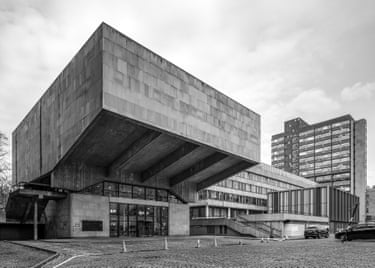
Gordon Aikman lecture theatre (previously George Square theatre), Edinburgh, designed by Robert Matthew, Johnson-Marshall & Partners (RMJM), built 1965–70, listed B
Though Scotland survived the war with relatively light material damage, apart from the devastation inflicted on Clydebank, the tenor of the postwar times gave an urgent impetus to demands for national reconstruction through centralised planning. While embracing an unashamedly contemporary architectural language, new building programmes had a resonance with particular landscapes and evoked a northern cultural sensibility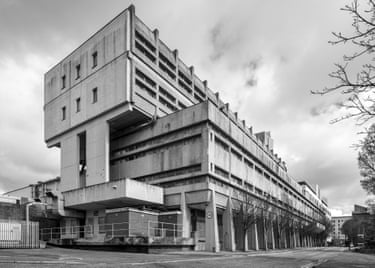
Medical Sciences Institute, Dundee, designed by Mackie Ramsay & Taylor, built 1970
The war precipitated shortages of building materials and manpower which continued into the mid-1950s. Authorities everywhere resorted to exploring new construction methods that were quick, economical and required little skilled manpower. Concrete provided an ideal solution, its manufacture facilitated by cheap and plentiful fossil fuel energy. Capable of bridging large spans without intervening columns, concrete enabled architects to devise more open and dramatic structures for a range of building types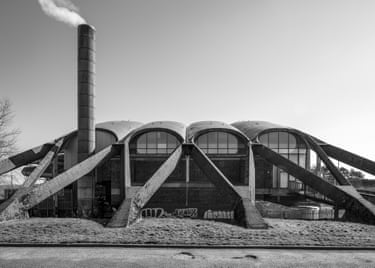
Dollan Aqua Centre, East Kilbride, designed by Alexander Buchanan Campbell, built 1963–65, listed A
East Kilbride’s Dollan Baths, which opened in 1968 as Scotland’s first competition-length swimming pool, powerfully epitomised this creative potential, featuring a monumental vaulted pool hall supported by splayed concrete ribs. Designed by Alexander Buchanan Campbell, it is a superb sculptural showpiece for Scotland’s first new town, inspired by the work of Japanese architect Kenzo Tange, in particular his gymnasia for the 1964 Tokyo Olympics, which Campbell saw under construction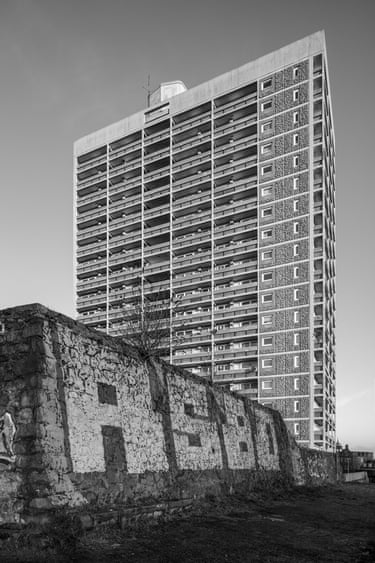
Marischal Court, Aberdeen, designed by Aberdeen City Architects’ Department, built 1959–66, listed A
As distinctively exemplified by Phipps’ images, Brutalism’s brooding, photogenic allure has helped to catalyse its current phase of rehabilitation and rediscovery. The expansion of the internet has also cultivated a renewed appreciation of Brutalism, partly as a reaction to the insipid, market-driven neo-modernism of the 1990s. Today, a growing fanbase can get its fix from Brutalist books, exhibitions and tours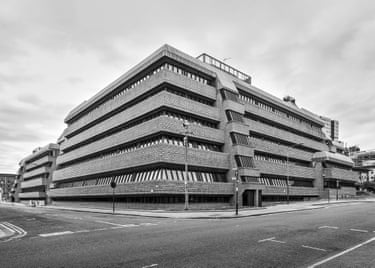
Kentigern House Glasgow, designed by the Property Services Agency, built 1981–86
Simon Phipps: ‘The building I first photographed was the Fulton Building in Dundee in 1994. I was in the city for an exhibition I was participating in at the Seagate Gallery. At this time I only took photographs as reference for the sculptures I was then making. That photograph, pasted into a scrapbook, became an unconscious reference point, the start of a journey – one that would take me across Scotland, tracing the arc of postwar modernism through universities, housing schemes, churches, hotels and ruins’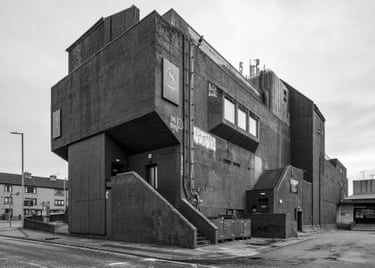
Lang Stracht Hotel (now Sure Hotel), Aberdeen, designed by Baxter Clark & Paul, built 1964–65
‘In Aberdeen I tracked down the Lang Stracht Hotel. It was closed, no longer offering respite to the traveller. The monolithic concrete facade had at some stage been painted black; now weathered to a dull patina, it offered a forbidding presence. But even in its current state – the last review read “shambolic hotel with terrible customer service” – the building retained presence. A sculptural confidence that rose out of the ground like it belonged there’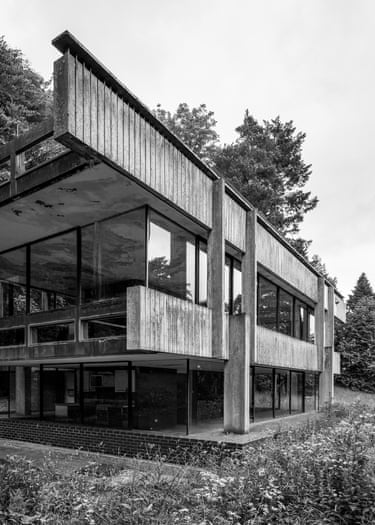
Bernat Klein Studio, High Sutherland, designed by Peter Womersley, built 1972, listed A
‘One of the most poignant sites I photographed was the Bernat Klein Studio. A low-slung concrete and glass pavilion, designed for the Serbian-born textile designer, it exemplified modernism’s poetic potential; functional yet graceful, open to the woodland around it. Today, it sits vacant, decaying, a fully paid-up member of Scotland’s Buildings at Risk Register. The future once lived here; now it’s damp, derelict and endangered (although acquired in July 2025 for restoration by the Bernat Klein Foundation)’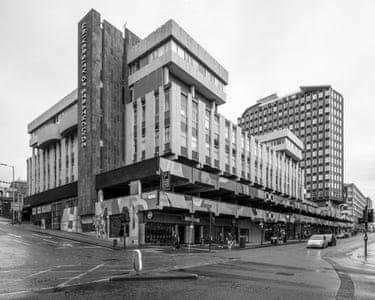
McCance Building, Glasgow, designed by Covell Matthews & Partners, built 1962–63
‘These buildings were never just about concrete and form – they were about ideas, about society, about a future that people believed they could shape. Scotland’s postwar architecture still tells that story, but you have to be willing to look past the neglect’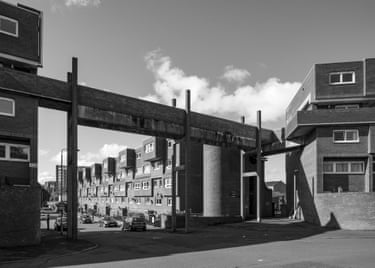
Woodside, Glasgow, designed by Boswell, Mitchell & Johnston, built 1970–74
‘As I travelled, I wasn’t only drawn to buildings. I began documenting public art – those often abstract concrete sculptures that once populated shopping precincts, underpasses, schools. I tried to salvage some of their value, to show that they were more than decorative – they were part of the same civic effort that built the estates and libraries and churches. Art made for everyone, now often seen by no one’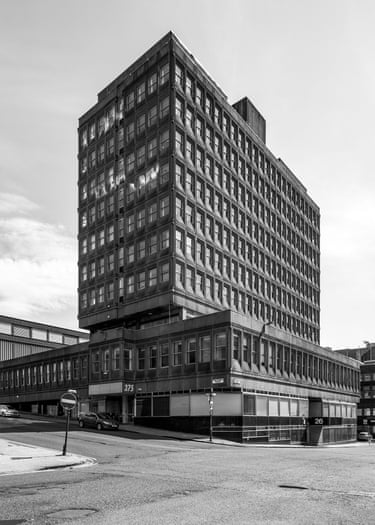
Pegasus House, Glasgow, designed by Derek Stephenson & Partners, built 1967–70
Ironically, a movement that was once seen as ugly, aggressive and alienating now features as desanitised decoration on plates, mugs, tea towels and much more. Yet Brutalism’s real puissance and presence lies in its buildings, things of supreme heft, surprising beauty and audacious ambition, constituting a unique corpus that attests to its enduring historical significance. Over 70 years on, what architectural historian John Summerson termed a ‘big sneeze in architecture’ still gloriously reverberates across timeExplore more on these topics