.png) 3 months ago
94
3 months ago
94
England failures find success at Trent Bridge
Peter Moores grew up in Macclesfield, a northern town that would not feel out of place in Surrey. Maybe that upbringing bred his ability to fit in, find a way to communicate and always be of one’s place, regardless of where that place may be.
After winning the County Championship with Sussex in 2003, Moores was appointed coach of the England men’s team. Like pretty much all of his predecessors, his reign ended in failure, precipitated by a falling out with Kevin Pietersen (I guess that slips comfortably into the “it happens” category).
Dusting himself down, he went to Lancashire and, in 2011, delivered a first outright Championship to Old Trafford in 77 years. That secured another crack with England, but, not much more than a year after taking the job, the ECB handed him his sandwiches wrapped in a road map once again.
Twenty-two years on from that win on the south coast, he was opening the champagne once again, for an unprecedented title with a third county, this time with Nottinghamshire. It is an extraordinary feat of coaching to inspire players in environments so radically different as that of English first-class cricket in 2003 and in 2025.
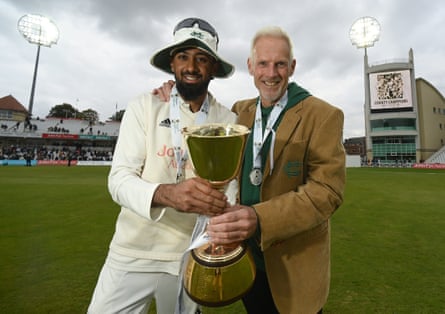
No doubt he was helped hugely by a man who has also felt the sting of failure but has subsequently navigated his way to redemption. Haseeb Hameed, like his boss, was twice tried by England and twice rejected, and even had time to lose his way at domestic level before recovering his form gloriously. And all by the age of 28.
The captain and coach can look one another in the eye and see each other’s pain and joy, know that the game can give and take with capricious cruelty, but also know that “never” is a word that should not really have a place in a cricketer’s vocabulary. Next year, they can also look at the Championship pennant flying high in Nottingham.
Mohammed Siraj sensational in south London
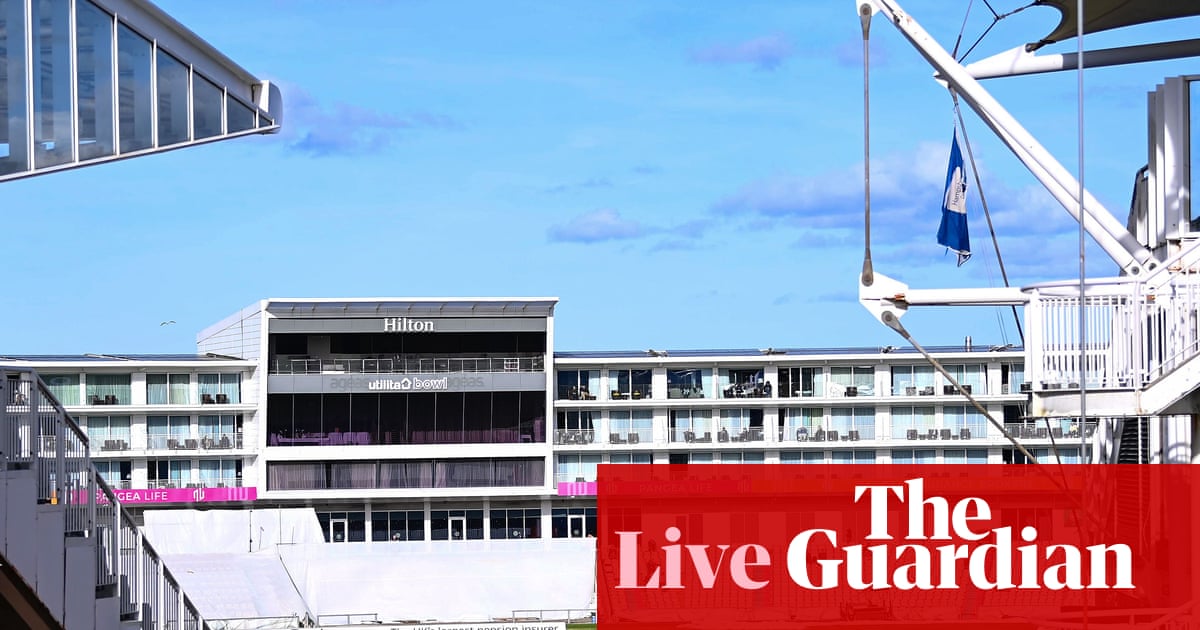
A grey morning in south London, the warmth of summer still there but a portent of autumn in the dull light underlining the fact that we were seeing the last Test cricket of a wonderful summer, disgracefully shortened so the blazers could start counting their money before August was even five days old.
The series was still in the balance after 24 days of struggle, the equation seemingly simple: England needed 35 runs; India needed four wickets. But Chris Woakes was sitting in the pavilion, his arm in a sling, and clouds threatened rain at any moment. A big crowd, with plenty of support for both teams, sat on the edge of their seats.
Woakes was to provide one of the images of the year as he walked to the wicket about as gingerly as it is possible to walk. The nicest guy was the toughest guy too. But the day was not to belong to Birmingham’s sweetest export since Dairy Milk; the spoils fell to another lionheart, India’s Mohammed Siraj.
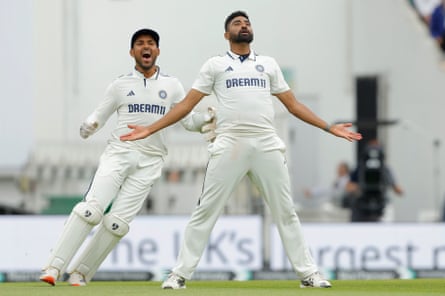
Breathing fire, inspiring teammates and supporters at the ground and at home, he gave his absolute all at the end of a cruelly scheduled five-match series in which he had bowled the most overs and taken the most wickets. Had he not raised such furies, the series would surely have ended 3-1 to England and not 2-2, the Anderson-Tendulkar Trophy shared.
He betrayed his humble origins in the post-match interviews, the rickshaw driver’s son from Hyderabad lacking his captain’s polished speeches, instead excitedly switching between his native tongue and broken English in trying, and failing, to describe his reaction after a gladiatorial hour’s play. Viewers may not have understood all he said but it didn’t matter. We understood his heart and his soul – and that’s why we love the game.
Temba Bavuma sees a ball – and a legacy
The match lay in the balance. India had fought to a first-innings lead of 30 (worth 130 on a treacherous Eden Gardens pitch). South Africa’s captain had batted for more than three hours undefeated for 55, willing his team to a just about competitive target of 124 for India’s stellar batting lineup to chase down. Even without their captain, Shubman Gill, they surely had enough power to take that off an attack led by a 36-year-old off-spinner more used to Chelmsford than Kolkata.
But it wasn’t Simon Harmer bowling when Temba Bavuma’s moment – a long, long moment – arrived. Axar Patel was winning the match for India: 4, 6, 0, 6 had reduced the target to 31, or about 10 more minutes of mayhem. Keshev Maharaj, another underrated but experienced spinner, was under the pump but kept his nerve; Patel kept swinging; and South Africa fans kept breathing.
The ball swirled into a bright sky. Bavuma was running back towards the boundary, the whole field behind him. Looking over his shoulder, the red sphere must have appeared smaller and smaller, darker and darker, higher and higher, as the match, the series, perhaps his legacy after a bit of harrumphing about the World Test Championship qualification criteria, hung interminably in the thick air. He caught it.
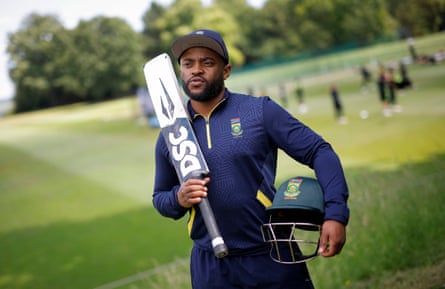
I wasn’t alone in thinking instantly of Kapil Dev’s legendary catch to dismiss Viv Richards at Lord’s in the 1983 World Cup final, a shot that was heard around the world and changed the history of cricket. Bavuma’s coolest of pouches won’t do that, but it did win the Test and did set up South Africa’s magnificent 2-0 win in India.
It should also secure Bavuma the accolade of leading men’s cricketer in the world come the 2026 Wisden Almanack. Eleven years on from his Test match debut, he is playing the best cricket of his life.
This article is from The 99.94 Cricket Blog