.png) 3 months ago
72
3 months ago
72
MPs are planning to redact the names of 2,000 parliamentary staff from an official register that has been in place for decades, in a move that experts say will reduce transparency around lobbying by passholders.
The proposal has been put forward by the House of Commons standards committee after evidence sessions held in private with staff unions, which raised concerns about the safety of those working for MPs.
It would put the Commons out of step with the House of Lords and legislatures in the EU and US, which list most staff members in the interests of transparency.
Under the present system, in place since 1993, about 2,000 staff members working for MPs put their names and any financial interests on a register.
Parliament had decided to widen the register to about 4,000 staff to include those who have access to the parliamentary online network and may be working in constituency offices.
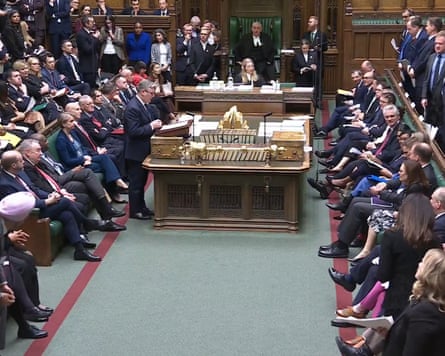
After staff raised safety concerns, the committee recommended redacting the names of all MPs’ staff and replacing them with their job titles, as well as removing from the register anyone who has no financial interests to declare.
As a result, people will no longer be able to see how many individuals are employed by each MP, or their names, and any staff member carrying out work for corporate interests will no longer be identifiable. It will also no longer be possible to see which individual staff members are repeatedly accepting hospitality, for example by going on foreign trips or taking up free tickets.
In 2023, it emerged through the register of staff interests that Jonathan Reynolds, then the shadow business secretary, was employing someone who worked for HSBC through a secondment, giving them a parliamentary pass.
It will also no longer be possible to identify cases where MPs are employing family members of other MPs, after they were banned from new instances of employing their own spouses.
Alberto Costa, the chair of the standards committee, which has made the proposal, employs his wife as a parliamentary staffer. Her name would in future be redacted from the register – although it would still be visible on the MPs’ register of interests.
In its report, published in the last few weeks, the committee said its recommendation was: “To require that all staff with a parliamentary network account and/or a parliamentary pass should have a register entry but that the names of all staff be replaced with their job titles, and that nil returns be required but need not be published.”
The committee received written submissions, which do not appear to have been published, and held a private session with the trade unions Unite and GMB to listen to concerns about staff safety. It also discussed the matter with the Members’ and Peers’ Staff Association. However, it does not appear to have conducted a wider consultation about the proposed reduction in transparency.
It added: “We note the opinion of the parliamentary commissioner for standards that our proposal reduces transparency and accountability in the sense that the public will no longer be able to see the individual names of members’ staff. We accept that this represents a change in the transparency provided by the current register, but we consider it a proportionate one in light of the safety concerns raised with us.”
Tim Picton, a senior advocacy adviser at Spotlight on Corruption, said: “With trust in politics at an all-time low, there is a real danger that rushing through this proposal could add yet another loophole that will weaken our already threadbare lobbying transparency regime, put us at odds with the standards of other legislatures and leave us yet more vulnerable to covert foreign interference.
“A tried and tested way for big corporate interests, lobbying firms and thinktanks to influence Westminster from the inside is to delegate staff to work in the offices of politicians. At the very least, the public deserves full transparency when this happens.
“It is very positive to see some long overdue focus on improving the safety of parliamentary staffers and there is clearly a balance to be struck here, but so far no formal evidence has been presented to show how effective this measure will be.”
Tom Brake, a former deputy leader of the House of Commons and director of the Unlock Democracy group, said members of staff had “legitimate safety concerns”, but added: “However, this measure will certainly erode transparency. It will make scrutinising staff activities and detecting potential breaches, such as conflicts of interest, much harder.
“Ironically, this change could also put MPs at greater risk. Since staff names are no longer on the public register, an MP could unknowingly employ a staff member about whom others, from inside or outside parliament, might have previously expressed concerns.”