.png) 3 months ago
60
3 months ago
60
Donald Trump has said only Iran’s “unconditional surrender” will bring an end to the offensive launched seven days ago, as the US and Israel carried out some of the heaviest bombardments so far in the conflict.
“There will be no deal with Iran except UNCONDITIONAL SURRENDER,” Trump wrote on his Truth Social platform on Friday, when US strategic bombers were in action over Iran and intensive Israeli strikes in Lebanon forced more than 1 million people to flee their homes.
Israeli and US officials threatened further escalation as Iran retaliated with more attacks across a swathe of the Middle East.
Pete Hegseth, the US defence secretary, said US firepower was “about to surge dramatically” , while Eyal Zamir, the Israel Defense Forces chief of staff, said Israel was moving to a new phase of its offensive that would “further dismantle the regime and its military capabilities”.
Zamir said in a statement: “We have additional surprises ahead which I do not intend to disclose.”
Tehran launched missiles and drones at Kuwait, Qatar, Saudi Arabia and Bahrain, apparently targeting US bases and civilian infrastructure including oil pipelines.
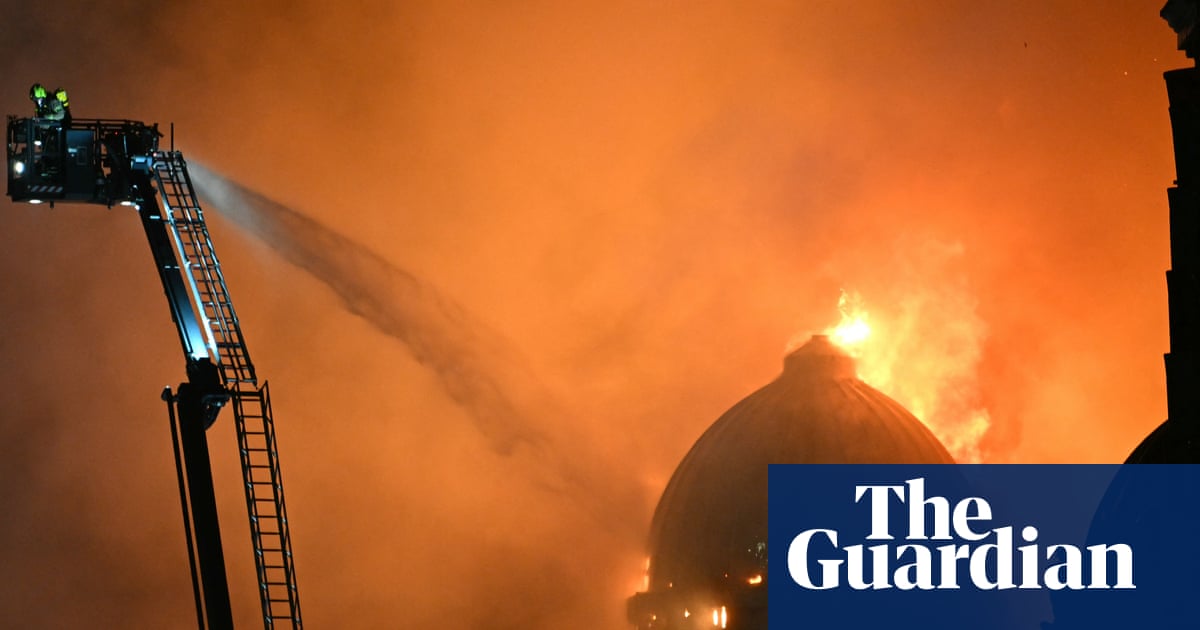
Other missiles were launched at Israel, though fewer than in the first days of the conflict. Iran’s Revolutionary Guards said they had fired missiles towards Tel Aviv after an earlier wave of explosions caused a blaze at a residential building in the city.
The Revolutionary Guards said Iranian forces had also targeted a military airbase and a radar site in Israel, and promised new initiatives and weapons would soon be deployed to confront Israeli and US aggression, without giving details.
Witnesses described the latest airstrikes in Iran as particularly intense, shaking homes in the capital, Tehran. Others reported explosions around the Iranian city of Kermanshah in an area that is home to missile bases. Internet coverage in Iran has been reduced to about 1%, according to the monitor group NetBlocks, limiting the availability of information about the impact of the war on ordinary Iranians.
In Lebanon, where there has been renewed fighting between Israel and the Iranian-backed Islamist militant movement Hezbollah, huge numbers were on the move after the Israeli army issued its largest, most sweeping displacement orders to date and hit Beirut with multiple attacks.
Hundreds of thousands were already fleeing Israeli strikes in the south of the country and the Bekaa valley.
The Israeli army issued a warning on Thursday evening, urging residents of Dahiyeh, a stronghold of Hezbollah in southern Beirut that is also home to more than 600,000 people, to “save your lives and evacuate your homes immediately”. By Friday, the usually vibrant area was a ghost town, the throngs of people replaced by rubble and fires from Israeli strikes.
Hashem Osseiran, a Red Cross spokesperson for the Middle East, described scenes of panic and confusion. “Many people have fled, some on foot, with nothing but the clothes on their backs and no clear sense of where to go,” he said.
Hezbollah has continued fighting in south Lebanon, announcing volleys of rockets aimed at northern Israel and targeting Israeli forces. Five Israeli soldiers were badly wounded by anti-tank fire on Friday as they were deployed near the border with Lebanon in northern Israel, the IDF said.
The headquarters of Ghana’s UN peacekeeping battalion in Lebanon was hit by Israeli missile attacks on Friday, leaving two soldiers critically injured, Ghana’s armed forces said in a statement.
It is understood that Irish soldiers helped to evacuate the wounded Ghanaians. The taoiseach, Micheál Martin, condemned the Israeli action as a “reckless attack”. He was joined by the French president, Emmanuel Macron, who called it “unacceptable” as he highlighted the “key stabilising role” played by the United Nations interim force in Lebanon.
The Lebanese health ministry said the death toll in the country stood at 217 since the resurgence of hostilities between Israel and Hezbollah, which fired missiles into Israel in the opening days of the war. A further 798 people have been injured.
Military officials say Israel’s strikes in Beirut are targeting residential buildings used by Hezbollah as headquarters and for the storage of drones, while in Iran, Israel is targeting command bunkers, missile launch sites and other military infrastructure.
Adm Brad Cooper, the head of US Central Command, said on Friday morning that B-2 stealth bombers dropped dozens of 2,000lb “penetrator” bombs on deeply buried ballistic missile launchers inside Iran. A large Iranian naval vessel used as a launch platform for drones was also hit, and possibly sunk.
The biggest single loss of civilian life reported so far in the conflict came in an apparent airstrike on an Iranian girls’ school on Saturday, which killed more than 100 students. Military investigators in the US believe it is likely US forces were responsible but have not yet reached a final conclusion, Reuters reported.
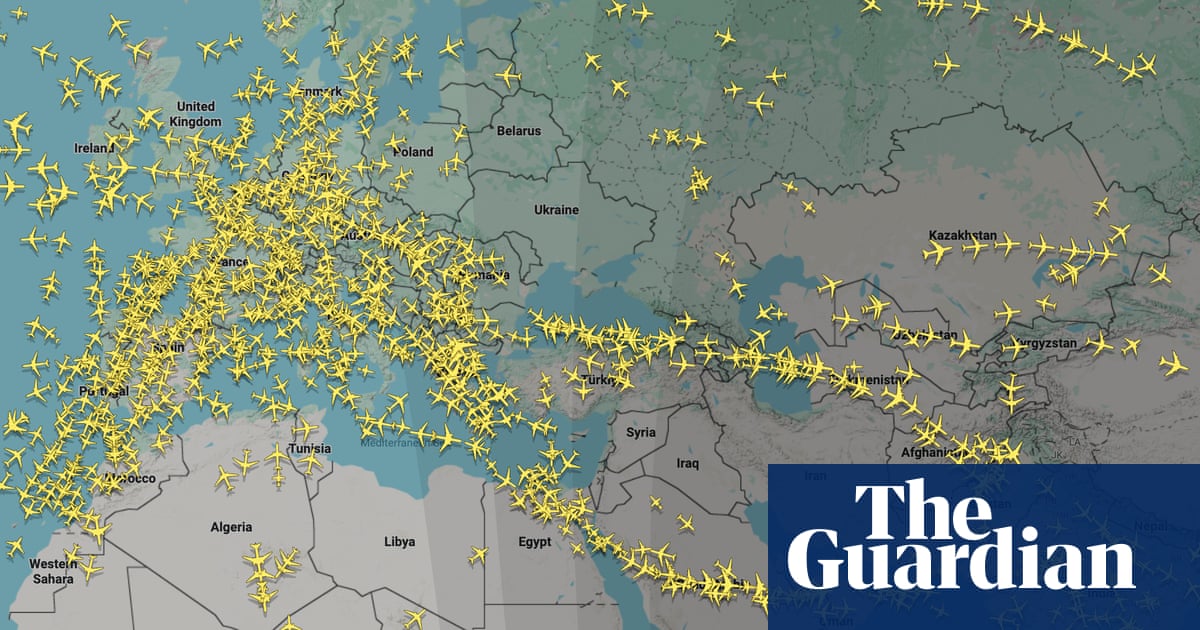
The war has killed at least 1,230 people in Iran and about a dozen in Israel, according to officials in those countries. Six US troops have been killed. Oil supplies have been disrupted, tens of thousands of flights have been cancelled and international stock markets have been rocked.
Before posting his comments about Iran’s unconditional surrender, Trump said on Friday that regime change was the objective of the joint US-Israeli offensive, which began with a surprise attack that killed Ayatollah Ali Khamenei, Iran’s supreme leader.
In brief remarks at the White House, Trump again urged the Iranian people to “help take back your country”, promising the US would grant them “immunity”.
“So you’ll be perfectly safe with total immunity,” Trump said, without giving any details about what that meant. “Or you’ll face absolutely guaranteed death.”
Analysts have said that defections of senior officers from the army or the Revolutionary Guards would suggest the radical clerical regime’s grip on Iran was weakening. There is no evidence of this so far, however.
On Friday night the White House press secretary, Karoline Leavitt, said the US would consider Iran in a state of “unconditional surrender” once Trump had determined the country no longer “poses a threat” to the US. “Then Iran will essentially be in a place of unconditional surrender, whether they say it themselves or not,” she said.
Iranian state television reported on Friday that a leadership council had started discussing how to convene the country’s assembly of experts, which will select the new supreme leader.
In Tehran, worshippers gathered for the first Friday prayers since the start of the war. Iranian media showed crowds of men and women dressed in black, some carrying Iranian flags, streaming to an open space outside the Imam Khomeini Mosalla grand mosque in the capital.
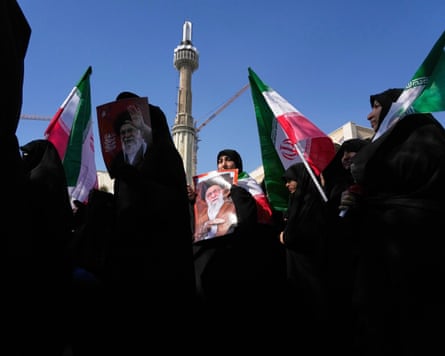
In the background of one video, a man speaking through a loudspeaker mourned Khamenei. “We bear witness that he was the embodiment of piety and guardianship in our time,” he said as some worshippers seated on prayer rugs wept.
In an interview with the news website Axios, Trump said he should be involved in choosing Iran’s new leader and spoke dismissively of Khamenei’s son Mojtaba Khamenei, who is a frontrunner to replace his father, calling him “a lightweight”. “We want someone that will bring harmony and peace to Iran,” Trump said.
Recent waves of Israeli strikes appear to have been focused on Iran’s western border with Iraq, possibly preparing for an incursion by fighters from Iranian Kurdish opposition groups based in northern Iraq.
Qatar and Saudi Arabia said they had intercepted Iranian attacks targeting US bases in their countries. In Bahrain, officials said Iranian strikes targeted two hotels and a residential building. In Kuwait, where the six US soldiers were killed on Sunday, the army said air defences were activated when missile and drone attacks breached its airspace.
The British ambassador to Bahrain said on Friday the UK would help defend the country with its fighter jets. On Thursday the UK prime minister, Keir Starmer, said he was sending four more Royal Air Force Typhoon fighters to Qatar after requests from allies for further support.
Volker Türk, the UN high commissioner for human rights, said “the world urgently needs to see steps to contain and extinguish this blaze”, but that “instead we are only seeing more inflammatory, bellicose rhetoric, more bombings, more destruction, killings and escalation, that fuels it further”.