.png) 2 months ago
67
2 months ago
67
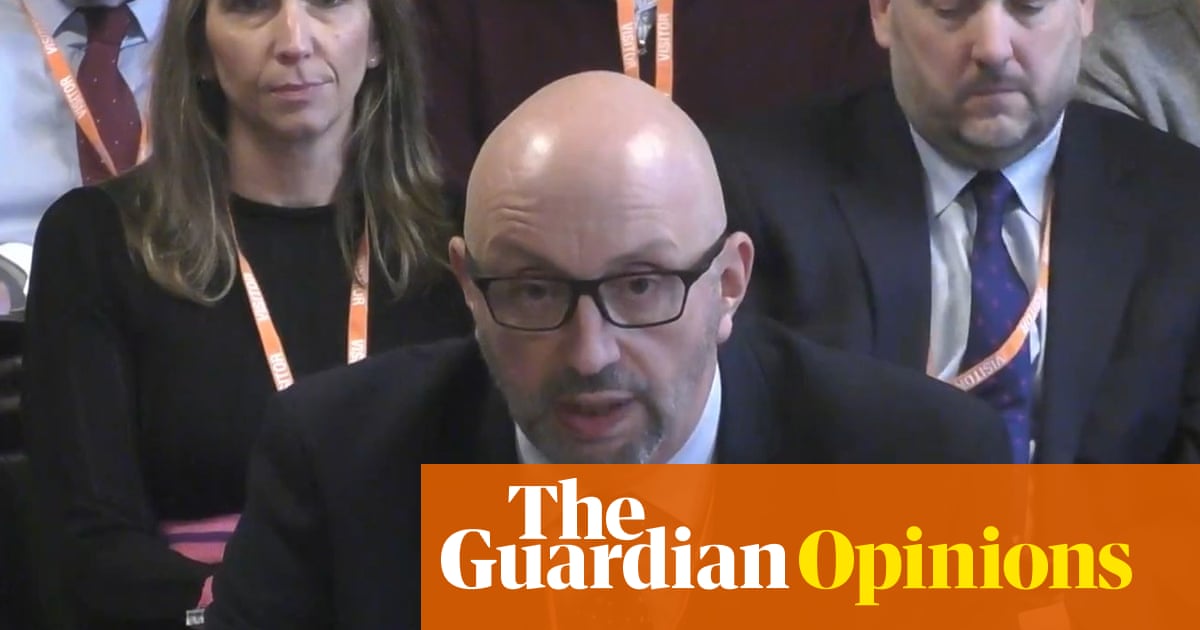
The UK’s independent reviewer of terrorism laws has criticised the government’s latest national security strategy for failing to take online threats more seriously, despite Keir Starmer claiming it would result in “a hardening and sharpening of our approach” in the face of Russian menace.
Jonathan Hall KC said it was “a very surprising omission” that the 2025 national security strategy did not focus more on online risks, including from terrorists and hostile states, which he said were now a “major vector of threat”.
Hall said the need to protect the country against online threats – with digital channels being employed widely by terrorists and states – was now little different from the need for robust air, naval and land forces. The adviser, appointed by the home secretary, was speaking before a speech on Tuesday in which he is expected to say that not dwelling more on the implications of online threats to national security “is a gross error”.
Hall, who has been the reviewer of terrorism legislation for six years, said that almost all terrorism in the UK starts online.
“Digital life is central to national security, is not an adjunct consideration, and is not to be categorised and dismissed by drawing analogies with earlier technologies such as television, that have caused moral panics and then become integrated into our lives,” he is expected to say.
“Consider the fact that … on one of most popular online games [platforms] for children, Roblox, it is possible to enact a school massacre or mosque shooting.
“Consider the chatbot … that encouraged a man to take a crossbow to Windsor to try to kill the late Queen. Think about Dylan Earl, recently sentenced for a total of 23 years, who was recruited online by the Wagner group to arrange arson at a warehouse containing equipment destined to support Ukraine.
“All this is quite apart from the technical opportunities given to adversaries for hostile surveillance, disruption through cyber-attacks [and] new attack methodologies.”
The government’s 2025 national security strategy published in June calls for improvements in the UK’s cybersecurity and Starmer stressed that “technology is transforming the nature of both war and domestic security”. But the strategy focuses strongly on boosting defence spending to 5% of GDP by 2035.
The government has been approached for comment.
after newsletter promotion
Hall will also allege that the government has exaggerated the safety of online life in Britain and will say that despite the Online Safety Act, introduced in 2023, his researchers found an Islamic State-affiliated Facebook account posting an instructional document on the “deadliest places for stabbing” on a body, which had been online for at least a month and remained accessible despite being reported to Facebook.
Such content is now illegal, yet, Hall said: “Nothing in the Online Safety Act allows the authorities to take down content or to order tech companies to take it down.
“Despite this, you will continue to hear ministers saying that the Online Safety Act makes the UK the safest place to be online. We need much greater clarity about what the Online Safety Act can and cannot do. Digital life is too important for us to be left in the dark,” he added.
Dame Melanie Dawes, chief executive of the UK communications regulator Ofcom, on Monday told MPs it was investigating if social media companies had adequate systems to assess and swiftly remove illegal hate and terror material reported to them.
“If we uncover significant compliance concerns, we will not hesitate to move into formal enforcement action,” she said.
Hall also called for a “recast” of laws that govern surveillance by UK authorities and restrict them from gathering personal information, even if it is posted online, without prior authorisation.
He said these restrictions are in place under human rights law protecting the right to a private life, but he is expected to say in his speech: “We need to consider whether our predigital laws governing surveillance are unduly restricting the ability of counter-terrorism authorities to consider publicly available information online – that is, information that we have freely publicised and/or surrendered to tech companies for advertising purposes.”
A government spokesperson said: “The UK has one of the most robust counter-terrorism frameworks in the world, and this government is committed to ensuring we have the required tools and powers needed to stop the spread of violence and hatred against individuals and communities in our society.
“Under the Online Safety Act, digital platforms must also take action to prevent illegal content, including terrorist and violent material, to protect users and our communities from online harm.”