.png) 2 months ago
67
2 months ago
67
Rachel Reeves updated MPs on Tuesday about the steps the government was taking to cushion the impact of the Iran war on consumers and the UK economy. The chancellor stopped short of announcing specific immediate support but said she was contingency planning for the tough months ahead.
Here are some of the levers she could pull:
Protecting (some) consumers from higher bills – eventually
Speculation has been rife since the effective closure of the strait of Hormuz sent oil and gas prices soaring, that the government may be forced to step in to protect households from a jump in utility bills.
But Reeves gave the clearest indication yet that she has no intention of repeating the across-the-board subsidies introduced by Liz Truss in autumn 2022, which went on to cost the Treasury about £40bn, and were worth £1,350 to households in the top 10% of earners.
Reeves said Truss’s approach had “left us with high levels of national debt, a cheque written then for a bill that is still being paid today”.
Instead, the chancellor said officials had been working with the Department for Work and Pensions and local authorities to assemble the data necessary to offer more targeted support to poorer households – at a lower cost to the taxpayer. Thinktanks including the Resolution Foundation have been urging the government for some time to take on this complex task.
She also gave a hint on timing. Energy bills are poised to fall from April, as a result of measures Reeves took in her autumn budget, including shifting the cost of some green measures on to general taxation.
They are then forecast to rise to nearly £2,000 in July, when the next quarterly energy price cap – set on the basis of market prices – comes into force.
There had been suggestions the government might act before then, but Reeves pointed out most of household spending on energy happens over winter, in what appeared to be a hint that any support may not come into effect until the autumn.
Cracking down on price gouging
From the start of the conflict, the government has warned that it will not allow companies to take advantage of the crisis by short-changing consumers.
That message has been so strident, in fact, that at one point petrol retailers threatened to pull out of a meeting with the chancellor, accusing the government of “inflammatory language”.
But recent academic research has suggested companies tend to take advantage of economy-wide shocks to raise their profit margins.
To prevent that, Reeves said she would ensure the Competition and Markets Authority, the regulator, has the powers it needs to stop profiteering. “This government will not tolerate any company exploiting this crisis,” she said.
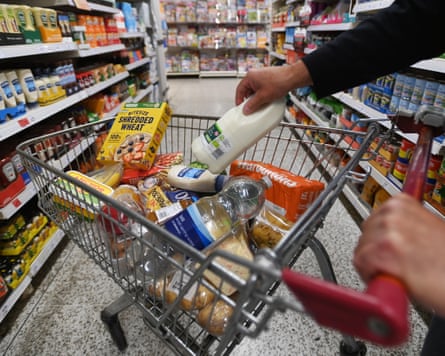
Reeves also said she would meet supermarket and bank bosses later this week, to ensure they are doing what they can to help consumers.
Cancelling planned fuel duty rises
Opposition parties have been campaigning noisily for Reeves to cancel the planned 1p a litre increase in fuel duty due to come into force in September, with 2p rises then planned for December and March.
These moves are intended to reverse a 5p a litre cut implemented by the Tories – but now look awkwardly timed, given the global backdrop.
The cost of oil remains above $100 a barrel, and petrol is already costing UK motorists 13.5p a litre more than before hostilities broke out, according to the RAC.
Reeves made no commitment to cancel the planned rises; but did promise to give an “update on fuel pricing within the next month”.
Getting on with EU negotiations
Reeves suggested the government’s hoped-for sanitary and phytosanitary (SPS) deal with the EU, which will stop exports being subject to veterinary checks, could cut food prices.
She said the government hopes to conclude the negotiations by the end of this year – almost two-and-a-half years after Labour stated its intention to get an SPS deal in its manifesto.

The chancellor also said she had asked officials to look at whether tariffs on imports of some agrifoods could be reduced, to cut prices for consumers.
Accelerating energy projects
Ministers, including the energy secretary, Ed Miliband, have insisted the Iran war and resultant high oil and gas prices reinforce the case for pressing ahead with the clean energy transition.
Reeves said the government would legislate to implement the findings of the Fingleton review, which was aimed at speeding up the building of new nuclear power stations and cutting their cost. She also promised to change planning rules to allow critical energy projects to continue, even when they face legal challenges.
Of course, neither of these measures will bear fruit on a timescale that will help cash-strapped consumers facing rising bills in the coming months.