.png) 2 months ago
59
2 months ago
59
Warnings of a possible “genocide” in Sudan were removed from a UK risk assessment by Foreign Office officials, according to a whistleblower whose testimony raises fresh concern over British failures to act on the atrocities unfolding in the war-ravaged country.
The threat analyst said they were prevented from warning that genocide could occur in Darfur by Foreign, Commonwealth and Development Office (FCDO) officials in a humanitarian risk assessment collated days after Sudan’s brutal civil war erupted in April 2023.
The analyst, requesting anonymity, believes the decision may have been taken to protect the United Arab Emirates (UAE), a key UK ally accused of arming the paramilitary Rapid Support Forces (RSF) perpetrating genocidal violence in Sudan.
“The word genocide was removed from our report. Anyone who has studied Sudan – its patterns of behaviour – knew genocide was a risk,” said the analyst, who produced a regular early-warning assessment for the FCDO, reports which can be disseminated throughout government departments.
It amounted to “censoring”, they said, and was particularly disturbing as the UK is the UN security council’s “penholder” on Sudan, meaning it leads the council’s activities on the conflict.
What is genocide?
Show
Agreed by many as the gravest of all crimes against humanity, genocide is understood to refer to the mass extermination of a particular group of people, such as the attempts of the Nazis to eradicate the Jewish population in the 1940s.
Conceived as a response to the Holocaust, the convention on the prevention and punishment of the crime of genocide – better known as the 1948 UN genocide convention – was the first legal instrument to codify genocide as an offence, defining it as an act committed with the “intent to destroy, in whole or in part, a national, ethnical, racial or religious group”.
Behind this relatively simple definition lies a complex web of legal concepts concerning when and how the term can be applied.
UN bodies have said they believe genocide to have occurred in Srebrenica in 1995, in Rwanda in 1994, in Myanmar in 2019, and in Gaza in 2025. Judgments of the international court of justice are awaited on all.
Meanwhile, a former FCDO official linked to the department’s atrocity prevention team told the Guardian that they also believed the suppression of the risk of genocide in Sudan was to protect the UAE from scrutiny.
Difficulties raising atrocity concerns over Darfur, they said, were comparable to problems they experienced flagging human rights concerns relating to conflict in the Democratic Republic of the Congo (DRC).
They likened the way in which the UK maintained close relations with Rwanda – despite Kigali’s military support for the M23 militia in eastern Congo – with how the UK has stayed close to the UAE despite its backing for the RSF (which the Gulf state denies).

DRC atrocity assessments were “dropped for political reasons”, the former official claimed, adding: “That pattern of behaviour looks to have been repeated for Sudan.”
However, the FCDO said a formal determination of genocide was never a political consideration.
A spokesperson said: “The UK does not make formal determinations of genocide on the basis of politics.
“It does so based on the judgment of a competent court, after consideration of all the evidence available in the context of a credible judicial process, and there is currently no such judgment in the context of Sudan.”
Shortly after the April 2023 report warning of genocide was finalised for the FCDO, ethnic violence was already sweeping through Darfur. This vast western region is where the Janjaweed, the predominantly Arab militia that was the forerunner of the RSF, perpetrated a genocide estimated to have killed 300,000 Sudanese two decades ago.
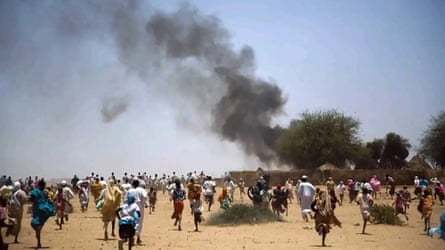
Two months after the allegedly censored document, possible genocide was committed by the RSF in the Darfuri city of El Geneina. The UN estimates about 15,000 people from non-Arab and ethnic African communities were killed.
The analyst alleged that even after the atrocities in El Geneina, the word genocide was prohibited from their risk assessments.
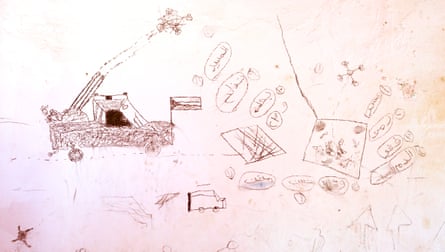
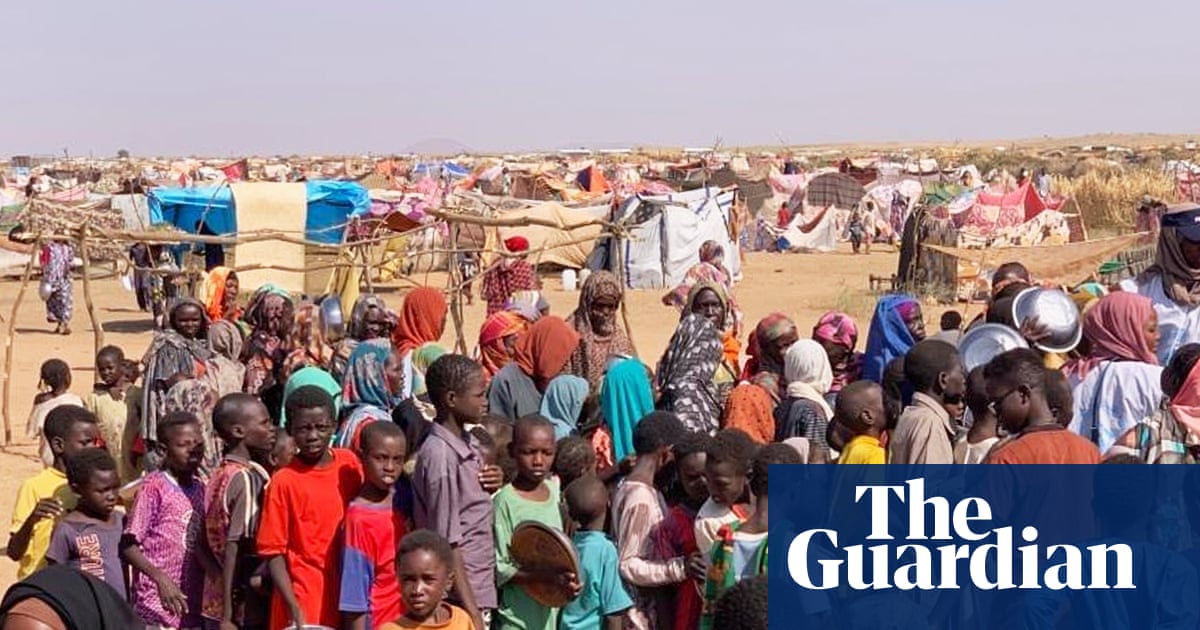
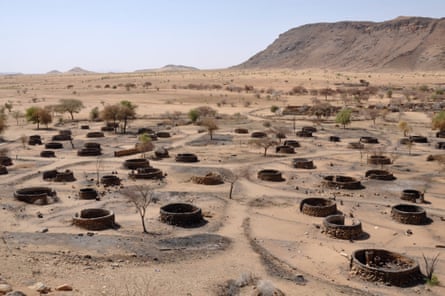
El Fasher, another regional capital in Darfur, was seized by the RSF last month, prompting systematic mass killings that experts have likened to the opening days of the genocide in Rwanda.
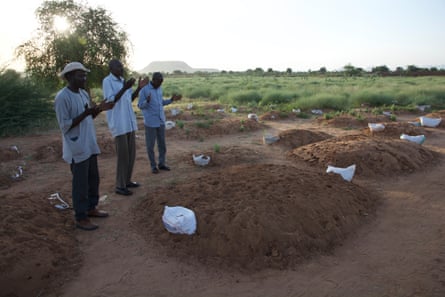
With the city sealed off and in effect a massive crime scene, intelligence suggests the RSF has spent weeks disposing of evidence, with experts detecting mass graves and possibly bodies being burned. Tens of thousands of the city’s residents are still missing.
Days after Sudan’s war began on 15 April 2023, analysts submitted an assessment to FCDO officials outlining possible crisis scenarios that could also be passed to the UN’s early-warning systems, British intelligence or “Cobra” meetings, where senior ministers convene to coordinate the emergency response to a disaster.
The analyst said that instead of being allowed to warn of the “risk of genocide in Darfur”, they had to state instead that there was a danger that Darfur might return to conflicts previously witnessed in the region.
“I didn’t understand the head-in-the-sand attitude – the need to find more amenable language to an obvious risk,” they added.
The final report has been seen by the Guardian but specific details are not being reported to protect the identity of authors.
Abdallah Abu Garda, chair of the UK-based Darfur Diaspora Association, said the news raised “extremely grave” issues.
“Our concern is that Foreign Office officials appear to have deliberately downplayed the risk of genocide precisely as Sudan was descending into one of the worst episodes of mass atrocities in recent memory,” he said.
For years before war erupted, experts had issued warnings of the rising risks of mass atrocities in Sudan.
In 2022 the UK Civil Society Atrocity Prevention Working Group, an umbrella organisation of human rights groups, wrote to ministers with concerns “that the UK’s systems, capabilities and policies towards Sudan still lack a focus on atrocity prevention, grievance and political marginalisation”.
These warnings were repeated in June 2023, as atrocities were committed in El Geneina. Experts warned MPs on the foreign affairs select committee of continuing risks of atrocities across Sudan and that the FCDO’s Sudan team was ill-equipped to respond.
Kate Ferguson, a foreign policy expert on mass violence, and co-executive director of Protection Approaches, told MPs that she believed even “when those warnings are being raised, whether in West Darfur or in Khartoum, [the FCDO] don’t have a system by which those warnings can be easily, rapidly and urgently raised to the ministerial office”.
Approached for comment on what she felt had changed since 2023, Ferguson said: “It is difficult to see how our years of raising alarm of genocide returning to Darfur, and of warning the FCDO they needed to prioritise atrocity prevention, has translated into clear UK policy to prevent or protect – even now, with tens of thousands missing from El Fasher, facing unthinkable peril or [who] are already dead.”
“Halting genocide is not easy but it is possible,” she added. “That’s why it is essential our foreign secretary and prime minister have full confidence in the analysis of atrocity violence they receive and that prevention options passed up for decision-making match ministerial ambitions and obligations to protect civilians in Sudan.
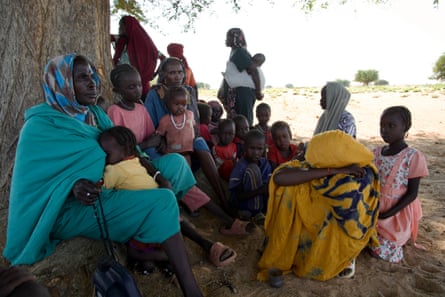
“The RSF’s assault on black and Indigenous civilians will continue – our government’s expertise and systems must be fit for the urgent purpose of averting further catastrophe in [nearby] Tawila displacement camp and across Sudan.”
Meanwhile, the former FCDO expert within the Office for Conflict, Stabilisation and Mediation, revealed that raising atrocity concerns over Darfur was similar to problems they had experienced relating to the Congo.
“We were persistently warning about atrocity risks in DRC, but this was the time of the government’s Rwanda policy [the UK’s proposed scheme to send asylum seekers to Kigali] and they didn’t want to know because it would go against British interests.
“It felt we were getting into very similar territory on Sudan. You need to consider the [United Arab] Emirates to explain why people were struggling with how to talk about Sudan.
“What I can say is that from the outset of the war, evidence started to come in about Emirati involvement, progressively more and more,” said the former FCDO official.
The UAE has repeatedly denied providing arms to the RSF.
At the same time, the former official added, the FCDO was amassing evidence that genocide was likely to unfold again in Darfur.
They said that a system for tracking the Sudan conflict was monitoring RSF recruits who had expressed ambitions to eradicate ethnic Africans from Darfur. “People were expressing genocidal intent,” they said.
Although the US formally declared in January that genocide had been committed in Sudan by members of the RSF, the UK has not followed suit.
The UK has said the determination of genocide was an issue for competent courts to decide, but it would act to prevent atrocities.
However, the former FCDO expert said this did not explain why genocide was removed from the early-warning report.
“In this scenario, its use is totally acceptable because you’re portraying a worst-case scenario that would be difficult to describe without saying the word,” they added.
The analyst added that attempts to flag that Sudan appeared to be heading to conflict were also not signed off by FCDO officials.
“We kept trying to raise Sudan [as an urgent issue] in February [2023], then March, but there was no traction,” they added.
An FCDO source said the UK was committed to upholding its obligations under the UN genocide convention and strongly advocated for accountability for all breaches of international law.
They added that the UK supported the work of the UN Fact-Finding Mission and the international criminal court and was funding a project to document and verify attacks on civilians.
Abu Garda added: “Britain’s failure to properly assess and recognise ongoing atrocities has fostered impunity and contributed directly to further genocidal campaigns in El Geneina, in Zamzam camp, and now in El Fasher.
“The British government must uphold its moral and legal responsibilities and act decisively to prevent genocide rather than minimise or obscure it for political or economic convenience.”