.png) 3 months ago
99
3 months ago
99
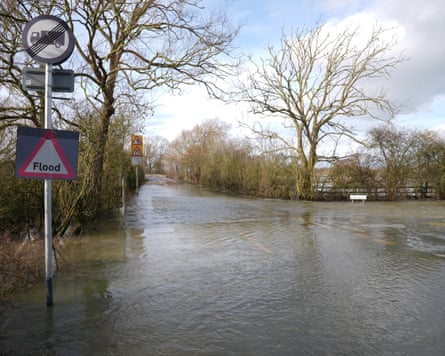
In a “miserable and relentlessly wet” start to the year, rain has fallen in parts of the UK every day for weeks without fail.
With more than 100 flood warnings active across the country and downpours expected to continue this week, scientists say the forces behind Britain’s constant drizzle are the same ones bringing devastation to Spain and Portugal.
How bad is the rain across the UK?
Northern Ireland had its wettest January in 149 years according to the UK Met Office, while southern England had its sixth wettest January in records that date back to 1836. The south-west had 56% more rain than the long‑term average. The south-east and central south were 88% wetter.
North Wyke in Devon, Cardinham in Cornwall and Astwood Bank in Worcester have recorded rain every day so far this year, the Met Office said on Monday.
Jess Neumann, a hydrologist at the University of Reading, said: “It’s been a miserable and relentlessly wet start to the year for many across the UK.” The commuter town near London has had its longest unbroken spell of rain since records began a century ago.
“It seems hard to remember that only a few months ago, large parts of the UK were experiencing drought and hosepipe bans.”
Why is the UK so rainy?
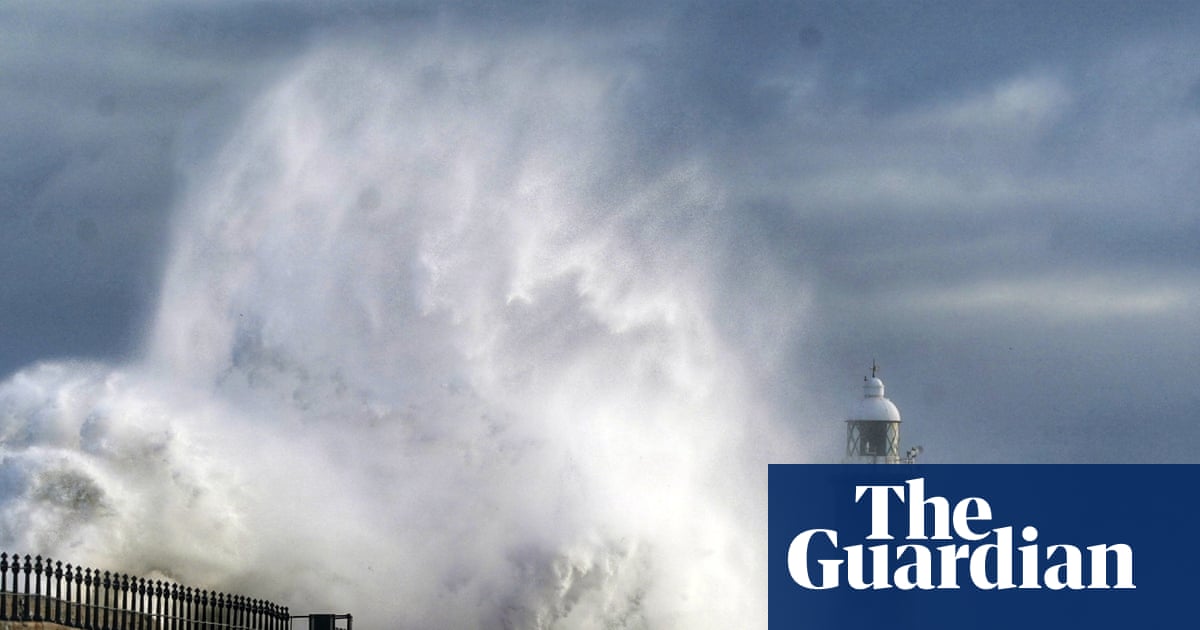
The seemingly continuous rain is due to a rapid-fire series of separate events. Storms Goretti, Ingrid and Chandra battered the UK in January, with back-to-back rounds of rain that have brought soil in parts of the country to the point of saturation.
Neil Armstrong, a chief forecaster for the Met Office, said: “The past few weeks have felt relentlessly wet, with repeated bands of rain sweeping in from the Atlantic and creating increasingly saturated ground across large parts of the UK.”
A southward shift of the jet stream, a conveyor belt of fast-flowing air, has steered areas of low pressure towards the UK.
“Cold plunges of air across North America have strengthened the temperature gradient across the north-west Atlantic, energising the jet,” Armstrong said. “A blocking high over northern Europe has prevented weather fronts from clearing, causing them to stall over the UK.”
Where have storms struck?
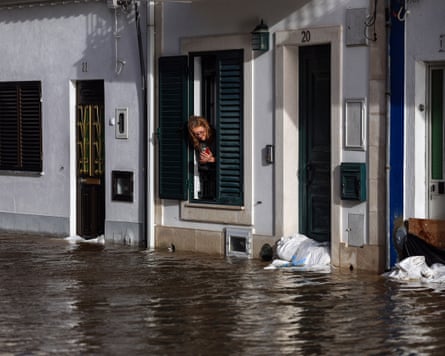
The jet stream shift has also hit Spain and Portugal with devastating floods that have killed several people and forced thousands to flee their homes. Storm Leonardo, which merged with a rainfall-replenishing “atmospheric river” of tropical moisture from the Caribbean, was followed by Storm Marta at the weekend, which killed two people.
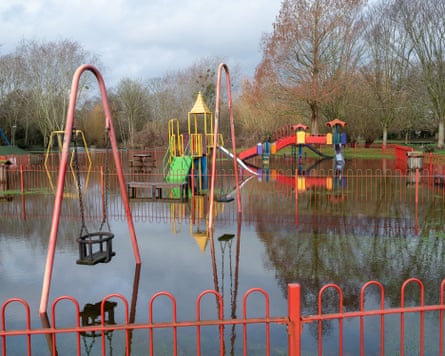
The low pressure systems in the UK have not intensified as rapidly, but have been strong enough to break daily rainfall recordsin several places. Scientists warn that even modest rainfall can trigger floods if soils are too wet to absorb water.
Is the climate crisis making rainfall worse?
Scientists think fossil fuel pollution is making the jet stream wavier and allowing extreme weather systems from heavy rain to heat domes to get stuck in one place, causing far more damage than if they had just moved freely. Such “blocking systems” are expected to increase under medium- and worst-case emissions scenarios.
At the same time, global heating means extreme rainfall hits harder. Warm air can hold more moisture – about 7% for every 1C – which has contributed to wetter winters in the UK that are striking two decades sooner than regional climate models predicted. In January, however, Arctic air led to slightly cooler temperatures than usual, with high monthly rainfall totals more a result of persistence and duration than intensity.
Scientists project climate breakdown will lead to wetter winters and drier summers in the UK. Neumann said: “One positive to come from the recent rainfall is the move to recovery status for UK water resources.” She added that England has become free from drought for the first time since May. “Reservoirs and aquifers are slowly restocking and recharging to healthy levels.”