.png) 3 months ago
81
3 months ago
81
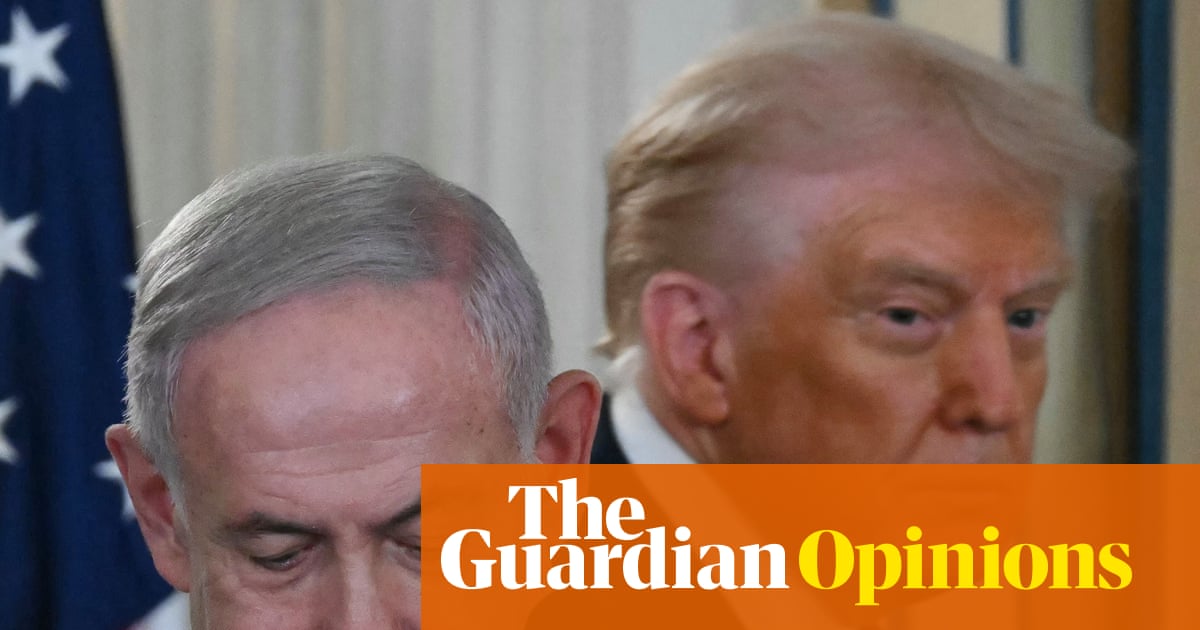
Venezula’s Nicholás Maduro was captured. But Donald Trump and Benjamin Netanyahu have chosen a different strategy for Iran: to target and aim to kill the country’s supreme leader, Ali Khamenei, , and as many other senior regime figures as possible.
Though Iranian military sites and its air defence systems were also targeted by coordinated US and Israeli bombing, beginning in the morning, the most significant attack was on Khamenei’s compound in Tehran.
Film on social media showed heavy plumes of smoke emerging from the site in the capital following the daylight strike, and soon after satellite imagery showed it had been destroyed in what appeared to be a targeted attack.
Khamenei’s fate remains uncertain, but its intention was: an attempt to effect regime change in Iran through bombing and killing with no credible justification in international law. It is a tactic that is disturbingly easy to start, but its results are profoundly uncertain.
Last summer during the 12-day war with Israel, Khamenei had named three potential successors should he be killed. Reports earlier this month indicated that Khamenei had named four layers of succession for key government and military jobs, in an effort to ensure regime survival in the face of a US-Israeli attack.
“There is no sign that the US or anybody else is going to put boots on the ground, so the monopoly of force domestically remains with the Iranian regime,” said HA Hellyer, a senior fellow at the Royal United Services Institute. “The only way that changes [is] if there is an uprising with mass defections.”
Explosions were heard in Tehran, Isfahan, Kermanshah, Qom and other large cities in a broad assault that began in the morning, a deliberate change from a more normal pattern of night-time strikes, to achieve a measure of operational surprise.
Hundreds of targets were struck in multiple waves, the Israeli military said, with little evidence of opposition from what was left of Iran’s air defences – already depleted after last summer’s 12-day war and hit again on Saturday. Political and military targets were struck, with 200 Israeli fighter jets striking at air defence and ballistic launch sites, according to the country’s military.
Over the past month, the US has amassed two carrier strike groups in the region – the USS Abraham Lincoln in the Arabian Sea, joined recently by the USS Gerald R Ford in the eastern Mediterranean. Each carrier has an air wing of about 75 combat aircraft, while allied destroyers and submarines have Tomahawk cruise missiles available, each with a range of about 1,000 miles or more.
Iran, recognising it was faced with an existential crisis for its regime, responded by quickly launching ballistic missiles and drones against Israel and US allies and bases in several countries in the region: Jordan, Kuwait, Bahrain, Qatar, the UAE, and Saudi Arabia, immediately drawing six other countries into the conflict.
Though the UK was not party to the US-Israeli assault – clearly believing the initial attack on Iran to be illegal – it has already been drawn in, supplying fighter jets to protect regional allies.
Initial signs are that the fight, as a traditional military contest, is extremely one-sided. Alma, an Israeli military thinktank, reported that Iran had targeted Israel with 25 waves of attack by 5.30pm local time, while Israel’s Magen David Adom ambulance service reported 89 peoplehad been wounded
One person was killed in Abu Dhabi from falling debris from an intercepted missile, a fire broke out at Fairmont hotel in Dubai after it was hit. So far it appears casualties from Iran’s regional retaliation have been limited, though all it takes is for one missile to get through somewhere across the regional war.
A missile was filmed smashing into the US naval base in Bahrain – the level of damage it caused as yet unclear – followed by a single Shahed-type delta winged drone targeting a radar dome. Both hits were surprising given that the US had airlifted Patriot air defence systems into regional bases over the past month in anticipation.
Iran, meanwhile, appeared to be taking heavier casualties. A primary school for girls in Minab, southern Iran, was struck, killing 85, according to the country’s Tasnim news agency, a grim reminder that so called precision bombing is often not accurate, civilians the victims.
By the evening Iran appeared to be trying to enforce a closure of the strait of Hormuz, through which an estimated fifth of the world’s oil supply passes from Iran and Gulf nations. Warnings were being broadcast to merchant shipping on VHF radio, according to the UK’s Maritime Trade Organisation.
Iran could attempt to mine the two 1.9 miles wide shipping lanes with Russian Kilo class and midget Ghadir submarines, though it is unclear such an operation, if attempted, would be successful. The strategy is sufficiently obvious that the US is almost certain to have submarines available to prevent or disrupt a mine laying operation.
The early indications are that the US and Israel plan a bombing campaign that could last weeks, while Iran runs down its estimated stock of 2,000 ballistic missiles. Its ability to retaliate at scale may only last a few days, while the US can run in excess of 125 bombing missions a day from each of its aircraft carriers alone.
Iran has few good strategic options now it is under sustained attack. The regime’s best prospect may be to try to endure the waves that are likely to come, continue to retaliate while it can, and try to retain control of the streets given that the US and Israel have so far expressed no intention of mounting a ground invasion.
If that is the case, it is not obvious how the war will end. “In short, the US and Israel have started this war with vague and unachievable objectives, with no international law base, and little or no support from Gulf states or other US allies,” said Lord Ricketts, former UK national security adviser.