.png) 1 month ago
46
1 month ago
46
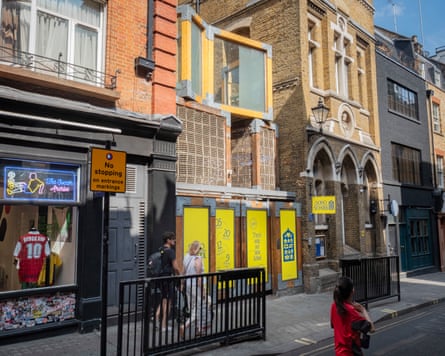
Sandwiched between a strip club, a West End theatre and a pub might not be the most obvious location for a school but Soho Parish C of E primary has thrived for decades among the colourful charms of inner London.
But in an area that once had 16 schools, Soho Parish is the last remaining and its time may soon be up, a victim of the post-Covid downturn and falling pupil numbers that are forecast to close hundreds of primary schools across England.
Parents waiting to collect their children on Great Windmill Street in the fierce heat this week said they had been left in the dark about the site’s fate by the school and Westminster council. Some said they feared its closure would snuff out the last remnant of what one called “normal family life” within Soho.
“Without this school it’s all just tourists, isn’t it?” said one, gesturing at the long queue outside an artisanal gelato shop across the street.
The school received a temporary reprieve last month, when the governing body announced an end to plans to “amalgamate” Soho Parish with another Church of England school nearly a mile away in Fitzrovia.
Parents who spoke to the Guardian praised the school, saying it made good use of the rich seam of nearby museums and theatres. But with Westminster council working on a consultant’s report on the future of schools in the borough, many said they were worried.
“The problem is that people around here aren’t having children. There’s actually council housing hidden here and there but there’s nothing much for families. It’s mainly old people and single people. That’s up to the council,” one said.
One couple, who asked not to be named, said their son had started in nursery class and hoped he would have been able to stay on. But they said they feared teachers would leave because of the uncertainty, and were now thinking about moving to find affordable childcare.
A spokesperson for the school said: “Soho Parish C of E primary school is a unique school – but the challenges we face are not unique.
“Our falling roll means that our revenue reserves deficit continues to grow. The reality is that we had close to 180 children before Covid, and next September we will be welcoming close to 65 children. Given that schools are funded on a per pupil basis, we are having to look at all options to explore how to support the school to continue to thrive.
“We are already working closely with the council and look forward to engaging with their Isos [consultancy report] process moving forward.”
But while Soho Parish may not be attracting enough pupils, it does have many supporters among local businesses, with parents and former pupils raising prodigious amounts of money and fighting to keep the school open.
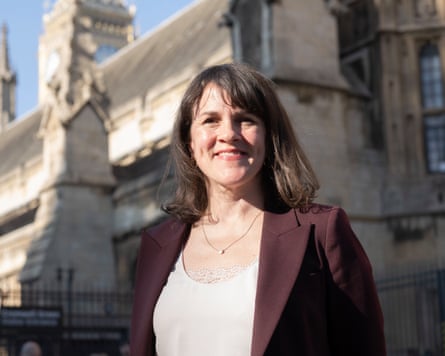
Alice MacDonnell, a former parent campaigning to revive the school, said the Covid pandemic played havoc with pupil numbers, and that the school had yet to recover.
“When my son was about nearly five, I walked past it thinking it was a ‘play and stay’ type of place. When I found out it was a school, I thought that’s amazing, he can go there, but it was oversubscribed, so he didn’t have a chance. But then Covid happened and then there were lots of spaces, so my son joined,” MacDonnell said.
According to MacDonnell, the school’s open catchment area made it attractive to those living outside Soho but working in the area, commuting from outer London boroughs such as Hounslow.
“Lots of those parents worked in restaurants who commuted in with their children, but during Covid restaurants and offices weren’t really open so commuters weren’t bringing their children, and lots of them just left,” MacDonnell said.
While a Soho school community committee has been formed to do battle, MacDonnell and others are working on ambitious plans to make the school more attractive.
“What is needed is a creative community school, inspiring creative thinking. I think there are parents looking for somewhere that doesn’t just teach the national curriculum,” MacDonnell said.
“We’ve got lots and lots of people behind us. We’ve now got Mark Featherstone-Witty, the founder of the Brit School, supporting our vision, so we are gathering teachers and inspiring people who can transform the school.
“I feel that this is a positive way forward for the school. The ball is rolling. There’s going to be a next step soon.”
Meanwhile, the school is in a race against time. Sources say Westminster council has accrued a £1m deficit keeping the school open, even after an estimated £1m in external fundraising. The school’s site belongs to the Church of England but it has limited means to intervene.
The Conservatives took control of Westminster in May’s local elections. Hannah Galley, the council’s cabinet member for children and education, said: “Falling pupil numbers are affecting schools right across central London, and Soho Parish primary school is no exception.
“We’re working closely with the school, parents and the diocese through the Isos Partnership review process to look honestly at every option – including what it would take to keep the school open – before any decision is made.
“We know how unsettling this uncertainty is for families, and we, along with the school, will keep them informed at every stage.”
Westminster has already experienced the largest decline in primary pupil numbers among local authorities, a fall of 16% in the past five years. And new national forecasts suggest England is going the same way, with primary and nursery numbers falling by nearly 473,000 between now and 2031, the equivalent of more than 1,500 primaries without pupils.
Rachel Blake, the Labour MP for Cities of London and Westminster, said she had been working with parents, the council and the London diocese, and argues that losing the school would significantly affect families remaining in inner London.
“I absolutely stand by the parents and kids at Soho primary; it’s a really important part of the community and we should do everything we can to make sure that it carries on,” Blake said.
“It’s really important that the council and the diocese come together to stabilise the school’s leadership, and the council needs to develop a sustainable approach for the school. This primary school is a crucial part of a very special community, and they need to take a holistic community perspective.”