.png) 3 months ago
77
3 months ago
77
Environmental groups have objected to the recommendation of a “blue tick” sustainability label being awarded to a Norwegian krill fishing giant, amid concerns over concentrated fishing pressure and dramatic climate-driven effects on the Antarctic’s fragile ecosystem.
Norway’s Aker QRILL, the world’s largest harvester of krill, a tiny crustacean and keystone of Antarctica’s fragile ecosystem, and its sister company, Aker BioMarine, produce feed additives for aquaculture and dietary supplements for pets and humans.
Their krill products have carried the “blue tick” label operated by fishery certification scheme, the not-for-profit Marine Stewardship Council (MSC), since 2010.
Aker is undergoing a fresh evaluation of its eligibility of the blue tick scheme by a third party assessor.
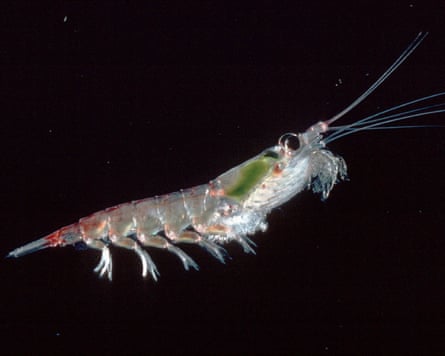
Environmentalists say that since Aker was last certified as meeting MSC’s standard for a “sustainable and well managed” fishery in 2020, management of the entire Antarctic krill fishery has worsened, due to lapsed conservation measures.
Holly Curry, marine protected areas campaign director at the Antarctic and Southern Ocean Coalition (Asoc), a conservation charity, said: “The Antarctic and Southern Ocean Coalition opposes the recommendation to recertify the Antarctic krill fishery.”
Rhona Kent, polar oceans programme manager at WWF-UK said: “To protect this extraordinary species and wider ecosystem, WWF is calling for an immediate moratorium on krill fishing and a review of the sustainability certification issued by the MSC until more precautionary fisheries management measures are agreed by CCAMLR.”
CCAMLR is the Commission for the Conservation of Antarctic Marine Living Resources, a body set up to protect the region from overexploitation.
In 2024, a key rule, or “conservation measure” to disperse the krill catch across a number of areas of the Southern Ocean to avoid local depletion, lapsed, due to political deadlock. China and Russia, two CCAMLR nations, blocked the renewal of an agreement restricting krill fishing in 2024. In 2025, countries once again failed to reach consensus on conservation measures.
This raised concerns over local depletions of krill, the main food source for whales, penguins and seals, in key feeding grounds.
Last year, scientists from the British Antarctic Survey warned that climate driven extreme changes in Antarctica are happening faster than expected and that consequentially, crucial populations of krill, also an important climate buffer, are under increased threat.
As a result, Asoc and the WWF object to any MSC recertification of Aker’s fishery. Asoc has written to the third party evaluators and the MSC claiming that the current assessment disregards the deepening climate concerns and lapsed conservation measure.
The NGOs are not alone in expressing concern. In his film, Ocean, which showed industrial krill trawlers next to Antarctic whales, David Attenborough said: “Some claim this is sustainable, but we might be removing the foundations of an entire ecosystem.”
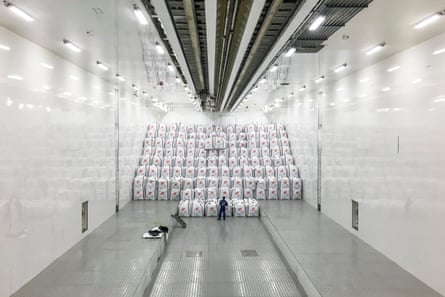
In February, a draft 300-page report of the assessment of Aker’s MSC tick by LRQA, part of Lloyds Register and a third-party “conformity assessment body” for the Marine Stewardship Council, determined the Aker fishery should be certified “against the MSC standard” for a further five years.
Curry expressed deep disappointment valuators had not addressed Asoc’s concerns over the continued sustainability of krill fishing.
“It has taken a step backwards,” she said, given the deadlock at the 26-nation organisation. Asoc have now submitted formal objections to the report, which will go to an independent adjudicator.
A spokesperson for MSC said it could not comment on the evaluation of Aker, which was still under way. The council’s standards for krill as a keystone species, have “especially precautionary catch limits which are much lower than for other species, ensuring the needs of dependent predators in the food web are met before those of humans”, they said.
“In terms of management, all fisheries seeking to be certified must demonstrate that the management system that they operate within is effective.” This included measures they have taken or those taken by relevant management bodies, in this case CCAMLR, the spokesperson said.
Matts Johansen, the CEO of Aker QRILL, said the NGOs had an “extreme narrative” that is “counter-productive” to achieving ecosystem protection in the Antarctic, given the need for cooperation and consensus at CCAMLR.
His company is working behind the scenes, including visiting China, to help break the deadlock on appropriate conservation measures in the Antarctic. Aker has no interest in expanding its fishery, he added.
“We want these changes, we want the MPA in place, we want spatial management in place and we are working hard to make it happen,” Johansen said.