.png) 3 months ago
61
3 months ago
61
After years of arrests, disappearances and mass killings of protesters, the hatred in Iran from some quarters for the hardline, oppressive governing regime had boiled into such a desperate rage that many believed Donald Trump’s promise that the US would “come to their rescue”.
Now, after a fortnight of war, with US and Israeli airstrikes killing hundreds as they hit residential blocks, shops, fuel depots and even a school, the mood is changing.
“They are also lying! Like the regime has been lying to us,” said Amir*, a student at the University of Tehran. “You are all worse than each other.”
The anti-regime protester has let himself hope for more from the US and Israel, which on the first day of the war had swiftly killed Iran’s most feared and powerful man, the supreme leader.
Yet the regime lives on, with Ayatollah Ali Khamenei’s son quickly appointed to replace him, while Israel has widened and intensified its attacks on the country of more than 90 million people.
“We’re tense. We are really tense,” said Amir. “I feel worse when I am alone. Khamenei’s death has left us with this weird sense of emptiness. Like I am now forced to think about the future, which seems so chaotic right now. We never got to look at him in the eye. He died just like that? Without facing justice for what he did to us?”
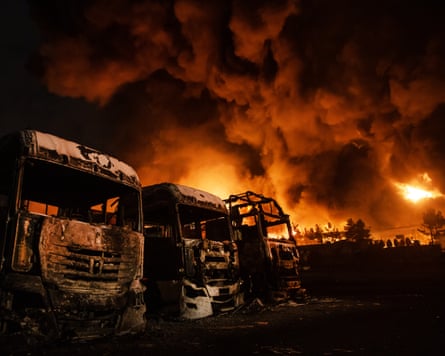
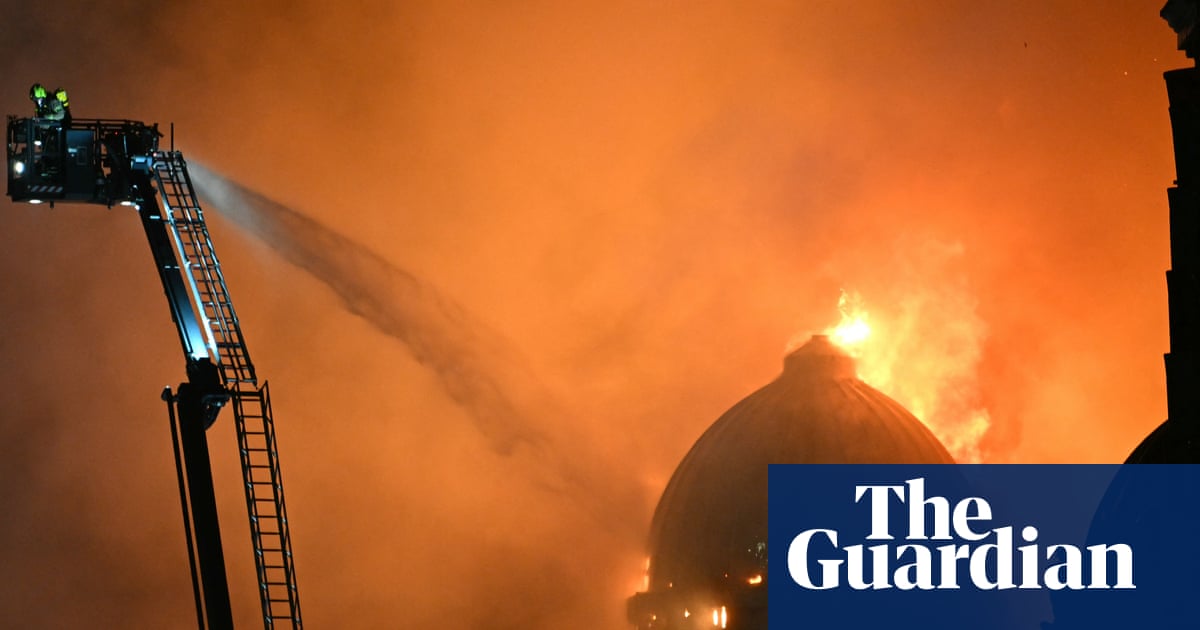
The turning point for Amir was the Israeli strikes on fuel depots in Tehran last week, with one attack on the Shahran oil depot overshadowing the capital with black smoke. A rain shower later covered trees, homes and cars with layers of toxic oil.
“I genuinely believe now they [the US and Israel] didn’t have a plan. I was still hoping I was wrong, but the Shahran attack changed the way I look at this war right now,” he said. “If the regime is what you want to hit, even if you think these depots were used by the regime, where do you draw the line? What about us, the ordinary Iranians? We rely on this civil infrastructure. Why take away our ability to govern in the future? Who can rebuild utter ruins?”
Amir said he now had constant anxiety about Iran “turning into another Iraq”, a country the US invaded in 2003, promising freedom but delivering a civil war. Israeli leaders have also previously called on Palestinians in Gaza and the Lebanese people to rise up against oppression, only to later kill them in large numbers.
“My heart is so heavy,” said Amir. “I don’t even have tears left. Only anger and more anger. At this regime, and them,” he added, referring to the US and Israel.
Others who spoke to the Guardian this week also had a shift in their attitudes towards the war, especially after the attack on oil depots, but also after seeing images of the country’s heritage sites damaged.
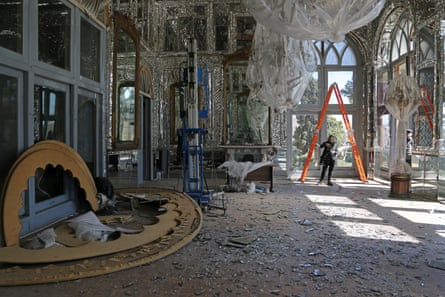
Among those that took the worst hits were Tehran’s Golestan Palace, dating to the 14th century, and the 17th-century Chehel Sotoon Palace in Isfahan.
“How will they rebuild … a priceless part of history?” asked a Tehran-based student. “And how will we bring back people who are dying? Is that it? Is the message from abroad that just because the regime doesn’t care, the world shouldn’t? Is the goal to erase our culture and history?”
Another student, based in Karaj, a city about 30 miles west of the capital which has been under heavy bombardment this week, said: “I want this regime gone. I asked for help from Trump.” But the student said he thought the strikes would target the Iranian Revolutionary Guard Corps and its volunteer militia, the Basij. “When did this plan change and why are they hitting our infrastructure?”
Most Iranians have lived their whole lives under the Iranian regime, which took power in a 1979 revolution that toppled the monarchy, only to replace it with autocratic clerics.
It is hard to assess support for the government in a country with such a heavily restricted media climate, and where open dissent can mean jail and death.
Yet, for almost two decades, protest movements have managed to thrive, often sparked by political unrest, a sudden rise in fuel prices, economic turmoil or the repression of women’s rights. In 2009, in what was known as the Green movement, hundreds of thousands of people took to the streets over disputed presidential elections. The protests were met with a bloody state crackdown.
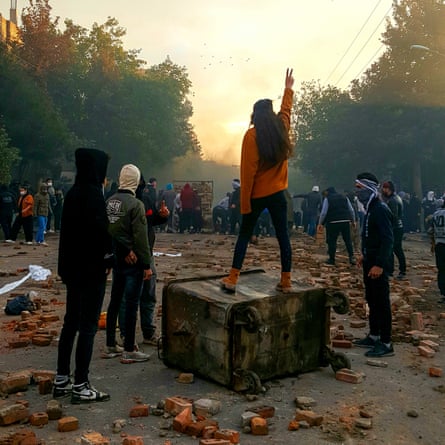
In 2022, one of most powerful uprisings, the Woman, Life, Freedom movement, was sparked by the death in custody of Mahsa Amini over her alleged improper wearing of the hijab. The most recent wave of protests began in late December. They began as small-scale strikes in Tehran’s bazaar over plunging currency. As they spread into countrywide rallies of mass upset, security forces launched one of their deadliest crackdowns, killing thousands.
An Iranian doctor who treated protesters in January for gunshot wounds said he still had some hope the war would “at least result in real change”.
“What we fear most is the war stopping now in its current stage,” he said. “Then we’ll be left with the same people who massacred us last month … only stronger.”
But many others in the anti-regime movement are hearing reports of newborn babies being killed by the US and Israeli strikes, and conclude simply that now three governments, rather than one, are killing Iranians.
A protester in Tehran said: “A significant portion of the people I’ve been speaking to, after witnessing the killing of civilians, have altered their perception of military intervention.”
Earlier this week, they said that for the first time in Tehran, they had experienced “something resembling the idea of carpet bombing. Several neighbourhoods in the city centre were attacked in a sequential, wave-like manner.”
Iranians, they said, had been “well and truly abandoned”.
*Names have been changed