.png) 3 months ago
81
3 months ago
81
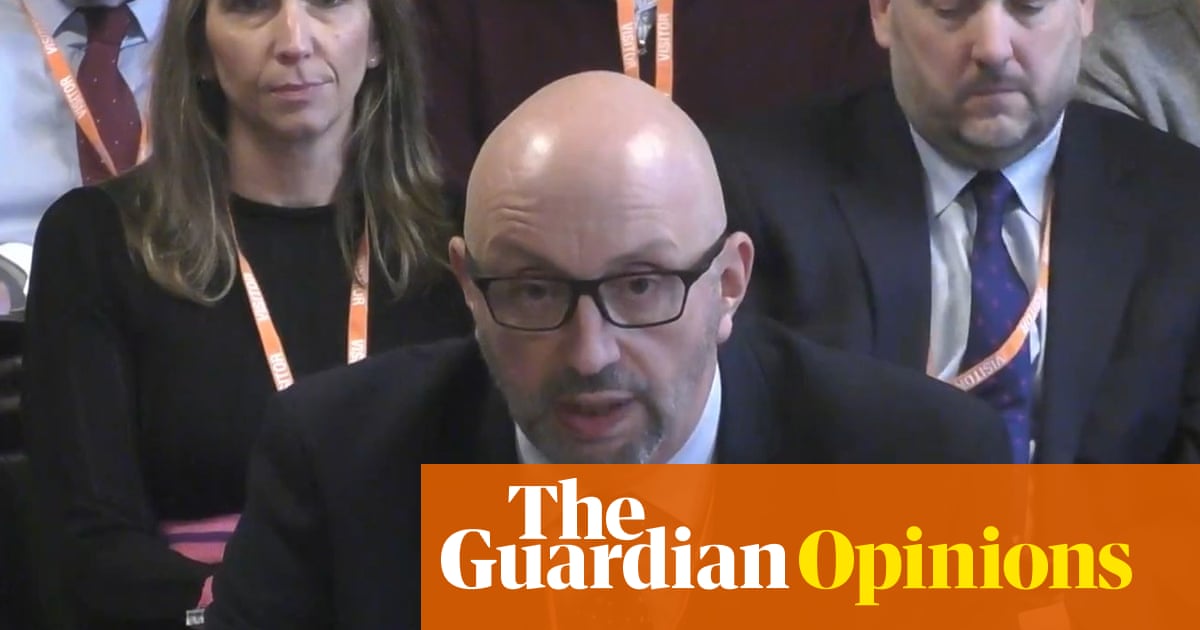
This week’s high court hearings between Sting and his former bandmates in the Police, Stewart Copeland and Andy Summers, are the latest chapter in the life of a song whose negative energy seems to have seeped out into real life.
Every Breath You Take is the subject of a lawsuit filed by Copeland and Summers against Sting, alleging that he owes them royalties linked to their contributions to the hugely popular song, particularly from streaming earnings, estimated at $2m (£1.5m) in total. Sting’s legal team have countered that previous agreements between him and his bandmates regarding their royalties from the song do not include streaming revenue – and argued in pre-trial documents that the pair may have been “substantially overpaid”. In the hearing’s opening day, it was revealed that since the lawsuit was filed, Sting has paid them $870,000 (£647,000) to redress what his lawyer called “certain admitted historic underpayments”. But there are still plenty of future potential earnings up for debate.
The dispute is not over some dusty forgotten hit, with the band members looking merely to redistribute old earnings – any interpretation of the agreements between the bandmates will have huge and ongoing financial impact. As the hearings open, Every Breath You Take sits in the Top 10 of the most-streamed songs daily worldwide on Spotify, racking up about 3.5m plays on that platform alone each day: more than some of the most popular songs of recent times such as Billie Eilish’s Birds of a Feather and Lady Gaga and Bruno Mars’s Die With a Smile. On Spotify, streams jumped by 89% in 2024 and have just kept going up, growing another 36% last year, with particular popularity in the Americas: the US, Mexico, Brazil, Germany and the UK are the song’s biggest markets.
That makes Every Breath You Take a hugely industrious engine for publishing (ie songwriting) royalties, currently being funnelled mostly to Sting (he is the sole credited songwriter, though Copeland and Summers receive 15% of the publishing via an agreement dating back to 1977). Every Breath You Take has benefited from being included on the Stranger Things soundtrack, appearing in seasons two and four, and, like so many other songs as fans rewatch the whole sci-fi/fantasy saga, earned a boost on streaming – but it has also been huge on TikTok outside the show.
It went to No 1 in the charts in the UK and US when it was originally released in 1983. And the 1997 song I’ll Be Missing You, Puff Daddy and Faith Evans’ posthumous tribute to the Notorious BIG which heavily interpolated the song, was a global chart-topper. But Every Breath You Take’s eternal success belies the various forms of conflict at its heart.
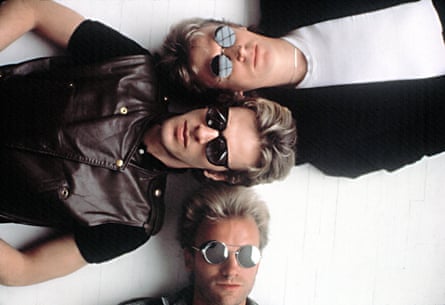
Sting has said he set out to write a “romantic, kind of seductive” song and acknowledged it is “not in the least bit original; it has a standard chord sequence which is probably nicked off Stand By Me” by Ben E King. (He has also ascribed inspiration from Paul Simon’s Slip Slidin’ Away – all interesting detail around a court hearing centred on songwriting.) It’s so classic that researchers at Aarhus University in Denmark found it to be the most universally appealing song in terms of fitting into the rhythms of daily life: “a very pleasant, perhaps even a bit bland song”, as the study’s lead researcher had it in 2021.
But Every Breath You Take derives its power from the infernal trick it plays on the listener. Sting kept it as a tender ballad with a soothingly simple and classic structure, filled with promises of eternal love and support. It’s just about possible to take those words at face value, and Faith Evans didn’t need to change much to make it into a pure song of devotion to her dead husband. It gets played, seemingly without irony, at weddings. But Sting added what he called “a compulsion behind it, to the point of obsession, where it becomes kind of sinister” – making this earnest declaration of love the words of a stalker who can’t let go.
There’s something close to demonic in its calm, determined manipulation, and Sting – who called it “a nasty little song, really rather evil” – even felt compelled to undo the hex with the 1985 single that kicked off his solo career in earnest, If You Love Someone Set Them Free. “I had to write the antidote,” he said, “after I’d poisoned people with this horrible thing.”
Every Breath You Take was also nightmarish to make, as was the whole of the massively popular album, Synchronicity, on which it appeared. “By the time of Synchronicity, they were sick of each other,” the album’s producer Hugh Padgham has said. “Sting and Stewart hated each other, and although Andy didn’t show as much venom, he could be quite grumpy – and there were both verbal and physical fights in the studio.” It was Every Breath You Take that almost brought them to breaking point, with Copeland feeling restricted by the song’s very tight, straight drum pattern. Padgham remembered: “Stewart would say, ‘I want to fucking put my drum part on it!’ and Sting would say, ‘I don’t want you to put your fucking drum part on it! I want you to put what I want you to put on it!’ and it would go on like that. It was really difficult … I also remember quite clearly working full-on for 10 days … and having nothing on tape that was playable.”
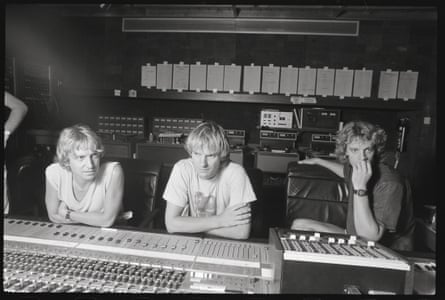
If Copeland felt constrained by Sting’s vision for the song, Summers has claimed he had a more profound influence on it: “It was crap until I played on it,” he said in 2016. Responding to a demo version played by Sting over organ chords, Summers came up with the arpeggiated guitar riff, he said later, as a way of “keeping those other bastards happy. That song was going to be thrown out. Sting and Stewart could not agree on how the bass and drums were going to go. We were in the middle of Synchronicity and Sting says, ‘Well, go on then, go in there and make it your own. And I did it in one take. They all stood up and clapped.”
Physical fights continued on the Synchronicity tour, with Copeland breaking one of Sting’s ribs. Copeland later waved this off as “play-fighting”, but the rifts proved too deep. Sting wanted to explore music-making with others and the Police split up at the height of their success, earning their legend as one of the most fractious rock bands in history.
Responding to a Guardian reader’s question in 2024, Copeland said that reputation wasn’t totally fair. “We tore each other’s throats out in the studio but those two motherfuckers came up with incredible stuff and we got on really well on stage, in the van, on the plane. To this day we still send each other dumb Instagram clips. It’s a myth that Sting and I fought all the time.”
Another of the band’s running jokes centres on Every Breath You Take. As Copeland said in 2018: “One of our favourite in-band riffs is that, when Puff Daddy sampled Every Breath You Take on I’ll Be Missing You, he sampled Andy’s guitar figure, not the melody or the lyrics. Me and Andy go, ‘Go on Sting, pay Andy his royalties,’ and Sting will say, ‘OK Andy, here you are …’ Not reaching anywhere near his wallet.”
But that jokey argument has now become very real, and with Every Breath You Take as popular as it ever was, relations in the Police may well be as bad as they were when they recorded it.