.png) 2 months ago
52
2 months ago
52
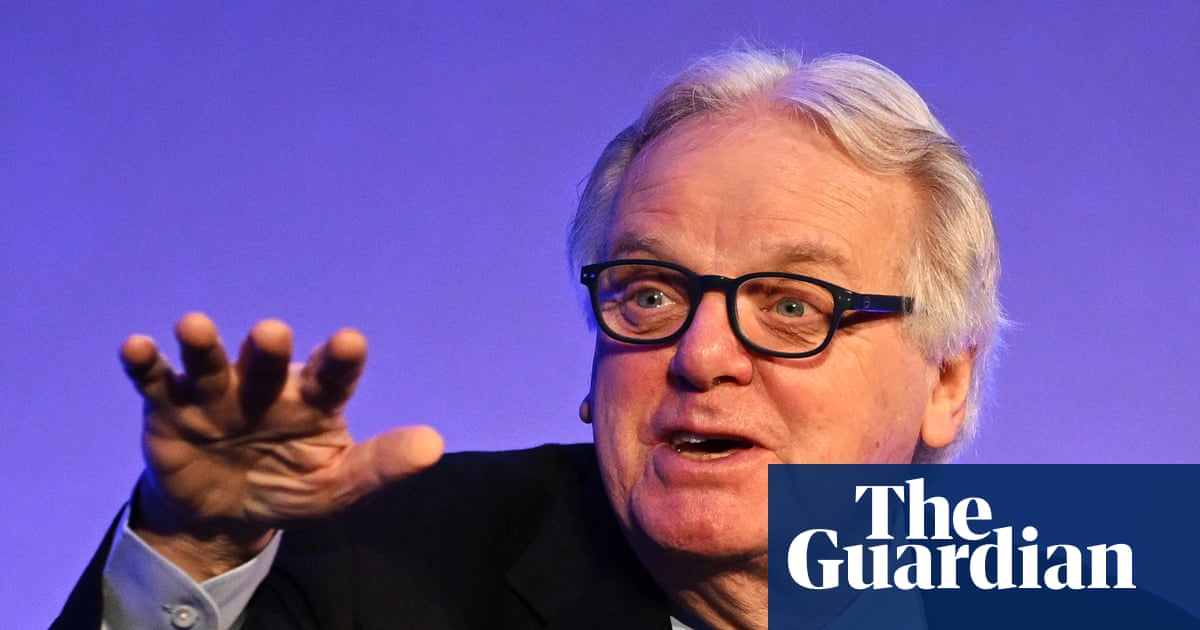
Gary Fisher has always enjoyed a game of poker, but after he turned 60, his partner suggested he take it seriously. “She said, ‘You’re really good at it, but you don’t study. You just turn up and play.’” It wasn’t what Fisher expected to hear, but he set about researching the game, completed some online courses, got a coach – and now plays professionally.
So far this year, Fisher, who lives in London, has travelled to competitions in Cyprus, Marrakech, Amsterdam, Tallinn and Paris. He pays to enter, and has won $200,000 (£150,000) in prize money. “I’ve had a very good start,” he says. He is speaking on a video call from his hotel in Dublin where he is taking part in the Irish Open. Next he will travel to Melbourne.
“You don’t tend to get those highs in a normal job … I can’t believe that my careers master at school didn’t mention that I could be a professional poker player when I was in my 60s.” (He recommended mechanical engineering.)
On tour, Fisher eats healthily, abstains from alcohol, gets a good night’s sleep, goes to the gym, and drinks hydration salts during long matches. Sometimes, the matchplay is gruelling – 12 hours a day, weeks on end. “And every single hour, you could be facing a tough decision. You can never switch off.”
His “uniform” is a inscrutable black T-shirt and no shades or hat: “I like to be very open with my mannerisms. I communicate what I want them to see,” he says. He researches his table, “so I can play every hand with at least an assumption, a hypothesis, of how I will play against each person.” To date, his lifetime poker earnings stand at $1.1m . He is ranked 755 in the world and he is in the top 40 players in the UK. “I keep detailed records of every tournament, so I know my average hourly rate, my return on investment.”
But it isn’t all about the money. “I imagine top golfers want to be number one in the world. The measure of the points is in dollars earned, but they don’t really care about those dollars – other than that they make them number one. And it’s the same for me in poker … I like it when people come up to me and say, ‘You had a great result in Tallinn. Well done.’ (He came third.) “I want to be recognised as one of the best players.”
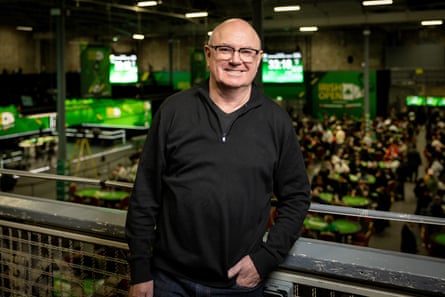
As a child growing up in Kingston upon Thames, in south-west London, Fisher remembers playing board games with his mother – but he was always terrible at cards. “I wouldn’t say that poker is a card game,” he says. “It’s a mixture of mathematical reasoning, psychology, logical analysis and pattern recognition.”
Fisher loved maths and studied physics at university, and his first job was as a software engineer. What he appreciated about physics was “being able to boil something incredibly complex, like the universe, into really elegant mathematical constructs that you can describe to someone else”.
In a way, he says, “that’s still kind of what I’m doing: boiling down something very complex – the way nine people at a table are playing game theory, which is a very complex mathematical algorithm – into simple constructs that I can use. I think that’s really what appeals to me about poker.”
After an MBA when he was 31, Fisher did business strategy work for IBM, then management consultancy, before starting his own tech business in his early fifties.
He is no longer looking for consultancy work, as he regards himself as being early in his poker career: “I’ve got much more to achieve. I want a major title. And, quite honestly, I would like a million-dollar win.”
But his new career has taught him to build reserves of “patience and discipline”, qualities that “haven’t always been my strong point. I’ve been very impatient in life, wanting to get on with things quicker. And then losing discipline.” In work and in relationships, he says, this trait has caused “some life mistakes”.
But, now, when the chips are dwindling, he resists rash decision-making, telling himself instead, “I can be patient. I can build this all the way back up again.” As he says, “There’s a lot to learn from poker.”