.png) 2 months ago
55
2 months ago
55
On International Women’s Day this year, I found myself in Selfridges listening to my wife, Geetie, talk about her experiences as a childhood communard, mother, restaurateur, environmental campaigner and, of course, as a woman. I was one of two men in the audience. Some might ask what a 65-year-old male farmer was doing there at all. I would contend, first, that as many of the issues discussed on IWD relate to male behaviour, men should be paying as much attention as women; and second (and more practically) that too many blokes being blokey does not get the strawberries picked.
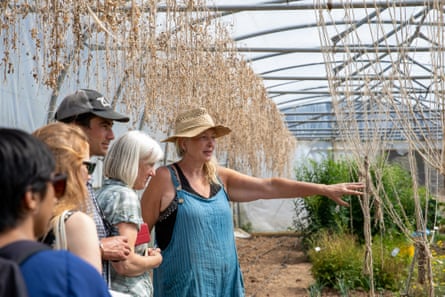
Success in farming depends on being able to build and maintain relationships. I’d say that’s true of most businesses. When we first measured our gender pay gap at Riverford in 2017, women earned an average of 91p an hour to their male colleagues’ £1. We made excuses and weak efforts at change, but most of the men at the top were unwilling to challenge their unspoken prejudice. My own farm, Baddaford, has been happier, more productive and more profitable since I, and my male head grower, put our best picker – a woman half our age – in charge of the picking and people.
Today, we must be one of very few veg farms with a waiting list for pickers, and that’s all down to our farm manager, Maddie, demanding change and making work here fun, emotionally safe and fulfilling. Like a lot of the more “enlightened” men of my generation, I would resist being branded sexist, but unless you call out prejudice when you see it, you might as well be. It has been rewarding on both a personal and commercial level to see Maddie flourish and take the rest of us forward with her.
But why did it take a woman and a new entrant to our historically very male industry to deliver that? Why is it that whenever I need to air or resolve sensitive issues, I end up talking to a woman? Why is it that in lots of empty-nest households, when the children ring home, after a few heartfelt but uncomfortable attempts to make conversation, the father hands the phone to his wife? Why are there so many lonely, ageing men in the UK – 75% of older men without partners report feeling lonely – and why are they less likely to do something about it?
Many older men believe that we are here to provide and protect physically, and many of us have done a decent job of that, but that is no longer what is required; at any rate, it won’t help us to live full lives, nor does it command the validation or respect so many of us crave (a paternal hangover that continues to work to our detriment).
At Riverford, the company I founded in 1986, this cultural shift began with the transition to employee ownership in 2018. The process required a lot of introspection, and patient evaluation of how decisions were made, and by whom. We employed a business change coach who, working with our head of HR over three years, patiently built a genuinely inclusive culture. The change started with me, and I am so grateful that these women had the courage to challenge me and help me grow in a new and more rewarding direction. In 2025, our gender pay gap turned negative – on average, women at Riverford are now paid 1.56% more per hour than men, largely because so many senior jobs have been filled by women. But the work continues, much of it led by our co-owner council and their advocacy for equality, diversity and inclusion.
Prior to this, too many men and too few women in leadership roles made our decisions narrow in scope, and this lack of diversity and inclusivity also impeded our growth as a business.
But as we have learned, we can all change. Men can embrace the “emotional”, even at work. Far from being a weakness, emotional literacy – kindness, openness, empathy, compassion – makes us so much stronger. The best businesses increasingly acknowledge, include and harness our inherently emotional human nature to build relationships with customers, colleagues and suppliers.
At 65, I lament the decades spent constrained by my own limited, unimaginative masculinity – whether at work, at home or in the pub. It is a tragedy of our own making. The answer is to cast off the limiting and damaging beliefs around what a man ought to be; to catch up, broaden our minds, learn the language and support each other and, of course, the women in our lives. Ultimately, inclusivity benefits us all.
I no longer want to lead a life impoverished by constrictive male stereotypes; nor do I want to inflict them on my children or my co-workers. Men must never stand by, squirming awkwardly, when another man is sexist. We can do so much better than our fathers’ generation.
To live an unexamined life, defined by our society’s gender norms as “protector and provider”, is to live only half a life. We must be brave and move forward, unencumbered by stereotypes, as so many women have.
-
Guy Singh-Watson is the founder of organic veg box company Riverford